4 Daily Exercises That Flatten Your Stomach Faster Than Crunches After 60

A flatter stomach after 60 usually starts with a bigger picture than ab work alone. Crunches can train your abs, but they don’t burn many calories, build much total-body muscle, or do enough to change body composition on their own. If the goal is a leaner midsection, your daily movement, calorie balance, and strength work all have to pull in the same direction.
Spot reduction might not work the way most people want it to. You can strengthen the muscles under your stomach, but fat loss occurs throughout your body when you burn more calories than you consume over time. That’s why daily exercises that involve your legs, hips, core, and conditioning usually beat crunches for stomach-focused goals. They create more total work, raise your heart rate, and help maintain the muscle that keeps your body looking firm.
When I coach this type of goal, I like simple movements people can repeat without dreading them. Walking gives you steady calorie burn. Lunges and step-ups target the large lower-body muscles, while your core keeps you balanced. Mountain climbers add intensity and force your midsection to brace as your legs move. Put those together, and you’ve got a daily routine that supports a flatter stomach without turning every session into a punishment workout.
Walking
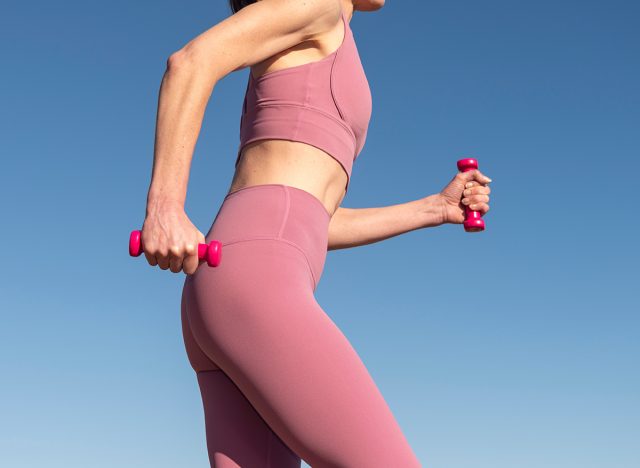
Walking helps flatten your stomach from the calorie-burning side of the equation. It’s easy to repeat, gentle on the joints, and effective for increasing daily movement without crushing your recovery. Your core, glutes, calves, and hamstrings all stay active as you walk, especially when you keep your pace purposeful and posture tall. Crunches may make your abs burn, but walking helps create the energy deficit needed for fat loss, which is what changes how your stomach looks over time.
Muscles Trained: Glutes, hamstrings, calves, core
How to Do It:
- Stand tall with your shoulders relaxed.
- Start with an easy pace for a few minutes.
- Increase your speed until your breathing gets slightly heavier.
- Swing your arms naturally as you walk.
- Keep your stride smooth and comfortable.
- Finish with a few slower minutes to cool down.
Recommended Sets and Reps: Walk for 20 to 40 minutes most days of the week. Rest as needed.
Best Variations: Incline walking, brisk walking intervals, longer steady walks
Form Tip: Walk with purpose and keep your chest lifted.
Alternating Lunges
Alternating lunges train your glutes, quads, hamstrings, and core while your body works to stay steady with each step. Your legs handle the main strength work, and your midsection helps keep your torso upright as your weight shifts. That makes lunges more effective than crunches for a flatter stomach, because larger muscles generate more total effort. Stronger legs also help you stay more active throughout the day, which supports the calorie burn needed for fat loss.
Muscles Trained: Glutes, quadriceps, hamstrings, core
How to Do It:
- Stand tall with your feet hip-width apart.
- Step forward with one leg into a lunge.
- Lower your back knee toward the floor with control.
- Push through your front foot to return to standing.
- Repeat on the opposite side.
- Continue alternating with steady control.
Recommended Sets and Reps: Perform 3 sets of 8 to 10 reps per leg. Rest for 45 seconds between each set.
Best Variations: Reverse lunges, assisted lunges, shorter-step lunges
Form Tip: Keep your torso tall and drive through your front foot.
Mountain Climbers
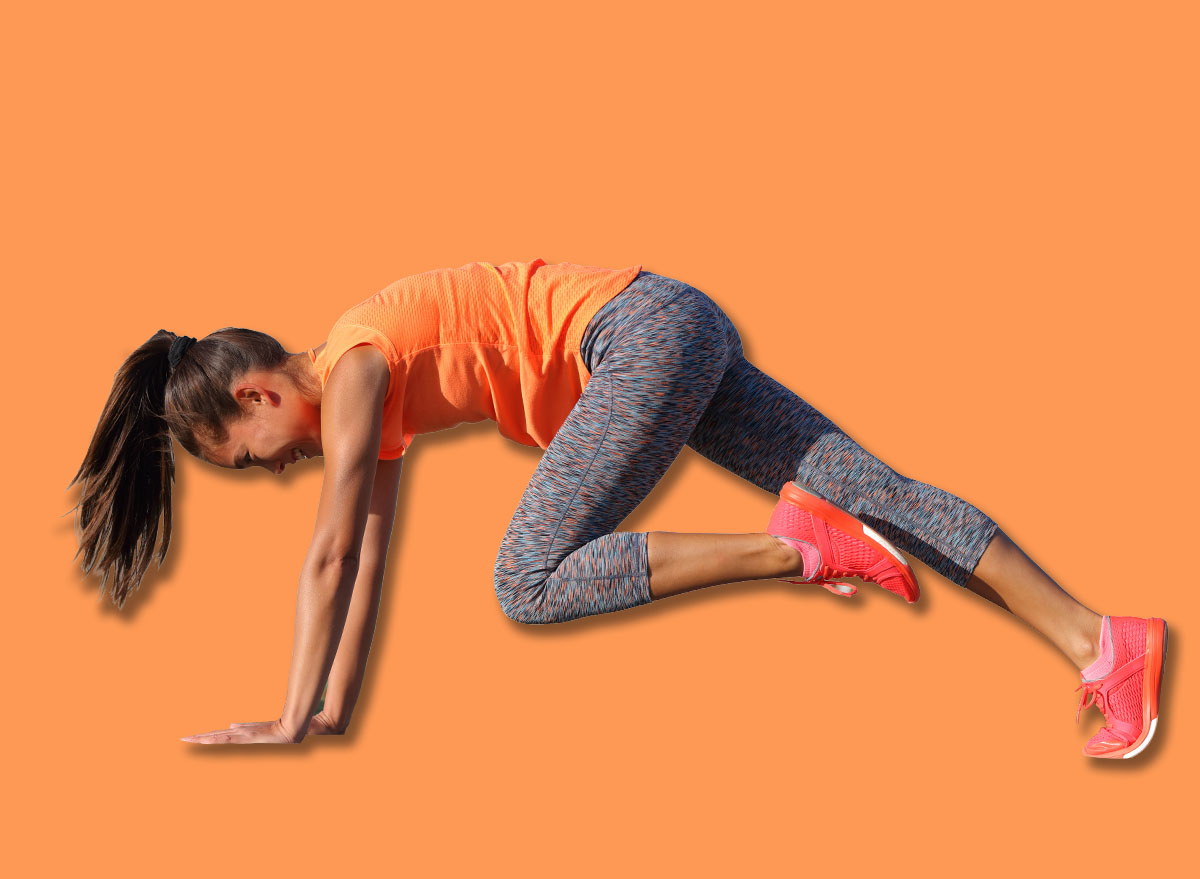
Mountain climbers train your abs, shoulders, hip flexors, and legs while raising your heart rate. Your core has to brace hard to keep your hips from bouncing as your knees drive forward. That combination gives you more return than crunches because you’re training core control while adding a conditioning effect. Keep the pace smooth, and use an incline version if the floor position feels too aggressive on your wrists, shoulders, or lower back.
Muscles Trained: Core, shoulders, hip flexors, quadriceps
How to Do It:
- Start in a high plank position with your hands under your shoulders.
- Brace your core and keep your hips level.
- Drive one knee toward your chest.
- Return your foot to the starting position.
- Drive your opposite knee forward.
- Continue alternating with control.
Recommended Sets and Reps: Perform 3 sets of 20 to 30 seconds. Rest for 30 to 45 seconds between each set.
Best Variations: Incline mountain climbers, slow mountain climbers, cross-body mountain climbers
Form Tip: Keep your hips steady and avoid bouncing through the reps.
Alternating Step-Ups
Alternating step-ups train your quads, glutes, hamstrings, calves, and core while building strength through a movement you use every day. Each rep asks one leg to drive your body upward while your midsection keeps you balanced. Step-ups help flatten your stomach by engaging larger muscles and creating more total-body effort than isolated ab work. They also carry over to stairs, curbs, walking trails, and staying confident on your feet.
Muscles Trained: Quadriceps, glutes, hamstrings, calves, core
How to Do It:
- Stand facing a sturdy step, box, or stair.
- Place your whole foot on the step.
- Brace your core and keep your chest lifted.
- Press through your lead foot to stand tall.
- Step back down with control.
- Alternate legs with each rep.
Recommended Sets and Reps: Perform 3 sets of 8 to 10 reps per leg. Rest for 45 seconds between each set.
Best Variations: Lower step-ups, assisted step-ups, slow step-downs
Form Tip: Let your lead leg lift your body instead of pushing hard off the floor leg.
What Actually Helps Flatten Your Stomach After 60
A flatter stomach comes from consistent movement, muscle-building work, and nutrition that supports fat loss. These four exercises help because they engage more of your body than crunches and provide a better mix of calorie burn, strength, balance, and core control. Keep the routine simple enough to repeat, then make each rep count.
- Walk often: Daily walks help increase calorie burn without draining your recovery. A brisk pace, hills, or short intervals can make walking even more effective.
- Train your legs hard enough to matter: Lunges and step-ups engage large muscle groups, which provide your body with a stronger training effect than small ab-only movements.
- Use mountain climbers for intensity: Keep the sets short and controlled. The goal is a steady core brace and a heart-rate bump, not sloppy speed.
- Keep calories aligned with your goal: Fat loss comes from burning more calories than you take in. Prioritize protein, consistent meals, and portions that support steady progress.
- Repeat the basics: A few simple exercises done often will beat a complicated plan you rarely follow. Consistency is where the stomach-flattening work starts to add up.
Crunches can stay in the mix, but they shouldn’t carry the whole plan. Build your routine around walking, lunges, step-ups, and controlled conditioning, and your midsection has a much better chance of tightening as your overall body fat trends down.
References
- Harris, M Brennan, and Chia-Hua Kuo. “Scientific Challenges on Theory of Fat Burning by Exercise.” Frontiers in physiology vol. 12 685166. 6 Jul. 2021, doi:10.3389/fphys.2021.685166
- Brobakken, Mathias Forsberg et al. “Abdominal aerobic endurance exercise reveals spot reduction exists: A randomized controlled trial.” Physiological reports vol. 11,22 (2023): e15853. doi:10.14814/phy2.15853