6 Home Exercises That Firm Arm Jiggle Faster Than Gym Machines After 60

Arms can change quickly when you give them consistent strength work. After 60, that firmer look usually starts with rebuilding the muscle underneath, then supporting it with daily movement, protein, and enough recovery to keep training regularly.
Home workouts fit that goal well because they remove a lot of friction. A band, a pair of dumbbells, and a sturdy chair can give your arms plenty to work with. You can train the biceps, triceps, shoulders, and upper back without waiting on machines or turning the session into a long gym circuit.
For clients over 60, I’d program this kind of routine when the goal is simple: make the arms look and feel stronger while keeping the exercises easy to repeat. The mix below gives you curling, pressing, rowing, and shoulder work so the upper body gets a balanced session.
Use these six home exercises three to four days per week. Keep the weights light enough to control, move with purpose, and let steady effort build the shape and strength you’re after.
Band Curls
Band curls are a simple way to train the biceps at home, and they’re easy to adjust based on how much tension you need. Stronger biceps help your arms look firmer while supporting everyday pulling and carrying tasks. The band also gives you a smooth strength challenge without needing heavy dumbbells, which makes it a good fit for regular training after 60.
Muscles Trained: Biceps, forearms.
How to Do It
- Stand on the middle of a resistance band with both feet.
- Hold one handle or end of the band in each hand.
- Stand tall with your arms by your sides.
- Curl your hands toward your shoulders.
- Pause briefly at the top.
- Lower your hands with control.
Recommended Sets and Reps: Perform 2 to 3 sets of 10 to 15 reps.
Best Variations: Seated band curls, alternating band curls, dumbbell curls.
Form Tip: Keep your elbows close to your sides as you curl.
Chair Dips
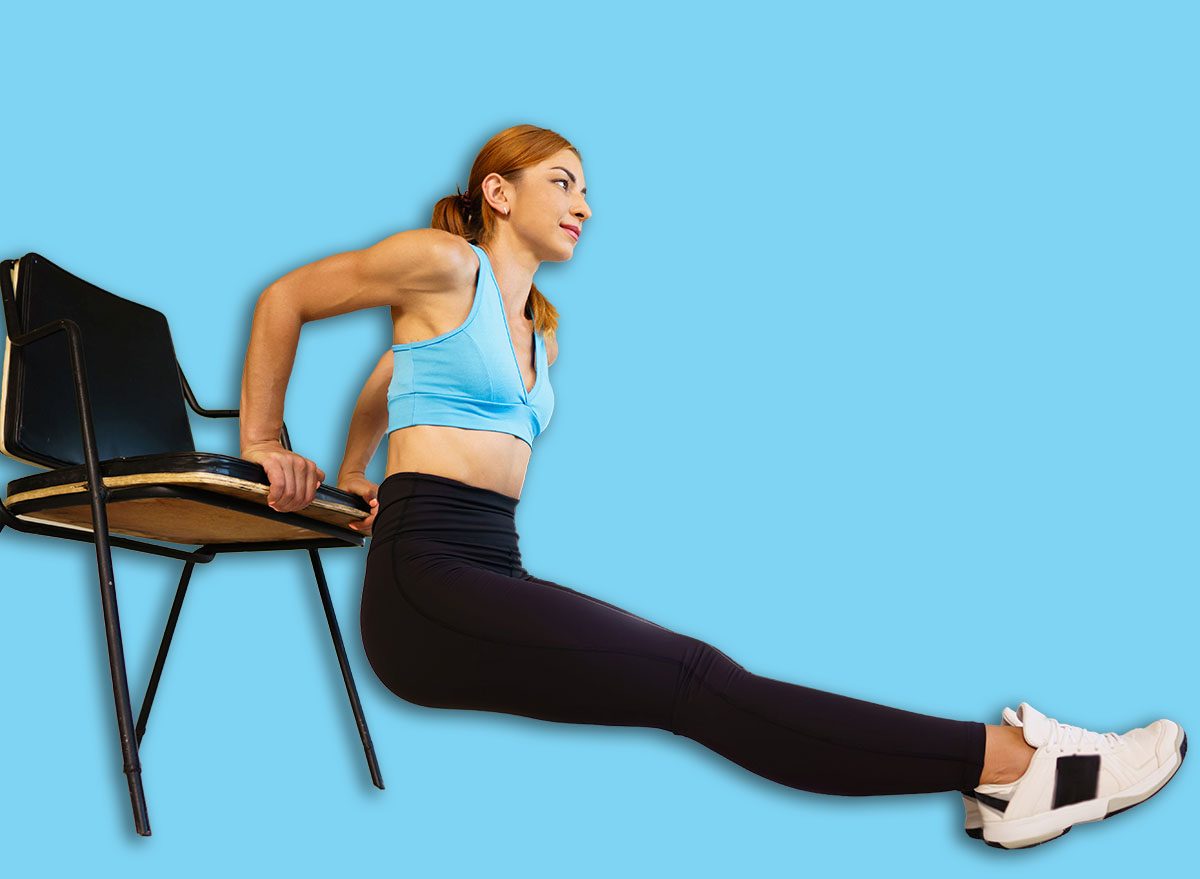
Chair dips target the triceps, which play a big role in the back-of-arm area many people want to firm. They also build pressing strength that helps your arms feel more capable when you push yourself up from a chair or support your body with your hands. Keep the range comfortable and controlled so the exercise feels strong through the arms and friendly on the shoulders.
Muscles Trained: Triceps, shoulders, chest.
How to Do It
- Sit on the edge of a sturdy chair.
- Place your hands beside your hips and grip the front edge of the seat.
- Walk your feet forward slightly.
- Bend your elbows and lower your body a few inches.
- Press through your hands to return to the starting position.
- Repeat with control.
Recommended Sets and Reps: Perform 2 to 3 sets of 6 to 10 reps.
Best Variations: Smaller-range chair dips, bent-knee chair dips, close-grip incline pushups.
Form Tip: Keep your shoulders relaxed and stop the dip before the front of your shoulders feels strained.
Incline Push-ups
Incline push-ups strengthen the chest, shoulders, and triceps while keeping the exercise more approachable than the floor version. They’re a great arm-firming move because the triceps get steady work every time you press away from the surface. The incline also makes it easy to find the right challenge by using a wall, counter, bench, or sturdy chair.
Muscles Trained: Chest, shoulders, triceps, core.
How to Do It
- Place your hands on a sturdy counter, bench, or chair.
- Step your feet back until your body forms a straight line.
- Brace your core.
- Bend your elbows and lower your chest toward the surface.
- Press through your hands to return to the starting position.
- Repeat for the full set.
Recommended Sets and Reps: Perform 2 to 3 sets of 8 to 12 reps.
Best Variations: Wall push-ups, counter push-ups, slow incline push-ups.
Form Tip: Choose a higher surface if your reps lose control.
Dumbbell Lateral Raise
Dumbbell lateral raises help shape the shoulders, which can make the upper arms look stronger and more defined. This exercise adds a focused shoulder challenge to the routine without needing much weight. After 60, it’s especially useful because stronger shoulders support better arm function when you reach, lift, and move through the day.
Muscles Trained: Shoulders, upper back.
How to Do It
- Stand tall with a light dumbbell in each hand.
- Let your arms rest by your sides.
- Brace your core.
- Raise both arms out to the sides.
- Stop when your hands reach about shoulder height.
- Lower the weights with control.
Recommended Sets and Reps: Perform 2 to 3 sets of 10 to 12 reps.
Best Variations: Seated lateral raises, single-arm lateral raises, band lateral raises.
Form Tip: Use light weights so the lift stays smooth instead of swinging.
Single-Arm Dumbbell Row
Single-arm dumbbell rows strengthen the upper back, which helps the arms look better by improving posture and balancing all the pressing work. Rows also train the biceps, shoulders, and grip, so they give your arms more than one reason to get stronger. This move belongs in the routine because firmer arms look and function better when the back is strong too.
Muscles Trained: Upper back, lats, biceps, rear shoulders.
How to Do It
- Place one hand on a sturdy chair, bench, or couch for support.
- Hold a dumbbell in the opposite hand.
- Step one foot back and hinge slightly at your hips.
- Pull the dumbbell toward your ribs.
- Pause briefly at the top.
- Lower the weight with control and repeat before switching sides.
Recommended Sets and Reps: Perform 2 to 3 sets of 8 to 12 reps per side.
Best Variations: Band rows, supported dumbbell rows, lighter high-rep rows.
Form Tip: Pull your elbow back toward your ribs instead of shrugging the weight upward.
Standing Shoulder Press
The standing shoulder press builds strength through the shoulders and triceps, giving the arms a stronger, more athletic look. It also teaches the upper body to press with control while your core keeps you steady. This is a smart finishing move because it ties together the arms, shoulders, and posture work from the rest of the routine.
Muscles Trained: Shoulders, triceps, upper chest, core.
How to Do It
- Stand tall with your feet about hip-width apart.
- Hold a dumbbell in each hand at shoulder height.
- Brace your core.
- Press the dumbbells overhead.
- Pause briefly at the top.
- Lower the weights back to shoulder height and repeat.
Recommended Sets and Reps: Perform 2 to 3 sets of 8 to 10 reps.
Best Variations: Seated shoulder press, single-arm shoulder press, alternating shoulder press.
Form Tip: Keep your ribs down as you press so your lower back doesn’t arch.
Best Tips for Firming Arm Jiggle After 60

Firmer arms after 60 come from a mix of strength training, muscle support, and habits that help your body show the work you’re putting in. The exercises above build the muscle that gives your arms more shape, while your daily routine helps manage the body-composition side of the goal. Keep the plan simple enough to repeat for several weeks, because arm definition takes consistency more than workout novelty. Focus on controlled reps, regular protein, and enough total movement during the day. Those basics can make a home routine feel much more effective.
- Train your arms several times per week: Short, consistent sessions help the muscles get regular work.
- Eat protein at each meal: Protein helps your body repair and maintain lean muscle.
- Walk daily: Daily movement supports fat loss and overall health while strength work firms the arms.
- Use weights that feel smooth: The last few reps should feel challenging without turning sloppy.
- Strengthen your back too: Rows help posture and make the upper arms look more balanced.
- Give your arms time to recover: A day between harder upper-body sessions can help your next workout feel stronger.
References
- Drenowatz, Clemens et al. “The Prospective Association between Different Types of Exercise and Body Composition.” Medicine and science in sports and exercise vol. 47,12 (2015): 2535-41. doi:10.1249/MSS.0000000000000701
- Roberts, Christian K et al. “Effects of Home-Based Exercise Training Systems, Combined with Diet, on Cardiometabolic Health.” International journal of exercise science vol. 12,2 871-885. 1 May. 2019, doi:10.70252/WEFP3647