The 7-Day Wall Sit Challenge That Restores Leg Strength After 60
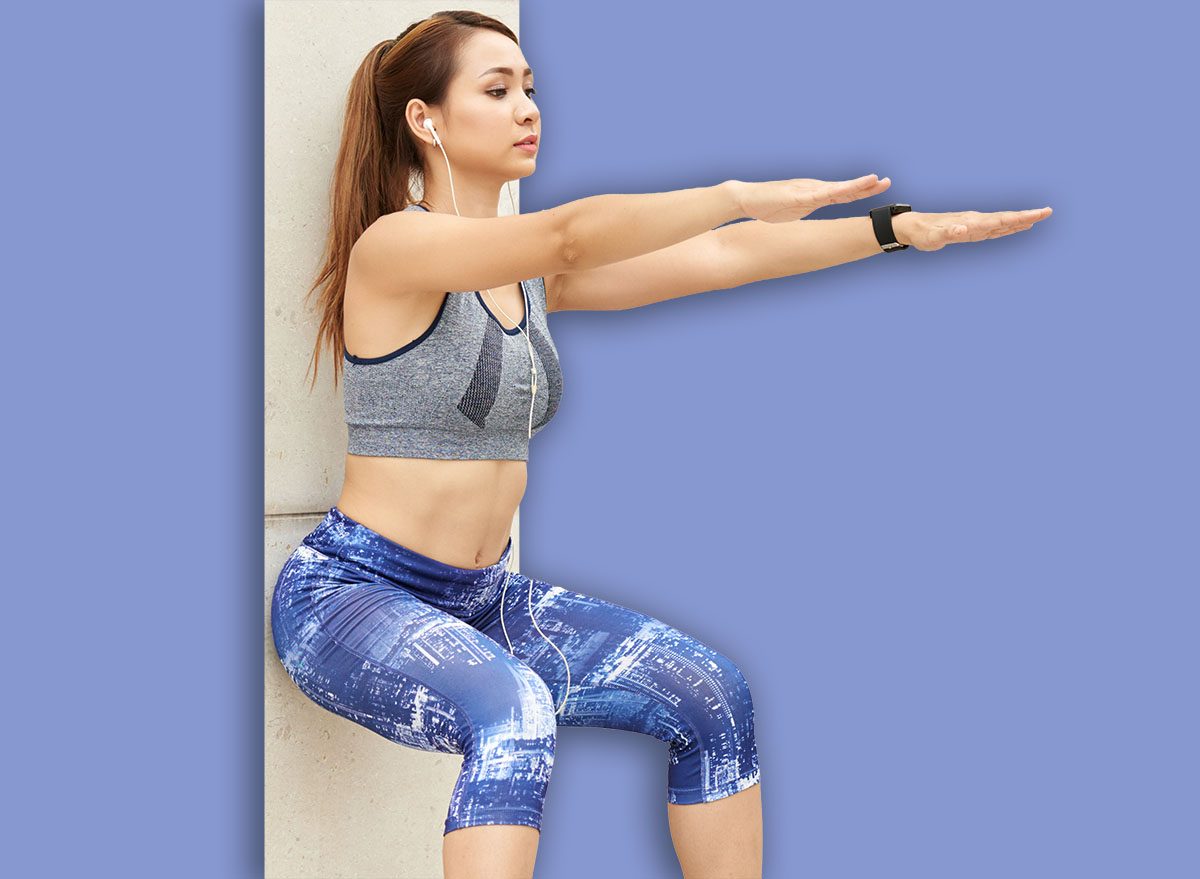

The first 10 seconds of a wall sit are usually uneventful. Then your thighs start speaking up. By the time you reach 20 seconds, your glutes, calves, and midsection are all working to keep you from sliding lower or shifting side to side. You aren’t moving much, but your legs are under real tension.
I use wall sits with older adults because the setup reduces the exercise to a few key details. The wall supports your torso, so you can focus on pressing evenly through your feet, keeping your knees pointed in the same direction as your toes, and holding a depth you can manage from start to finish. It also makes progression easy. Add a few seconds, keep the position clean, and let your legs earn the next step.
Think of this as a seven-day on-ramp for stronger legs. You’ll start with short holds, build more total time under tension, and finish with a benchmark you can repeat or improve next week. Pair it with regular walking and a few lower-body exercises afterward, and it can help support stronger stairs, easier sit-to-stands, and more dependable legs.
How to Do a Wall Sit
A wall sit builds lower-body strength through an isometric hold, which means your muscles create tension without moving through repeated reps. Your quads handle most of the load, while your glutes, hamstrings, calves, and core help keep your body steady. The wall gives you a reliable position to train from, but your legs still have to hold you there. Start higher than you think you need to, and make the hold harder over time by increasing its duration or lowering your position slightly.
Muscles Trained: Quadriceps, glutes, hamstrings, calves, core.
How to Do It:
- Stand with your back against a sturdy wall.
- Walk your feet 12 to 18 inches forward.
- Set your feet about hip-width apart.
- Slide down the wall until your knees bend to a comfortable depth.
- Press through your whole foot and keep your chest tall.
- Hold the position while breathing steadily.
- Slide back up the wall to stand when the set ends.
Recommended Sets and Reps: Follow the seven-day plan below.
Best Variations: Higher wall sits, wall-sit heel raises, wall-sit marches.
Form Tip: Keep your knees tracking with your toes and avoid letting your weight drift onto your heels or toes.
Day 1: Find Your Working Position
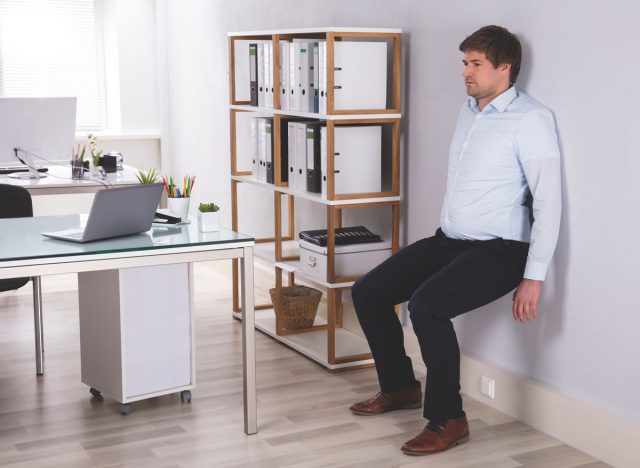
Perform 3 wall sits for 15 seconds each. Rest for 45 to 60 seconds between holds.
The first day is about finding a depth that gives your thighs real work while still keeping you organized. Keep your feet planted, breathe steadily, and finish every hold with the same posture you started with.
Day 2: Add a Small Amount of Time
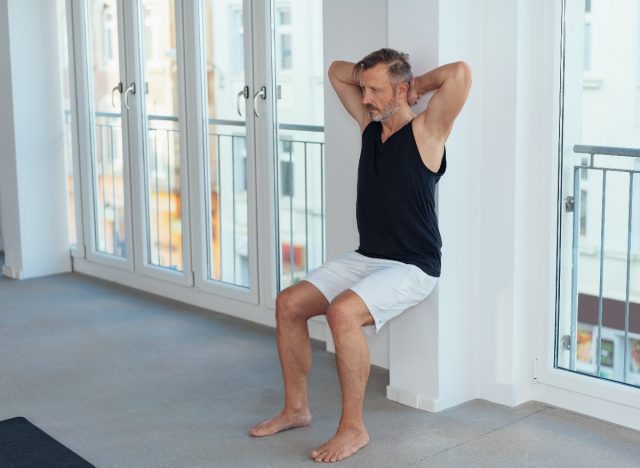
Perform 3 wall sits for 20 seconds each. Rest for 45 to 60 seconds between holds.
Five seconds may not sound like much, but it changes the feel of the hold once your quads start working. Keep your shoulders relaxed against the wall and press evenly through both feet.
Day 3: Build More Leg Endurance

Perform 3 wall sits for 25 seconds each. Rest for 60 seconds between holds.
By day three, your legs have a better feel for the position. Keep your wall sit at a consistent depth across all three holds and let the final few seconds challenge your thigh endurance.
Day 4: Repeat the Work With Better Control
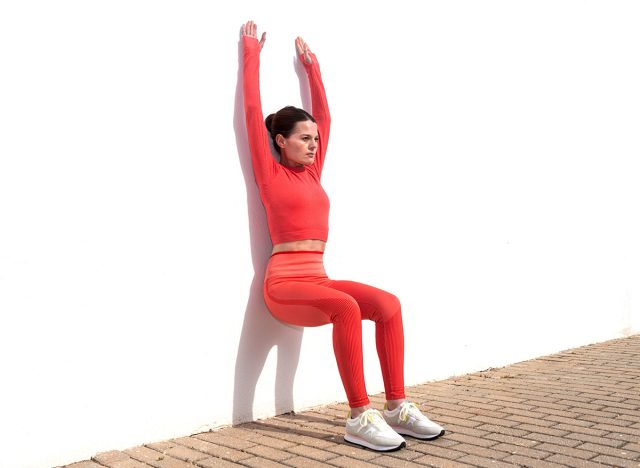
Perform 3 wall sits for 25 seconds each. Rest for 45 to 60 seconds between holds.
Repeating the same workload gives you a chance to clean up the details. Set your feet with purpose, slide into position without rushing, and keep your knees steady throughout each hold.
Day 5: Increase Your Total Time Under Tension
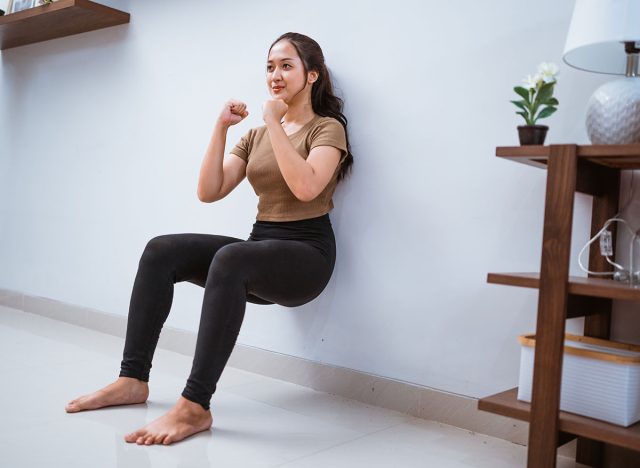
Perform 4 wall sits for 25 seconds each. Rest for 60 seconds between holds.
Adding a fourth set increases the total work in the day without forcing a major jump in hold length. Your goal is to make the fourth hold look and feel as controlled as the first.
Day 6: Extend Each Hold
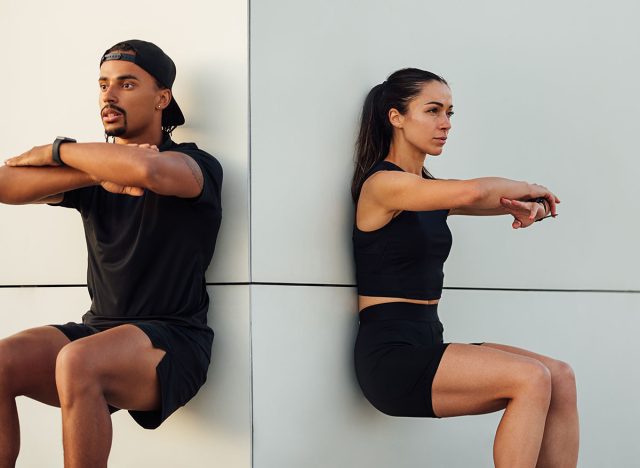
Perform 3 wall sits for 35 seconds each. Rest for 60 to 75 seconds between holds.
This is the longest individual hold of the week so far. Stay patient once the thighs start burning, keep breathing, and use the wall as a reminder to stay tall through your torso.
Day 7: Finish With a Benchmark
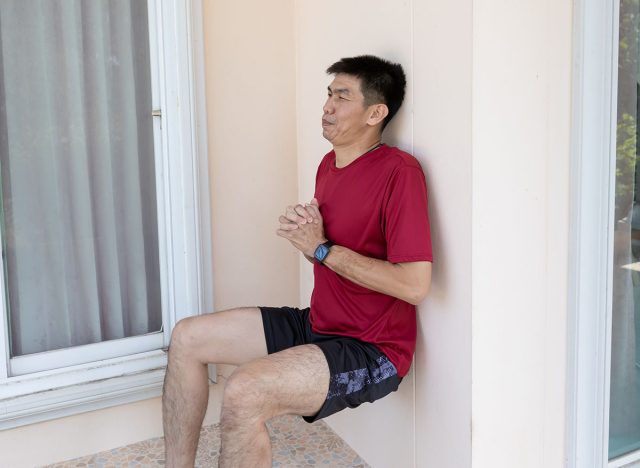
Perform 3 wall sits for 40 seconds each. Rest for 60 to 75 seconds between holds.
The final day gives you a useful baseline for the next phase of training. Your legs should feel more familiar in the position, and you should have a clearer sense of the depth and duration you can control.
How to Get More From the 7-Day Wall Sit Challenge
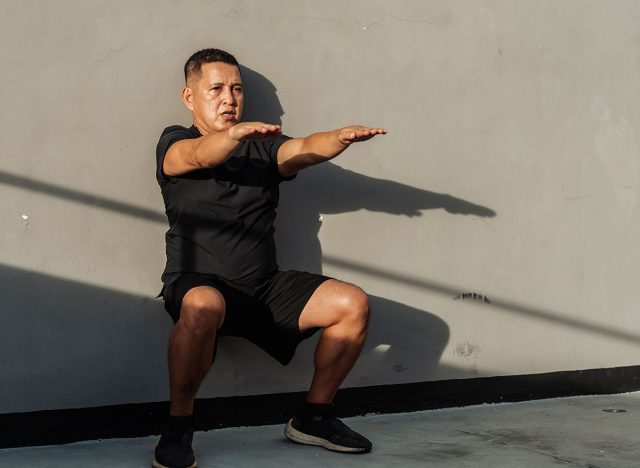
The calendar gives this challenge structure. Form, recovery, and repeatability determine how much strength you build.
- Use a depth you can repeat: A higher wall sit still trains your legs. Lower your position only when you can keep your feet planted and knees aligned.
- Repeat a day when needed: Staying at the same hold time for another day is a productive way to build strength.
- Keep walking: A comfortable daily walk gives your legs a chance to use the endurance you’re building against the wall.
- Add a variation next week: Wall-sit heel raises and wall-sit marches to add calf, hip, and core work once standard holds feel more manageable.
- Pay attention to joint feedback: Muscle fatigue is expected. Sharp pain, swelling, or a noticeable increase in joint discomfort calls for a pause and individualized guidance from a qualified clinician.
Seven days can establish a strong starting point, especially when your legs have not had much recent strength work. Keep the wall sit in rotation afterward, then build on it with chair squats, step-ups, calf raises, and regular walks.
References
- Cohen DD, Aroca-Martinez G, Carreño-Robayo J, Castañeda-Hernández A, Herazo-Beltran Y, Camacho PA, Otero J, Martinez-Bello D, Lopez-Lopez JP, Lopez-Jaramillo P. Reductions in systolic blood pressure achieved by hypertensives with three isometric training sessions per week are maintained with a single session per week. J Clin Hypertens (Greenwich). 2023 Apr;25(4):380-387. doi: 10.1111/jch.14621. Epub 2023 Mar 25. PMID: 36965163; PMCID: PMC10085809.
- Cho M. The effects of modified wall squat exercises on average adults’ deep abdominal muscle thickness and lumbar stability. J Phys Ther Sci. 2013 Jun;25(6):689-92. doi: 10.1589/jpts.25.689. Epub 2013 Jul 23. PMID: 24259831; PMCID: PMC3804993.