4 Classic Exercises That Reverse Aging Better Than Cardio After 60

Cardio does plenty of good things for your body after 60. It helps your heart, supports endurance, and keeps daily movement from feeling like a chore. Strength training adds another piece that matters just as much: it helps you keep the muscle, posture, and power that make life feel more capable.
That’s why classic strength exercises still hold up. They train basic patterns your body uses constantly, like lowering, standing, bracing, lifting, and pulling. The movements are simple, but they give your muscles a clear reason to stay strong.
After years of coaching, I’ve found these familiar exercises often work well because people can feel their progress quickly. The reps get smoother, the positions feel steadier, and the workout carries into the rest of the day. That kind of feedback builds confidence, which makes consistency easier.
Use these four classic exercises two to four days per week. Keep the reps clean, choose versions that fit your body today, and build the challenge gradually as your strength improves.
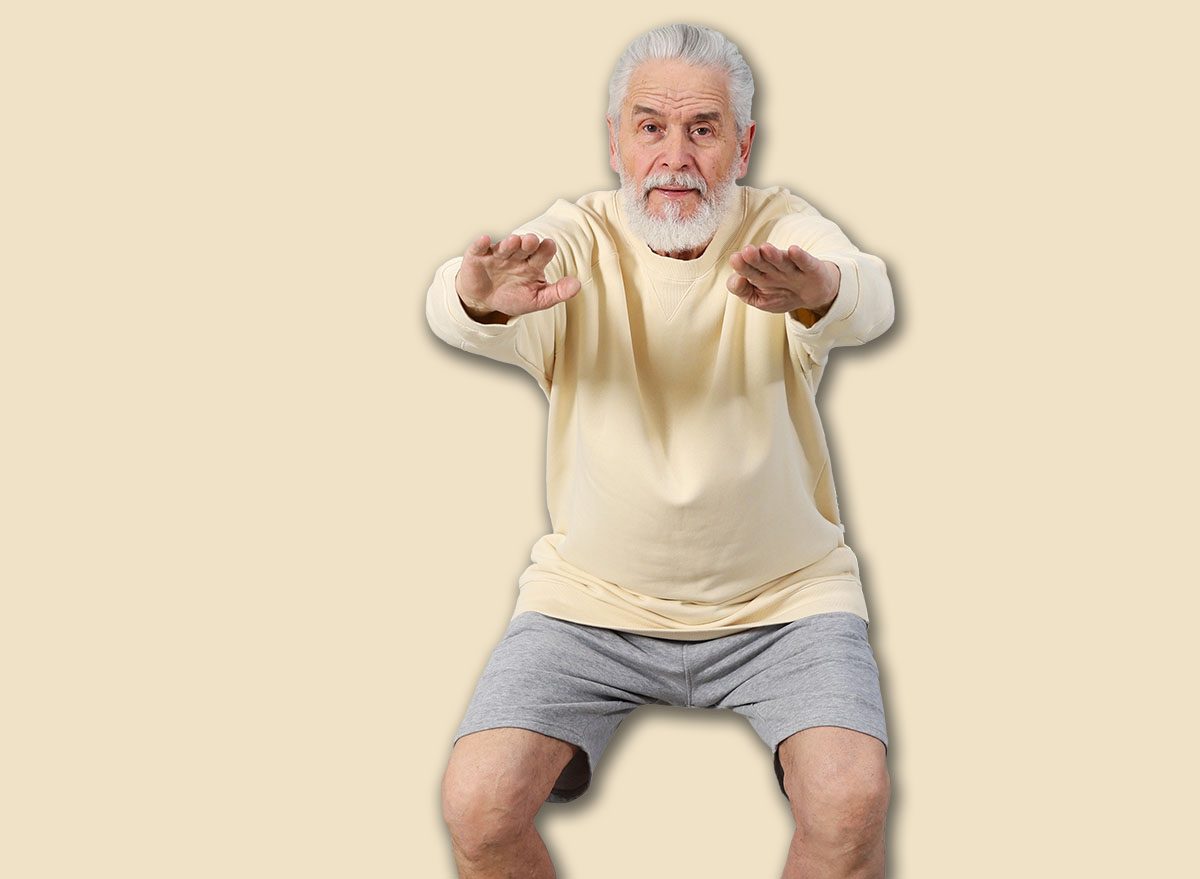
Bodyweight Squat
Bodyweight squats train the legs in one of the most useful patterns you have. Every rep gives your hips, thighs, and core a chance to work together while you practice lowering and standing with control. That carries over to getting out of chairs, climbing stairs, and moving with more confidence during the day. Start with a range that feels smooth, then build depth as your legs get stronger.
Muscles Trained: Quadriceps, glutes, hamstrings, calves, core.
How to Do It:
- Stand with your feet about shoulder-width apart.
- Brace your core and keep your chest lifted.
- Push your hips back as your knees bend.
- Lower to a depth you can control.
- Press through your whole feet to stand tall.
- Repeat with steady control.
Recommended Sets and Reps: Perform 3 sets of 8 to 12 reps. Rest for 45 to 60 seconds between sets.
Best Variations: Chair squats, box squats, slow-tempo squats.
Form Tip: Keep your feet planted and let your hips and knees bend together.
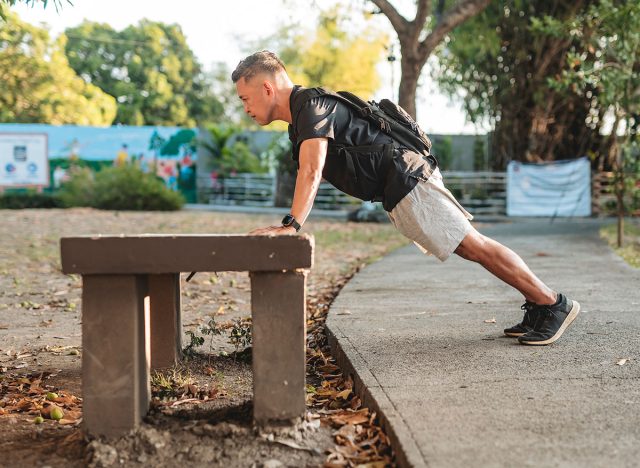
Incline Push-Up
Incline push-ups build upper-body strength without forcing you to the floor right away. The higher angle gives your chest, shoulders, triceps, and core a strong training effect while keeping the movement easier to manage. It’s also simple to progress. As your strength improves, you can move from a wall to a counter, then to a lower bench or sturdy surface.
Muscles Trained: Chest, shoulders, triceps, core, glutes.
How to Do It:
- Place your hands on a sturdy counter, bench, or secured chair.
- Step your feet back until your body forms a straight line.
- Brace your core and lightly squeeze your glutes.
- Bend your elbows and lower your chest toward the surface.
- Press through your palms to return to the starting position.
- Repeat with smooth control.
Recommended Sets and Reps: Perform 3 sets of 8 to 15 reps. Rest for 45 to 60 seconds between sets.
Best Variations: Wall push-ups, counter push-ups, slow-tempo incline push-ups.
Form Tip: Keep your body long from head to heels and stop each rep before your hips sag.
Kettlebell Deadlift
The kettlebell deadlift is one of the best classic strength moves for rebuilding the hips. It teaches you to hinge, grip, brace, and stand tall, which shows up every time you pick something up from the floor or carry something heavy. The kettlebell sits between your feet, so the setup feels natural and easier to control. Use a weight that lets you feel your glutes and hamstrings doing the lift.
Muscles Trained: Glutes, hamstrings, upper back, lower back, core, grip.
How to Do It:
- Stand with your feet about hip-width apart and place a kettlebell between your feet.
- Soften your knees and brace your core.
- Push your hips back and reach for the kettlebell handle.
- Grip the handle firmly and keep your chest lifted.
- Press through your feet and drive your hips forward to stand.
- Lower the kettlebell with control and repeat.
Recommended Sets and Reps: Perform 3 sets of 8 to 12 reps. Rest for 60 seconds between sets.
Best Variations: Bodyweight hip hinges, elevated kettlebell deadlifts, dumbbell deadlifts.
Form Tip: Keep the kettlebell close to your body and let your hips create the lift.
Standing Band Row
Standing band rows help rebuild the pulling strength that supports better posture and stronger shoulders. They’re especially useful if your day involves a lot of sitting, driving, or reaching forward. The band provides steady resistance, and the standing position helps your core hold everything in place. Pause at the back of each rep so the upper back gets a real chance to work.
Muscles Trained: Upper back, lats, rear delts, biceps, core.
How to Do It:
- Anchor a resistance band at chest height.
- Stand tall and hold one handle or end of the band in each hand.
- Step back until the band has light tension.
- Brace your core and keep your shoulders relaxed.
- Pull your elbows back toward your sides.
- Pause briefly, then return your arms forward with control.
Recommended Sets and Reps: Perform 3 sets of 10 to 15 reps. Rest for 30 to 45 seconds between sets.
Best Variations: Seated band rows, single-arm band rows, slow-tempo band rows.
Form Tip: Pull your elbows back smoothly and keep your shoulders away from your ears.
How to Use These Classic Exercises After 60
Use these exercises as a full-body strength circuit two to four days per week. Complete one set of each move in order, rest for 60 to 90 seconds, then repeat for two to three total rounds.
- Start with the version you can own: A chair squat, wall push-up, elevated deadlift, or lighter band can all help you build cleaner reps.
- Move with purpose: Strength work pays off when each rep has control behind it.
- Keep cardio in the week: Walking, cycling, swimming, or other steady movement pairs well with this kind of strength routine.
- Progress slowly: Add a few reps, use a slightly lower incline, increase the kettlebell weight, or choose a stronger band once the workout feels solid.
- Track the everyday wins: Easier stairs, stronger posture, better balance, and smoother sit-to-stands all tell you the routine is working.
Classic strength moves stay around because they solve real problems. Train the legs, push, hinge, and pull with consistency, and your body gets a stronger reason to keep moving well after 60.
References
- Burtscher, Johannes et al. “How much resistance exercise is beneficial for healthy aging and longevity?.” Journal of sport and health science vol. 12,3 (2023): 284-286. doi:10.1016/j.jshs.2022.11.004
- Iversen, Vegard M et al. “No Time to Lift? Designing Time-Efficient Training Programs for Strength and Hypertrophy: A Narrative Review.” Sports medicine (Auckland, N.Z.) vol. 51,10 (2021): 2079-2095. doi:10.1007/s40279-021-01490-1
- Langhammer, Birgitta et al. “The Importance of Physical Activity Exercise among Older People.” BioMed research international vol. 2018 7856823. 5 Dec. 2018, doi:10.1155/2018/7856823