5 Tips To Eat Your Way to a Flatter Stomach After 50, Dietitians Say
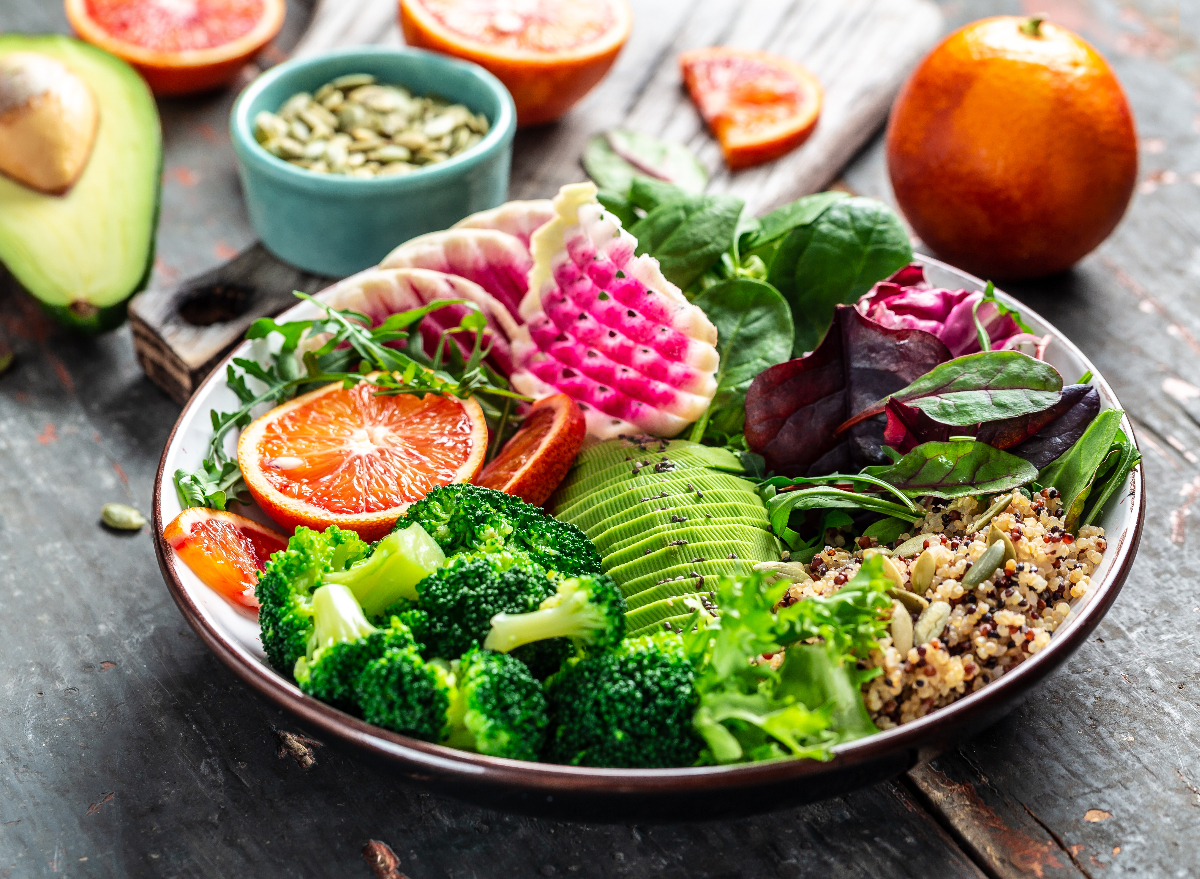

It’s no secret that achieving a flat stomach gets harder with age—and you can blame biology.
“As you age, you slowly lose both muscle mass and bone mass,” Roxana Ehsani, MS, RD, CSSD, LDN, a registered dietitian nutritionist and a board-certified specialist in sports dietetics, tells Eat This, Not That! “You may lose both at a faster rate, especially if you don’t use it by exercising regularly or if you aren’t consuming a nutritious diet that helps support both muscle and bone health.”
Ehsani explains that when it comes to a flat stomach, muscle mass is metabolically active. This means having more muscle mass over fat mass in your body, as it can burn more calories at rest than and when active.
“Therefore, it can make it more difficult for you to have a flat stomach as you age, as your metabolism also slows as you age,” says Ehsani.
However, not having a flat stomach could occur for reasons besides a slow metabolism.
“A protruded belly could appear for many reasons that may not necessarily be associated with weight or fat,” adds Bonnie Taub-Dix, MA, RDN, CDN, and the award-winning author of Read It Before You Eat It: Taking You from Label to Table. “Some bellies may be protruded due to hormonal reasons, or perhaps a woman has had a C-section in the past. Bloated bellies could also arise because of the food we eat or our eating habits, such as drinking through a straw, chewing gum or eating too many gassy foods or sugar alcohols.”
So if you are trying for a flatter stomach, what you eat is an incredibly important factor. Read on to learn which 5 dietitian-recommended tips can help you eat your way to a flatter stomach after age 50. Also, for more helpful guidance on which eating practices to avoid when you want a flat belly, check out The 6 Worst Eating Habits When You Want a Flatter Stomach.
Have more high-quality proteins
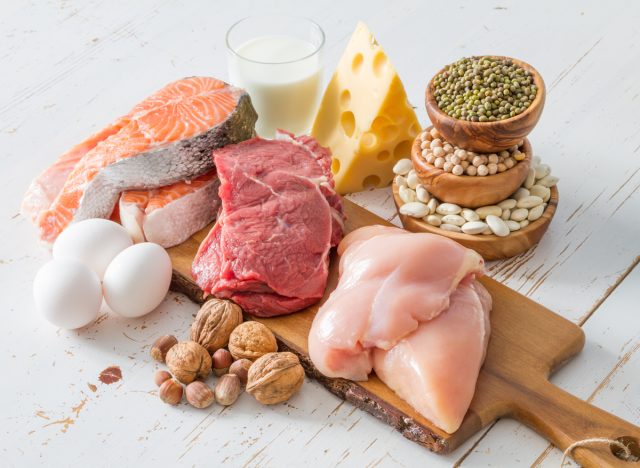
If you’re not getting enough protein—or enough of the right protein—it may be hurting your efforts at achieving a flat stomach.
“Protecting muscle is so important as we age, and can be maintained when consuming adequate food sources of protein,” says Ehsani. “Consuming lean sources of protein will help you preserve our metabolically active muscle mass, thus helping us maintain a flatter stomach.”
She also notes that high-quality protein choices are seafood like salmon, tuna, or chicken breast, eggs, and plant-based sources of protein are beans, lentils, nuts, and seeds.
“Be sure to spread them out throughout the day, and have a high-quality source at each meal and snack time,” adds Ehsani.
Eat high-fiber cereal
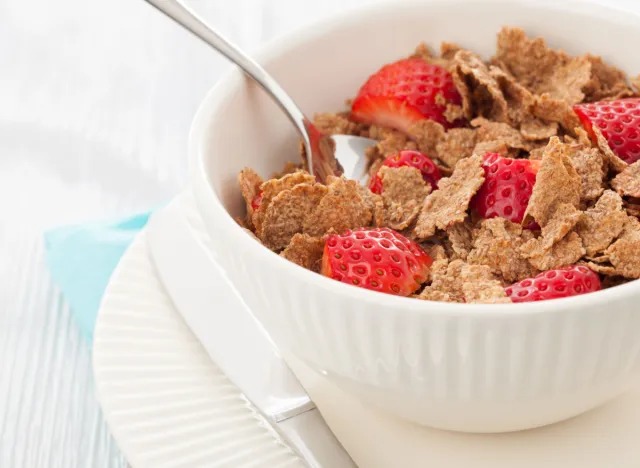
Fiber is extremely important if you want a flat stomach, since it can help you stay regular and prevent bloat. Women and men over 50 should aim to get 21 grams and 30 grams of fiber per day, respectively, according to the USDA’s Dietary Guidelines.
So, if you start your morning with a bowl of cereal, unfortunately, Frosted Flakes won’t cut it if a flat stomach is your ultimate goal. Instead, opt for cereals that are high in fiber
“The majority of us don’t get enough fiber—at any age. High-fiber cereal can easily make a major deposit in your fiber bank while also adding a variety of other vitamins and minerals,” says Taub-Dix. “You can pair it with your favorite plant milk, pulverize it into a flour, and bake with it or sprinkle it on top of yogurt. Be sure to pair your cereal with water to help make it more of a ‘moving’ experience.”
Consume more seafood
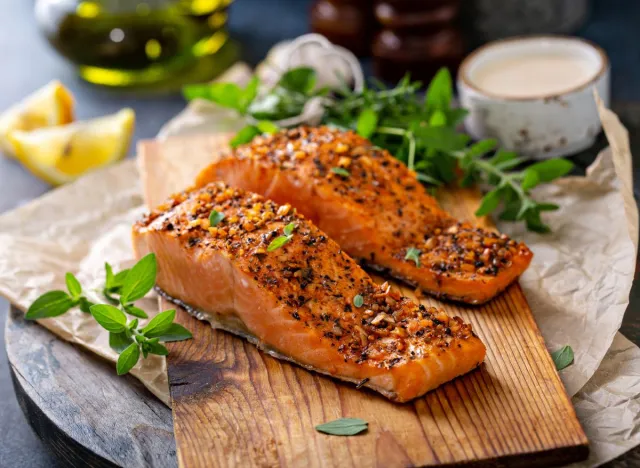
If you’ve never been a fan of seafood but want a flat stomach, it may be a good idea to start looking for creative ways to integrate it into your diet that also appeal to your taste preferences.
“Fish is a high-quality source of protein and a complete source of protein, meaning it contains all essential amino acids, which are protein building blocks. [This] can help support a flatter stomach, since consuming fish keeps us feeling full for longer and provides us with feelings of satiety,” says Ehsani.
Ehsani suggests you choosing wild-caught Alaskan seafood, like salmon. Salmon is lean high-quality protein that also key nutrients like vitamin D and anti-inflammatory omega-3 fatty acids. Vitamin D is found in only a few foods, but supports bone health. When it comes to omega-3 fatty acids, research has found they can help reduce the risk of developing certain medical conditions including obesity as well as support heart and brain health.
Snack on almonds
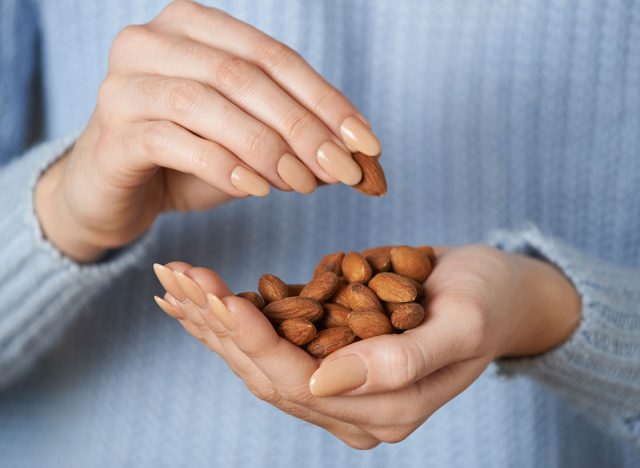
Put the bag of chips down! Instead, reach for a handful of almonds.
“Almonds provide more fiber than any other nut to help move things along in your system while also being the nut highest in calcium, a nutrient all of us need, especially after 50,” says Taub-Dix.
In addition to helping maintain a flat tummy, research has shown that munching on almonds can also benefit your overall gut health.
Make your plate mostly fruits and veggies
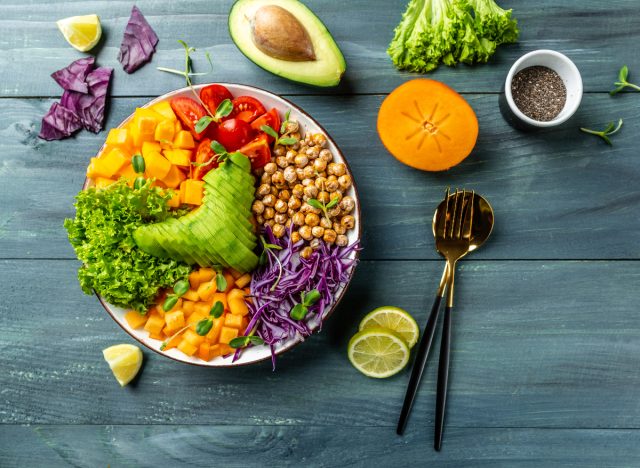
“Fruits and veggies are the most nutrient dense food, they are loaded with essential vitamins and minerals you need each day to support a healthy body,” says Ehsani. “And they also contain dietary fiber, which helps support a healthy gut and can help remove waste from the body, and prevent constipation. Rather than building your meal around steak or pasta, reframe your plate to make fruits and veggies the main course.”
Another benefit of fruits and vegetables? They are generally low in calories, so you can eat your fill without as many caloric concerns. In turn, this can help support a flat stomach.