If You Can Complete These 4 Morning Exercises Without Rest After 60, Your Endurance Is Top-Tier

Endurance after 60 shows up in subtle ways. Standing without leaning, walking without frequent stops, and moving through the morning without stiffness all reflect how well the body sustains effort. Traditional cardio often misses this mark because it trains the heart more than the muscles responsible for posture and daily movement.
Morning endurance depends on muscular stamina, breathing control, and coordination under light fatigue. When these systems work together, the body handles prolonged activity without strain. That combination separates average fitness from top-tier function later in life.
These four morning exercises challenge endurance through continuous movement and controlled tension. Completing them back-to-back without rest signals strong muscular stamina, efficient breathing, and resilient posture. Each exercise appears widely in senior fitness, mobility, and physical therapy videos, making them easy to follow visually.
Standing March With Controlled Tempo
This movement immediately tests endurance by demanding upright posture while the legs alternate under load. Unlike fast marching, slow tempo removes momentum and forces the hips, quads, and core to stay engaged continuously. Fatigue builds subtly, which reveals true endurance rather than burst strength.
Performed first in the sequence, this exercise elevates breathing while reinforcing posture. Many endurance breakdowns begin here, making it a reliable indicator of stamina.
How to Do It
- Stand tall with hands on hips
- Lift one knee slowly
- Lower under control
- Alternate without rushing.
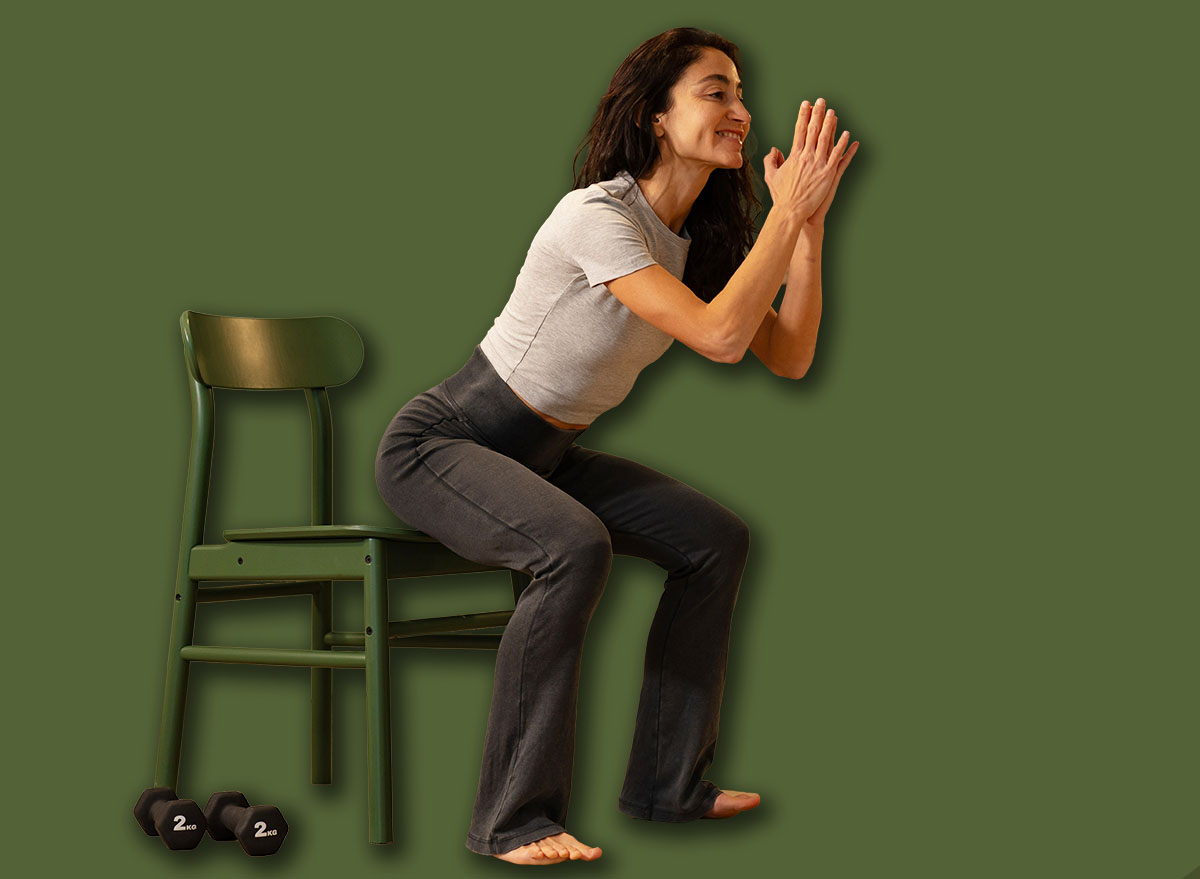
Sit-to-Stand Repeats From Chair
Repeated standing challenges leg endurance more effectively than walking because muscles remain under near-constant tension. Each repetition requires strength, balance, and controlled breathing. Without rest, fatigue accumulates quickly, especially in the quads and glutes.
This exercise mirrors daily movement patterns, making endurance gains immediately noticeable in real life. It appears in nearly all senior strength and rehab programs, making demonstrations easy to find.
How to Do It
- Sit near the front of a chair
- Stand fully without using hands
- Lower slowly with control
- Repeat continuously.
Standing Heel Raises With Pause
Calf endurance plays a major role in prolonged standing and walking. These muscles support circulation and balance, yet they fatigue quietly when endurance drops. Adding a pause at the top increases time under tension and reveals stamina limitations quickly.
Without rest between sets, this exercise challenges both muscular and circulatory endurance. It appears widely in balance, rehab, and senior fitness videos.
How to Do It
- Stand holding light support
- Lift heels slowly
- Pause briefly at the top
- Lower with control.
Standing Overhead Reach With Core Control
Endurance isn’t limited to the legs. This movement challenges posture, shoulder stamina, and breathing coordination after lower-body fatigue sets in. Raising the arms overhead increases cardiovascular demand while forcing the core to stabilize the torso.
Finishing strong here indicates top-tier endurance because posture and breathing often fail under accumulated fatigue. This movement appears frequently in mobility and posture routines for older adults.
How to Do It
- Stand tall with feet planted
- Raise arms overhead slowly
- Lower under control
- Maintain steady breathing.