5 Nightly Stretches That Loosen Tight Hips Faster Than Foam Rolling After 60
By nighttime, hip stiffness tends to make simple movement feel clunky. You stand up from the couch, take a few steps, and feel the tightness around your pelvis before the rest of your body catches up. Foam rolling can help you feel looser for a while. Stretching gives your hips a slower, more direct chance to open up before bed.
The pace matters here. A nightly routine should feel calm enough to repeat, especially after 60. You’re giving your hips a few focused minutes at a time when your body is already slowing down.
Good mobility work doesn’t have to feel like a chore. These five stretches hit the areas that tend to keep hips feeling locked up, from the front of the pelvis to the inner thighs. Use them four to six nights per week, hold each position gently, and breathe as you relax into the stretch.
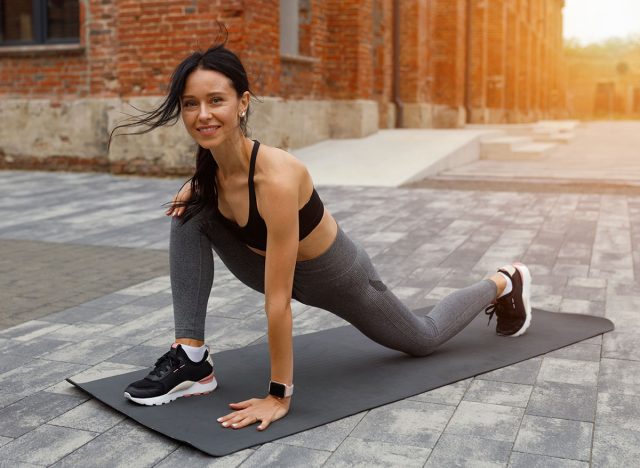
Half-Kneeling Hip Flexor Stretch
Sitting and shorter steps can leave the front of the hip feeling stuck by the end of the day. The half-kneeling hip flexor stretch targets that area with a position you can adjust easily. Keep the stretch gentle and stay tall through your torso. You should feel the front of the back hip open without forcing the position.
Muscles Stretched: Hip flexors and quads.
How to Do It
- Kneel on one knee with your other foot planted in front of you.
- Place a folded towel under your back knee if needed.
- Stand tall through your torso.
- Gently shift your hips forward.
- Hold the stretch while breathing slowly.
- Switch sides and repeat.
Recommended Sets and Reps: Hold for 20 to 40 seconds per side. Perform 1 to 2 rounds.
Best Variations: Standing hip flexor stretch, couch stretch, supported half-kneeling stretch.
Form Tip: Keep your ribs stacked over your hips so the stretch stays in the front of the hip.
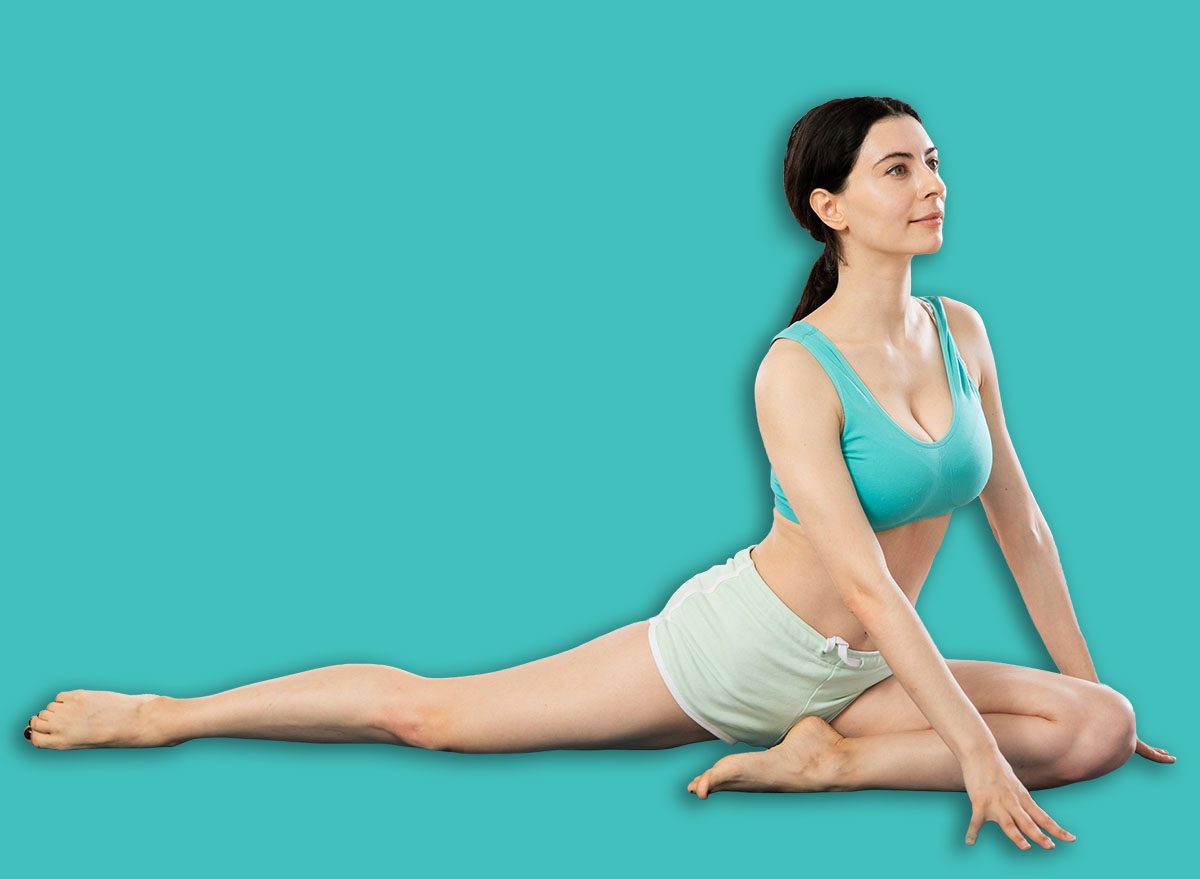
Pigeon Stretch
Pigeon is the stretch people usually feel right away, especially through the glutes and outer hip. It can help when the back or side of the pelvis feels tight after a long day. Use a pillow or folded blanket if the floor feels too aggressive. A supported version will usually work better than trying to sink into a position your hips are fighting.
Muscles Stretched: Glutes and outer hips.
How to Do It
- Start on your hands and knees.
- Bring one knee forward toward the same-side wrist.
- Let your shin angle across your body.
- Extend your opposite leg behind you.
- Lower your hips toward the floor or onto a pillow.
- Hold the stretch, then switch sides.
Recommended Sets and Reps: Hold for 20 to 45 seconds per side. Perform 1 to 2 rounds.
Best Variations: Figure-four stretch, elevated pigeon stretch, seated figure-four stretch.
Form Tip: Use support under your hip if the stretch feels too sharp or uneven.
Standing Forward Fold
A forward fold gives the back of the hips and legs a simple way to relax at night. Keep the knees soft and let your upper body hang without trying to reach a perfect position. The stretch should feel easy enough to breathe through. If your hamstrings feel guarded, bend your knees more and let the tension settle gradually.
Muscles Stretched: Hamstrings, glutes, and lower back.
How to Do It
- Stand with your feet about hip-width apart.
- Soften your knees.
- Fold forward from your hips.
- Let your arms hang toward the floor.
- Hold the stretch while breathing slowly.
- Rise back up with control.
Recommended Sets and Reps: Hold for 20 to 40 seconds. Perform 1 to 2 rounds.
Best Variations: Seated forward fold, supported forward fold, wide-stance forward fold.
Form Tip: Bend your knees as much as needed so the stretch feels comfortable through the back of your legs.
Alternating Shin Box
Hip rotation tends to get ignored until the floor starts feeling uncomfortable. Alternating shin boxes bring that rotation back in with slow, supported movement. Keep your hands behind you if sitting tall feels tough, and use a smaller range until the switch from side to side feels smoother. This should feel controlled, not like you’re wrestling your hips into place.
Muscles Stretched: Hips and glutes.
How to Do It
- Sit on the floor with your knees bent.
- Place your feet wider than your hips.
- Drop both knees toward one side.
- Pause in the shin box position.
- Lift your knees back through the center.
- Drop them toward the other side and continue alternating.
Recommended Sets and Reps: Perform 6 to 10 slow reps per side.
Best Variations: Hands-supported shin box, seated hip switches, smaller-range shin box.
Form Tip: Keep your hands behind you for support if sitting tall feels difficult.
Seated Butterfly Stretch
The butterfly stretch is a good place to finish because it lets the inner thighs relax without much setup. Sit on a folded blanket if your lower back rounds right away. Bring your feet a little farther forward if the stretch feels too sharp. Once you find a comfortable position, slow your breathing and let the hips settle.
Muscles Stretched: Inner thighs and hips.
How to Do It
- Sit tall on the floor.
- Bring the soles of your feet together.
- Let your knees fall out to the sides.
- Hold your feet or ankles.
- Sit tall and breathe slowly.
- Hold the stretch without bouncing.
Recommended Sets and Reps: Hold for 30 to 60 seconds. Perform 1 to 2 rounds.
Best Variations: Supported butterfly stretch, seated on a pillow, butterfly stretch with feet farther forward.
Form Tip: Sit on a folded blanket if your lower back rounds too much.
How to Make Your Hips Feel Looser at Night
A good nightly stretch routine should help your body downshift. Tight hips after 60 usually loosen more reliably when the stretches feel calm, repeatable, and easy to fit into the evening. You don’t need to push hard to make progress. Gentle holds, slow breathing, and a few minutes of consistent practice can help your hips feel less guarded over time. Keep the routine close to bedtime, and let it fit into the same rhythm as brushing your teeth or setting out clothes for the next morning.
- Keep the effort mild: Aim for a stretch you can breathe through without tensing up.
- Use pillows or folded towels: Support makes floor stretches feel much more approachable.
- Move first if you feel stiff: A short walk around the house can make the stretches feel better.
- Stay consistent for a few weeks: Hip mobility improves with repetition, not one aggressive session.
- Avoid forcing range: A smaller stretch you can relax into will serve you better than pushing too far.
- Pair it with a calmer evening routine: Less screen time, lighter movement, and steady sleep habits can help your body feel less tight overall.
References
- Satariano, William A et al. “Mobility and aging: new directions for public health action.” American journal of public health vol. 102,8 (2012): 1508-15. doi:10.2105/AJPH.2011.300631
- Ferrucci, Luigi et al. “Age-Related Change in Mobility: Perspectives From Life Course Epidemiology and Geroscience.” The journals of gerontology. Series A, Biological sciences and medical sciences vol. 71,9 (2016): 1184-94. doi:10.1093/gerona/glw043