The 7-Minute Standing Routine That Trims Belly Overhang After 60, According to a Trainer
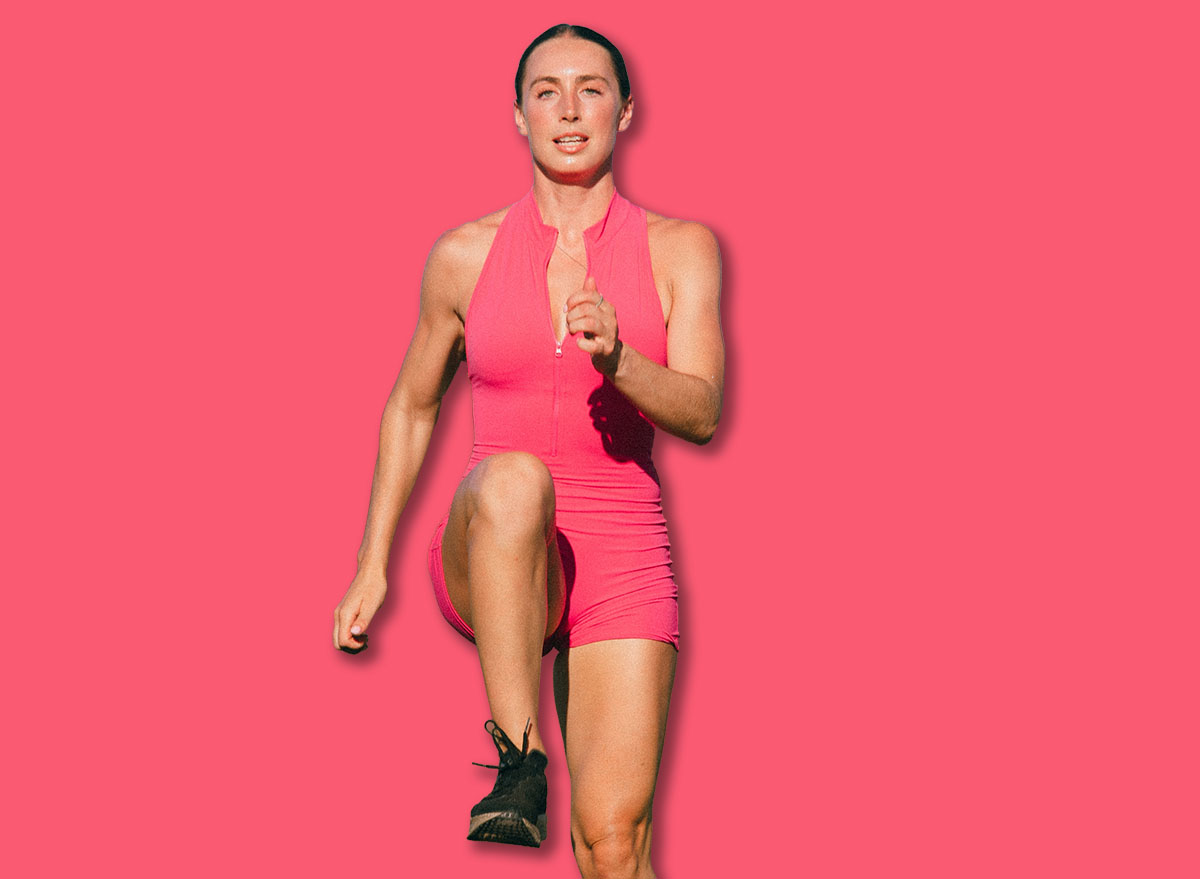
Belly overhang after 60 can make people think they need longer workouts or endless ab circuits. A short standing routine can still do plenty when it gets your legs, arms, and core working together from the first minute.
With clients over 60, I use short routines like this when the main hurdle is follow-through. Seven minutes feels doable, the exercises are easy to remember, and the standing setup keeps the workout practical for mornings, lunch breaks, or any pocket of time that opens up.
You’ll pair one full-body strength move with one standing core move, then repeat that combo for three rounds. Keep the pace steady, use the extra minute for quick resets, and let the final round feel like your strongest one.
The 7-Minute Standing Belly Overhang Routine

What you need: A pair of light dumbbells and enough space to move safely. If you’re new to the squat-to-press, start with bodyweight or one dumbbell held at your chest. This routine takes seven minutes, including transitions and quick rest breaks.
The Routine:
- Dumbbell Squat to Press: 3 rounds of 45 seconds
- Standing Cross-Body Knee Drive: 3 rounds of 45 seconds
Directions
Set a timer for seven minutes. Perform the dumbbell squat-to-press for 45 seconds, then take 15 seconds to switch. Perform the standing cross-body knee drive for 45 seconds, then take 15 seconds to reset.
Repeat that pairing for three total rounds. Use the extra minute for short rest breaks between rounds or whenever your breathing needs a quick reset. Keep moving with control and choose a pace you can hold through the full routine. Read on for the detailed instructions.
Dumbbell Squat to Press
The dumbbell squat to press works well in a short belly-overhang routine because it brings more total muscle into the session. Your legs drive the squat, your upper body finishes the press, and your core helps keep the movement organized from top to bottom. That full-body demand helps raise the effort quickly, which matters when you only have seven minutes. It’s also easy to scale with lighter dumbbells, one dumbbell, or bodyweight.
How to do it:
- Stand with your feet about shoulder-width apart.
- Hold a dumbbell in each hand at shoulder height.
- Lower into a controlled squat.
- Press through your feet to stand.
- Press the dumbbells overhead as you reach the top.
- Lower the weights back to your shoulders and repeat.
Best Variations: Bodyweight squat to reach, goblet squat to press, single-dumbbell squat to press.
Form Tip: Let your legs drive the movement before your arms finish the press.
Standing Cross-Body Knee Drive
The standing cross-body knee drive gives your core a clear job while keeping the workout upright and energetic. Each knee drive brings the abs and obliques into the movement, and the standing position adds balance practice without making the exercise high impact. This move helps the routine keep its pace after the squat-to-press, which makes the whole seven minutes feel more productive. It’s a strong choice after 60 because you can make it gentle, moderate, or more athletic with a simple change in speed.
How to do it:
- Stand tall with your feet about hip-width apart.
- Place your hands behind your head or hold them in front of your chest.
- Brace your core.
- Drive your right knee up toward your left side.
- Lower your foot with control.
- Repeat on the other side and continue alternating.
Best Variations: Standing marches, slower cross-body knee drives, supported knee drives with one hand on a chair.
Form Tip: Stay tall as your knee lifts so the movement doesn’t turn into a forward crunch.
Best Lifestyle Tips for Trimming Belly Overhang After 60

A seven-minute routine can help you build momentum, especially when it becomes part of a larger daily rhythm. Belly overhang changes when your workouts, meals, sleep, stress, and daily movement start working in the same direction. You don’t need to overhaul everything at once. Small habits done consistently tend to make the biggest difference because they’re easier to repeat when life gets busy. Use this routine as the spark, then support it with choices that help your body burn more energy, preserve muscle, and recover well.
- Walk after meals: Even 10 minutes after breakfast or dinner can help increase daily movement and support better blood-sugar control.
- Build breakfast around protein: Eggs, Greek yogurt, cottage cheese, protein smoothies, or lean leftovers can help keep you full and support muscle.
- Drink water early: Start the day with a glass of water so hydration doesn’t become something you chase later.
- Keep high-fiber foods in rotation: Fruit, vegetables, beans, oats, and whole grains can help meals feel more satisfying.
- Protect your sleep: Poor sleep can make cravings, hunger, and low energy harder to manage the next day.
- Limit mindless evening snacks: A planned snack is fine. Grazing out of habit can quietly push calories higher than expected.
- Keep strength work in the week: Short routines like this help preserve muscle, which supports body composition as you age.
Trimming belly overhang after 60 takes steady effort, and that’s exactly why short routines can work so well. Seven focused minutes give you a clear starting point, and the lifestyle habits around it help that work show up over time.
References
- Kolnes, Kristoffer Jensen et al. “Effect of Exercise Training on Fat Loss-Energetic Perspectives and the Role of Improved Adipose Tissue Function and Body Fat Distribution.” Frontiers in physiology vol. 12 737709. 24 Sep. 2021, doi:10.3389/fphys.2021.737709
- Cox, Carla E. “Role of Physical Activity for Weight Loss and Weight Maintenance.” Diabetes spectrum : a publication of the American Diabetes Association vol. 30,3 (2017): 157-160. doi:10.2337/ds17-0013