4 Standing Exercises That Firm Arm Jiggle Faster Than Gym Sessions After 50
Loose-looking skin around the upper arms often becomes more noticeable after 50 as muscle mass gradually declines and the body changes where it stores fat. Many people respond by spending more time in the gym performing isolated curls and triceps exercises, hoping more repetitions will quickly transform their arms. As a trainer, I’ve found that a better approach involves training the shoulders, triceps, chest, upper back, and core together through functional standing movements. Building more muscle throughout the upper body creates stronger, more capable arms while improving the way your entire body moves.
You don’t need an hour-long gym session to challenge your arms effectively. Standing exercises force your upper body to work while your legs and core help stabilize your position, creating greater total-body involvement with every repetition. That combination also improves posture, coordination, and balance, which often makes the arms look more defined simply because you stand taller and carry yourself with greater confidence. The goal involves building usable strength rather than chasing an endless pump from isolated exercises.
I’ve coached adults over 50 for years, and I’ve seen the biggest changes come from people who consistently perform simple movements with excellent technique. These four exercises target the muscles responsible for firmer, stronger arms while also training the body as a connected unit. They require very little equipment and fit easily into a morning routine, lunch-break workout, or quick evening session. Perform them consistently, focus on controlled repetitions, and you’ll give your upper body a much better reason to maintain muscle as you age.
Standing Overhead Press
The overhead press deserves a place in almost every upper-body routine because it trains the shoulders and triceps together while forcing the core to stabilize your torso. I especially like this standing variation because your entire body contributes to keeping you balanced as you press. Stronger shoulders provide the foundation for nearly every reaching and lifting task you perform throughout the day. As your pressing strength improves, everyday activities such as placing dishes on a high shelf or lifting a light box overhead become easier. Use light dumbbells or resistance bands at first and prioritize smooth, controlled movement over heavy resistance.
How to Do It
- Stand with your feet about shoulder-width apart.
- Hold light dumbbells at shoulder height.
- Tighten your core and keep your chest lifted.
- Press both weights overhead.
- Stop before locking your elbows aggressively.
- Lower slowly to shoulder height.
- Perform 10 to 12 repetitions.
Standing Resistance Band Row
Firm-looking arms require strong pulling muscles just as much as strong pushing muscles. Resistance band rows target the upper back, rear shoulders, and biceps while encouraging you to keep your chest open and shoulders properly positioned. I frequently use rows with clients who want better-looking arms because stronger upper-back muscles improve posture and create a more balanced upper body. The movement also counteracts the rounded posture that often develops from years of sitting at desks, driving, or looking down at screens. Every controlled pull gives your arms and back a reason to stay strong.
How to Do It
- Secure a resistance band at about chest height.
- Stand tall while holding one end in each hand.
- Keep your arms extended in front of you.
- Pull your elbows backward.
- Squeeze your shoulder blades together.
- Pause briefly.
- Return your hands forward with control.
- Complete 12 to 15 repetitions.
Standing Triceps Kickback
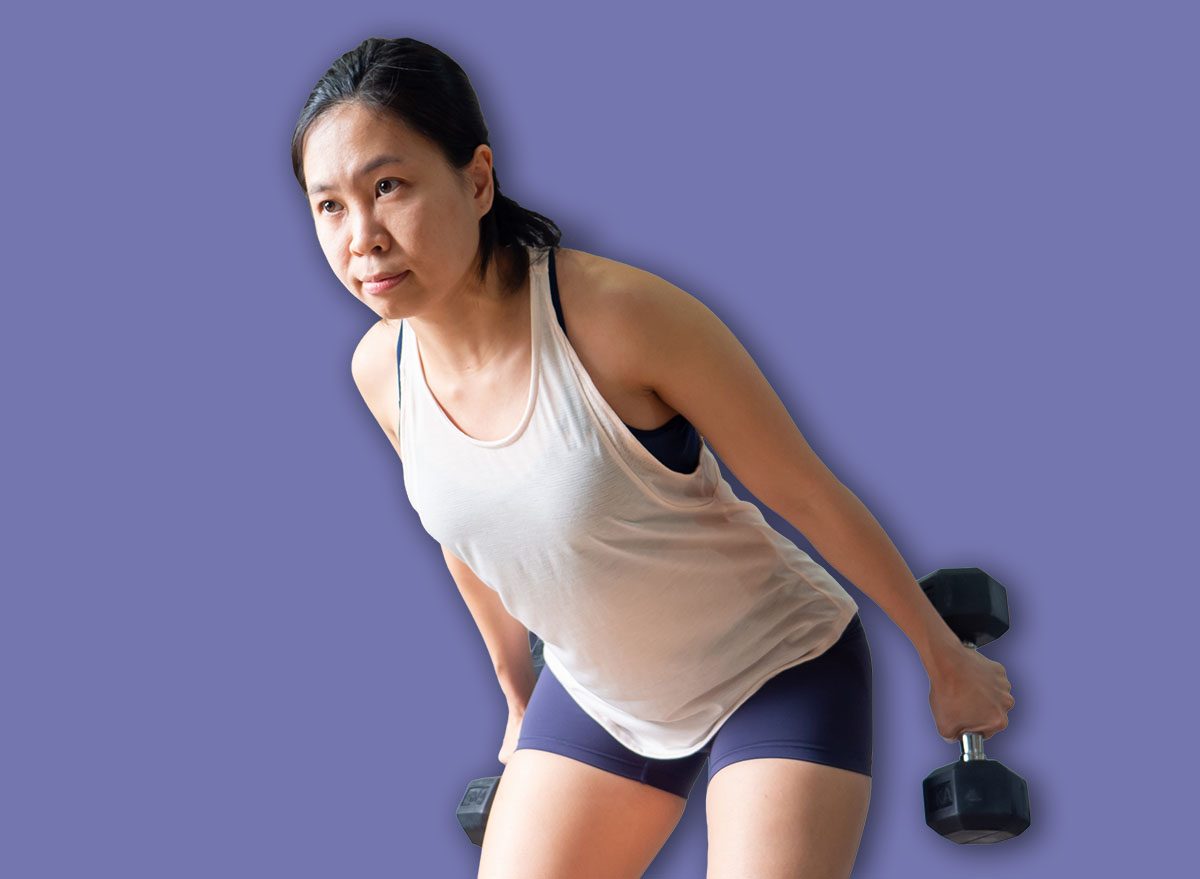
The triceps make up a significant portion of your upper arm, so strengthening them deserves plenty of attention when your goal involves firmer-looking arms. This standing variation allows you to isolate the triceps without requiring a complicated machine or heavy load. I want clients to focus on keeping their upper arms still while extending the elbows because swinging the weights shifts work away from the target muscles. Slow repetitions create much more productive tension than rushing through a long set. As your triceps grow stronger, pushing, lifting, and carrying tasks also become easier.
How to Do It
- Stand with your feet hip-width apart.
- Hold a light dumbbell in each hand.
- Hinge forward slightly while keeping your back flat.
- Pull your elbows behind your body.
- Straighten your arms behind you.
- Squeeze the triceps at the end of the movement.
- Bend your elbows slowly.
- Perform 10 to 15 repetitions.
Standing Cross-Body Punches
I like finishing with cross-body punches because they combine arm endurance with core stability and gentle rotational movement. Every punch challenges the shoulders and triceps while your abdominal muscles stabilize your torso and your legs keep you grounded. Unlike an isolated arm exercise, this movement keeps multiple muscle groups working continuously, making it an excellent way to finish a short workout. The steady rhythm also raises your heart rate without requiring complicated equipment. Focus on control rather than speed, and you’ll feel your shoulders and arms working hard by the end of the set.
How to Do It
- Stand with your feet shoulder-width apart.
- Keep your knees slightly bent.
- Bring your hands near your chest.
- Punch one arm across your body.
- Return your hand to the starting position.
- Alternate sides.
- Keep your core engaged throughout.
- Continue for 45 to 60 seconds.