The 10-Minute Wall Routine That Rebuilds Knee Strength After 60
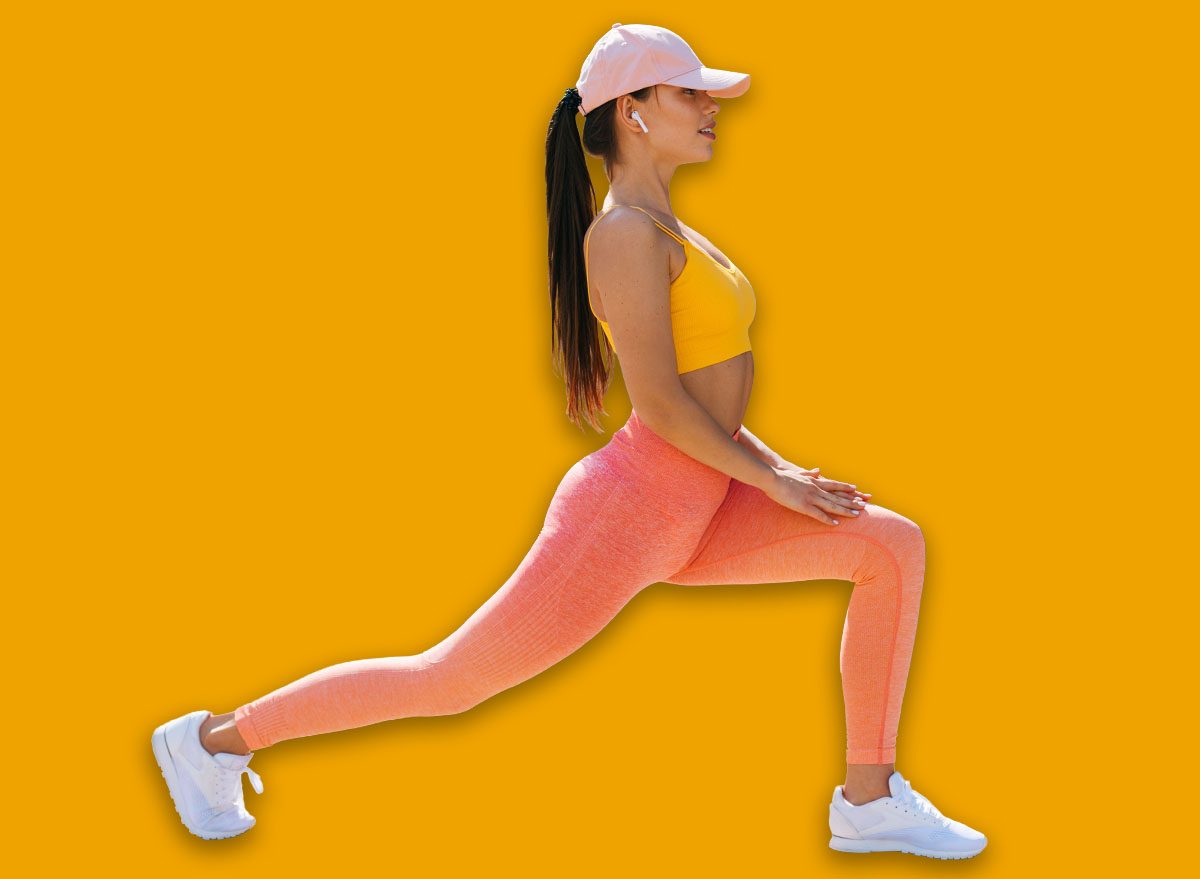
Knee strength after 60 often improves when the workout feels steady from the first minute. A wall helps you stay balanced, gives your body a clear reference point, and makes lower-body work feel easier to repeat at home.
The first thing I look for with knee-strength training is confidence in the movement. If someone can bend, hold, step, and rise with control, the knees usually start feeling more supported. The wall helps build confidence in your movement because it lets your legs work while your body has something solid nearby.
This 10-minute routine uses simple wall-supported exercises to train the muscles around the knees. You’ll build strength through squats, holds, step-backs, leg extensions, and calf raises in a format that’s easy to follow.
The 10-Minute Wall Knee Strength Routine
What you need: A clear wall, supportive shoes, and enough space to step back safely. You can place a sturdy chair nearby if you want extra support during the standing moves. This routine takes 10 minutes and uses five wall-supported exercises performed for two rounds.
The Routine:
- Wall Squat: 2 rounds of 40 seconds
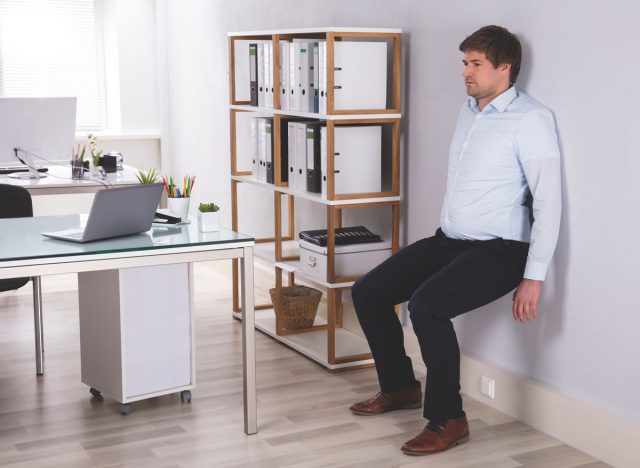
- Wall Sit Hold: 2 rounds of 40 seconds
- Wall-Supported Reverse Lunge: 2 rounds of 40 seconds
- Wall-Supported Standing Leg Extension: 2 rounds of 40 seconds
- Wall-Supported Calf Raise: 2 rounds of 40 seconds
Directions
Set a timer for 10 minutes. Perform each exercise for 40 seconds, then use 20 seconds to switch positions and reset. Move through all five exercises, then repeat the same sequence one more time.
Keep your range of motion comfortable. The goal is smooth movement, steady pressure through your feet, and enough control that each round feels better organized than the last. Read on for the detailed instructions.
Wall Squat
The wall squat helps rebuild knee strength by training your legs through a controlled bend-and-stand pattern. Your quads and glutes do most of the work, while the wall gives your body a steady reference point. This makes it easier to practice squatting with better control and less hesitation. For many people after 60, that confidence is what helps leg strength start showing up in daily movement.
How to do it:
- Stand with your back against a wall.
- Walk your feet a short step forward.
- Keep your feet about shoulder-width apart.
- Bend your knees and slide a few inches down the wall.
- Press through your feet to stand tall again.
- Repeat at a steady pace.
Best Variations: Smaller-range wall squat, slow wall squat, wall squat with a pause.
Form Tip: Keep the squat shallow enough that your knees feel strong through the whole rep.
Wall Sit Hold
The wall sit hold gives your thighs steady work, which can help the knees feel more supported over time. Holding the position builds strength and endurance in the muscles that help you stand, climb steps, and control lowering movements. It’s a useful part of this routine because the wall keeps your position stable while your legs handle the effort. Start higher on the wall, then build the hold as your legs get stronger.
How to do it:
- Stand with your back against a wall.
- Walk your feet forward slightly.
- Slide down until your knees bend to a comfortable angle.
- Keep your back against the wall.
- Hold the position while breathing steadily.
- Press through your feet to stand back up.
Best Variations: Higher wall sit, shorter wall sit hold, wall sit with heel raises.
Form Tip: Keep your knees comfortable and avoid sinking too low early on.
Wall-Supported Reverse Lunge
The wall-supported reverse lunge trains one leg at a time, which helps rebuild strength evenly after 60. The front leg gets focused work as you step back and return to standing. That single-leg demand helps the muscles around the knee become stronger and more coordinated. The wall support keeps the movement calm enough to practice with confidence.
How to do it:
- Stand beside a wall with one hand lightly touching it.
- Stand tall with your feet under your hips.
- Step one foot back.
- Bend both knees to a comfortable depth.
- Press through your front foot to return to standing.
- Alternate sides or switch halfway through the interval.
Best Variations: Step-back taps, smaller-range reverse lunges, supported split squats.
Form Tip: Keep your front foot planted as you return to standing.
Wall-Supported Standing Leg Extension
The wall-supported standing leg extension gives the quadriceps direct work, which matters for knee strength after 60. Stronger quads help the knee feel steadier when you walk, stand, and move up and down stairs. This version keeps the setup simple because the wall helps with balance while the working leg focuses on control. It’s a good way to train the front of the thigh in a home routine.
How to do it:
- Stand beside a wall and touch it lightly with one hand.
- Shift your weight onto one leg.
- Lift the opposite knee in front of you.
- Straighten the lifted leg as much as you can control.
- Bend the knee again.
- Continue for half the interval, then switch sides.
Best Variations: Smaller-range leg extension, seated leg extension, banded standing leg extension.
Form Tip: Keep the lifted thigh steady while the lower leg moves.
Wall-Supported Calf Raise
Wall-supported calf raises strengthen the lower legs, which play a bigger role in knee comfort than many people realize. Strong calves help with walking, balance, and push-off, and they also support better ankle control. That can make the knee feel more stable during standing movement. The wall keeps the exercise simple enough to repeat often.
How to do it:
- Stand facing a wall.
- Place both hands lightly on the wall.
- Set your feet about hip-width apart.
- Press through the balls of your feet.
- Lift your heels as high as you can.
- Lower your heels with control and repeat.
Best Variations: Smaller-range calf raises, slow calf raises, single-leg supported calf raises.
Form Tip: Lift through your big toe and second toe so your ankles stay aligned.
How to Keep Your Knees Feeling Stronger
Knee strength builds through steady practice and smart recovery. This wall routine gives your legs focused work, but the rest of your day still matters. Walking, protein, hydration, and comfortable daily movement all support the muscles around your knees. Give the routine a few weeks before changing it so you can feel the reps get smoother. Progress may show up first as less hesitation, better control, or more confidence when you move through stairs and uneven ground.
- Start with a higher wall sit: A smaller knee bend can still build strength when you hold it well.
- Use the wall lightly: Let it help your balance while your legs do the work.
- Keep walking in your week: Daily steps help circulation, stamina, and confidence on your feet.
- Support muscle with protein: Stronger knees need stronger muscles around them.
- Progress one piece at a time: Add a few seconds, a little more range, or another round once the routine feels steady.
- Stop for sharp pain: Muscle effort is fine, but sharp knee pain deserves attention from a qualified professional.
References
- Sadeghi, Alireza et al. “Effectiveness of muscle strengthening exercises on the clinical outcomes of patients with knee osteoarthritis: A randomized four-arm controlled trial.” Caspian journal of internal medicine vol. 14,3 (2023): 433-442. doi:10.22088/cjim.14.3.433
- Küçük, Hamza et al. “Strength training intervention for adult individuals with knee osteoarthritis: Establishing fidelity.” Frontiers in physiology vol. 16 1583153. 18 Jun. 2025, doi:10.3389/fphys.2025.1583153