5 Home Exercises That Firm Arm Jiggle Faster Than Gym Sessions After 60

Arm softness and loose skin around the upper arms become increasingly common after 60. Muscle loss, reduced activity, and weaker posture all contribute to shrinking triceps and less firm-looking arms over time. Many adults believe long gym sessions provide the only solution, but crowded workouts and heavy machines often create joint discomfort that limits consistency. Firmer arms come from controlled muscular tension, better upper-body coordination, and regular movement far more than occasional intense training sessions.
Home exercises work especially well because they allow the upper body to move naturally without the pressure of heavy equipment or awkward machine angles. Standing and bodyweight movements strengthen the triceps, shoulders, chest, and upper back together while improving posture at the same time. That full-body involvement helps tighten the arms while supporting healthier shoulder mechanics and better movement quality during daily life. Many adults over 60 also stick with home workouts longer because the exercises feel safer, more approachable, and easier on the joints.
The five exercises below strengthen the muscles responsible for firmer, stronger-looking arms while improving posture and upper-body endurance. Each movement creates steady muscular tension without requiring heavy weights or aggressive impact. Practice them consistently, and your arms will start feeling tighter, stronger, and more supported during everyday activity.
Wall Push-Ups
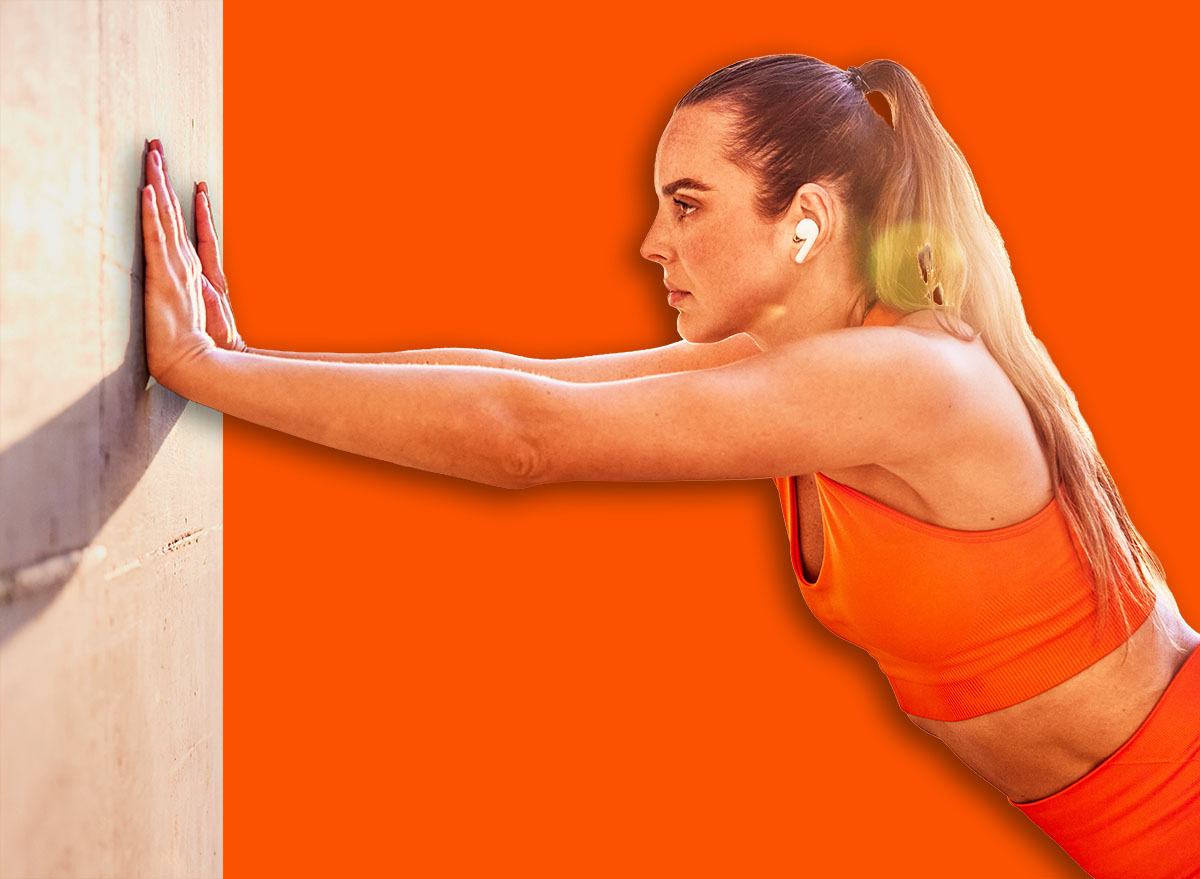
Wall push-ups strengthen the chest, shoulders, triceps, and core simultaneously while remaining extremely joint-friendly. Many adults avoid push-up movements because floor versions feel too difficult or stressful on the wrists and shoulders. The wall angle reduces strain while still forcing the arms to work against bodyweight resistance through a controlled range of motion. This movement also improves posture because the upper back and core stabilize continuously throughout every repetition. Adults over 60 often notice stronger pushing strength and firmer upper arms after practicing wall push-ups consistently. Slow controlled movement creates much more muscular activation than rushed repetitions with poor form.
How to Do It
- Stand facing a wall
- Place your hands against the wall at shoulder height
- Step your feet backward slightly
- Tighten your core gently
- Bend your elbows slowly
- Lower your chest toward the wall
- Press back to the starting position
- Perform 10 to 15 repetitions.
Standing Tricep Pressbacks
Few exercises target arm jiggle more directly than standing tricep pressbacks. This movement forces the triceps to contract repeatedly while the shoulders and upper back stabilize the motion. Many adults lose firmness in the back of the arms because the triceps stop receiving enough muscular tension during everyday movement. Pressbacks restore that missing activation without requiring heavy dumbbells or complicated equipment. The standing position also encourages better posture and core engagement throughout the exercise. Performed slowly, the movement creates an intense contraction through the back of the arms that quickly wakes up weakened muscles.
How to Do It
- Stand with feet shoulder-width apart
- Slightly bend your knees
- Hinge forward slightly at the hips
- Bend your elbows beside your body
- Press your hands backward slowly
- Straighten your arms fully
- Squeeze the triceps at the back
- Return with control
- Complete 12 to 15 repetitions.
Arm Circles
Arm circles strengthen the shoulders and upper arms through continuous muscular engagement instead of isolated heavy lifting. Small controlled circles force the triceps and shoulder stabilizers to remain active for extended periods, improving endurance and muscle tone simultaneously. Many adults underestimate this exercise because the movement appears simple, but the sustained tension quickly creates significant upper-body fatigue. The standing position also strengthens posture and upper-back stability while the arms remain elevated. Adults over 60 often notice improved shoulder mobility and stronger arm endurance after practicing controlled arm circles consistently. The key comes from smooth, steady movement instead of large, fast swings.
How to Do It
- Stand tall with your arms extended outward
- Keep your shoulders relaxed
- Make small forward circles
- Maintain controlled movement
- Continue for 20 to 30 seconds
- Reverse the direction slowly
- Keep your chest lifted
- Repeat for another 20 to 30 seconds.
Overhead Reach Pull-Downs
Overhead reach pull-downs strengthen the triceps, shoulders, and upper back while improving posture and shoulder mobility. Many adults develop rounded shoulders and weak upper arms from years of sitting and reduced overhead movement. This exercise reverses that pattern by forcing the upper body to stabilize while the arms move through a large controlled range. The pulling action activates the muscles surrounding the shoulder blades while strengthening the back of the arms during extension. Adults over 60 often feel taller and stronger through the upper body after practicing overhead movement consistently. The repeated reaching motion also improves flexibility and coordination throughout the shoulders and upper back.
How to Do It
- Stand tall with feet hip-width apart
- Raise both arms overhead
- Tighten your core gently
- Pull your elbows downward toward your sides
- Squeeze your shoulder blades together
- Extend your arms upward again
- Move slowly with control
- Perform 12 to 15 repetitions.
RELATED: 5 Daily Exercises That Firm Muffin Top Faster Than Crunches After 60
Chair Dips
Chair dips challenge the triceps through bodyweight resistance while strengthening the shoulders and chest at the same time. Many gym machines isolate the arms in unnatural positions that fail to improve practical pushing strength. Chair dips train the triceps through a natural movement pattern that carries directly into daily activity. Adults over 60 benefit greatly from controlled bodyweight training because it strengthens coordination and stability alongside muscular endurance. The movement also helps improve confidence during pushing tasks like standing up from chairs or supporting bodyweight during movement transitions. Slow controlled repetitions create excellent muscular tension through the back of the arms without requiring complicated equipment.
How to Do It
- Sit near the edge of a sturdy chair
- Place your hands beside your hips
- Slide your hips slightly forward
- Bend your elbows slowly
- Lower your body a few inches
- Press back upward with control
- Keep your chest lifted
- Perform 8 to 12 repetitions.