5 Wall Exercises That Restore Lower-Body Strength Faster Than Squats After 60

Lower-body strength becomes increasingly important after 60 because the legs and hips support nearly every movement throughout the day. Walking, climbing stairs, standing from chairs, carrying groceries, and maintaining balance all depend on strong muscles through the quads, glutes, calves, and core. Many adults immediately turn to traditional squats, hoping to rebuild strength, but deep squatting movements often place uncomfortable pressure on aging knees, hips, and lower backs. That discomfort usually reduces consistency and limits long-term progress.
Wall exercises create a safer and more controlled way to rebuild lower-body power without forcing excessive joint strain. The wall provides stability and support while allowing the legs to work through smooth strengthening patterns that improve posture, balance, and muscular endurance simultaneously. Many adults over 60 feel more confident performing wall-supported exercises because the body stays stable throughout the movement. Better stability allows stronger muscular engagement without the fear of losing balance or aggravating sensitive joints.
The five wall exercises below strengthen the legs, hips, calves, and stabilizing muscles responsible for better movement and independence after 60. Each movement trains practical lower-body strength while remaining gentle enough for consistent daily practice. Perform them regularly, and your legs will feel stronger, steadier, and more reliable during everyday activity.
Wall Sits
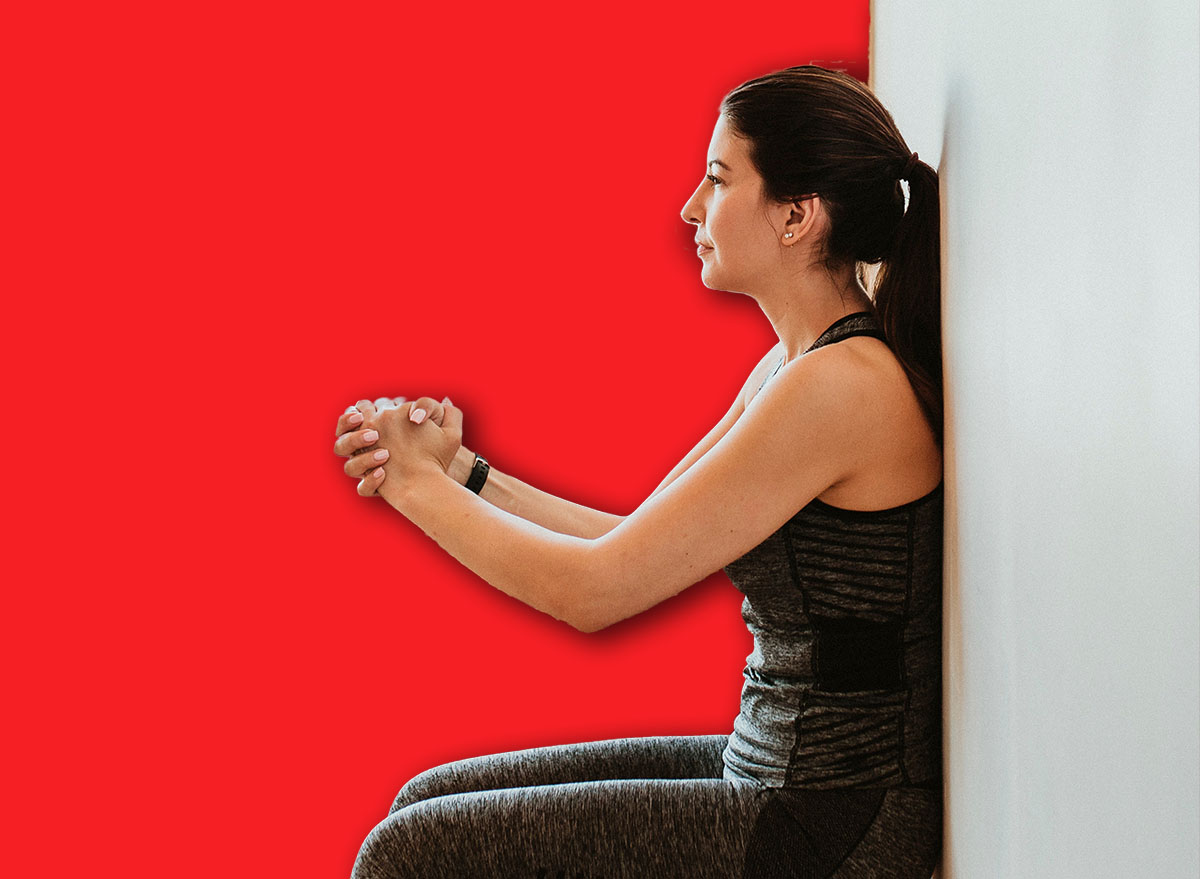
Few exercises build lower-body endurance more effectively than wall sits. This movement forces the quads, glutes, calves, and core to maintain constant muscular tension without requiring repetitive joint motion. Many adults over 60 struggle with leg fatigue because the muscles surrounding the knees and hips lose endurance over time. Wall sits rebuild that endurance while improving posture and stability simultaneously. The wall also supports the spine, allowing the legs to work hard without unnecessary strain on the lower back. Adults often notice stronger walking stamina and easier stair climbing after adding wall sits consistently.
How to Do It
- Stand with your back against a wall
- Slide downward until your thighs approach parallel to the floor
- Keep your knees above your ankles
- Tighten your core gently
- Press your back into the wall
- Hold the position steadily
- Breathe smoothly throughout
- Hold for 20 to 45 seconds.
Wall Calf Raises
Strong calves support walking speed, balance, and lower-leg stability after 60. Weak calf muscles reduce push-off power during walking and place extra stress on the knees and hips during movement. Wall calf raises strengthen the lower legs while improving ankle control and circulation. The wall provides balance support so the calves can focus entirely on controlled muscular contraction. Many adults overlook calf training completely, yet stronger calves often lead to smoother walking mechanics and improved lower-body endurance. Slow controlled repetition creates excellent muscular activation without aggressive joint loading.
How to Do It
- Stand facing a wall
- Place your hands lightly against the wall
- Keep your feet hip-width apart
- Press through the balls of your feet
- Lift your heels upward slowly
- Pause briefly at the top
- Lower with control
- Perform 15 to 20 repetitions.
Wall-Assisted Split Squats
Split squats strengthen the quads, glutes, and hips while improving balance and coordination. Many adults avoid single-leg exercises because they feel unstable during movement, but wall support makes the exercise safer and more approachable. This movement challenges each leg independently, helping correct muscular imbalances that often develop with age and inactivity. The split stance also improves hip mobility and walking mechanics while strengthening the stabilizing muscles surrounding the knees. Adults over 60 often notice stronger balance and smoother movement after adding controlled split squats consistently. The wall allows the body to focus fully on leg strength without fear of falling.
How to Do It
- Stand beside a wall for support
- Step one foot forward and one foot backward
- Keep your chest lifted
- Bend both knees slowly
- Lower under control
- Press through the front heel to rise
- Maintain steady balance throughout
- Perform 10 repetitions per leg.
Wall Marches
Wall marches strengthen the hips, thighs, and deep core muscles while improving balance and coordination. Many adults lose lower-body stability because the muscles responsible for walking mechanics weaken over time. This exercise restores controlled leg drive while forcing the core and standing leg to stabilize continuously. The wall provides support while the hips and abdominal muscles stay active during every repetition. Adults over 60 often feel steadier and more confident during walking after practicing controlled marching drills regularly. The movement also improves posture and lower-body endurance without impact stress on the joints.
How to Do It
- Stand facing a wall
- Place your hands lightly against the wall
- Tighten your core gently
- Lift one knee toward hip height
- Lower slowly with control
- Alternate sides continuously
- Maintain a tall posture
- Perform 20 total marches.
Wall Glute Presses
Strong glutes protect the knees, hips, and lower back during nearly every lower-body movement. Many adults over 60 lose hip strength gradually because the glutes stop activating properly during walking and standing tasks. Wall glute presses restore that activation while improving pelvic stability and lower-body control. The movement also strengthens the muscles responsible for upright posture and smoother walking mechanics. Adults often notice stronger balance and reduced lower-back tightness after adding glute-focused wall exercises consistently. Slow controlled pressure against the wall creates deep muscular engagement without excessive strain on the joints.
How to Do It
- Stand facing a wall
- Place your hands lightly against the wall
- Shift your weight onto one leg
- Extend the opposite leg backward slowly
- Squeeze your glutes at the top
- Lower with control
- Keep your torso upright
- Perform 10 to 12 repetitions per leg.