If You Can Do This Many Squats After 50, Your Leg Strength Is Elite
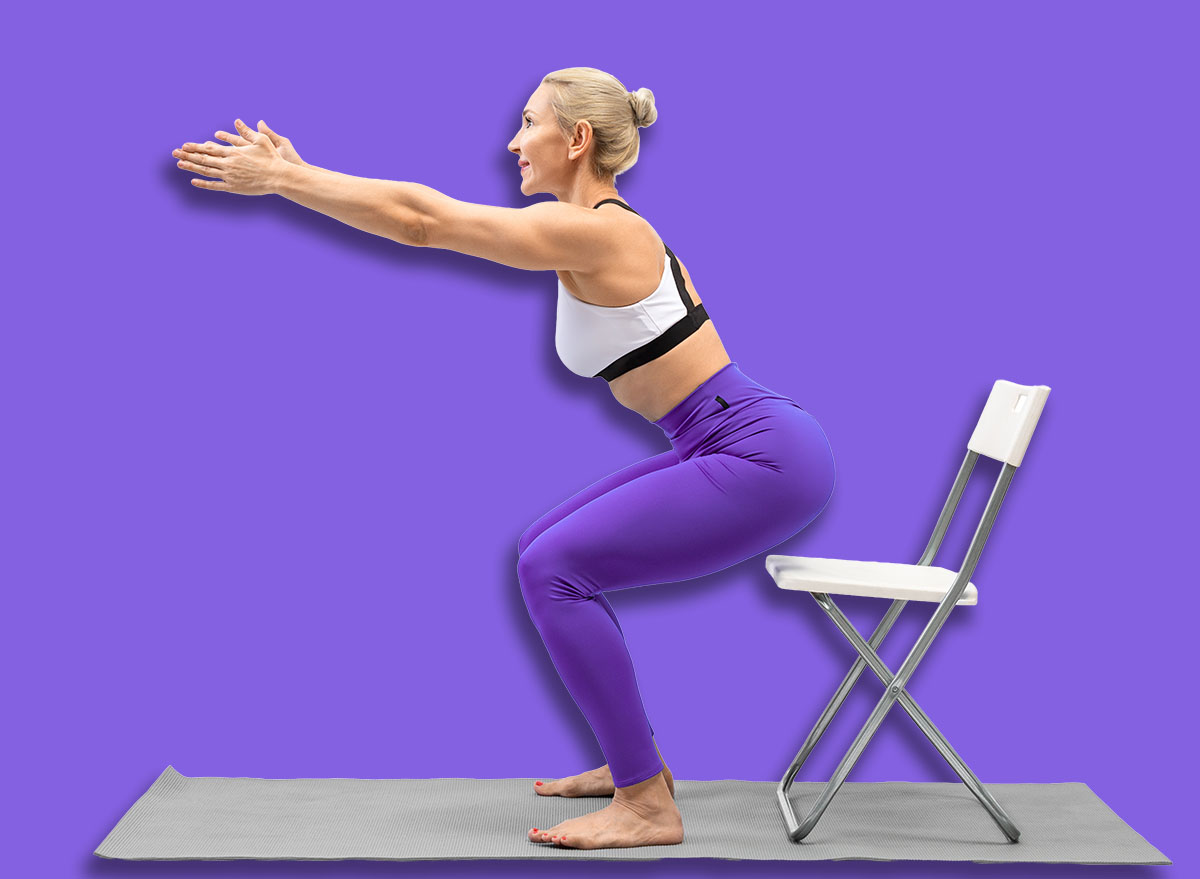

Many fitness enthusiasts include squats in their workout routine, because they activate large muscle groups and are chock-full of benefits. This bodyweight move strengthens your core and lower body while boosting balance, mobility, posture, bone density, and joint health. And that’s only half of it! Squats enhance overall functional strength and give your metabolism a nice little boost. Our point here is that if your goal is to get into excellent shape, you want squats in your arsenal. In fact, we’re here to share the benchmark to strive for that signals your strength is elite.
“Lower-body strength naturally declines with age due to changes in muscle tissue, mobility, and coordination,” explains Kevin Snodgrass, Vivo’s head trainer. The good news: squats, when done with proper form and appropriate load, can help slow or even reverse this decline.”
Why Are Squats a Reliable Indicator of Lower-Body Strength?
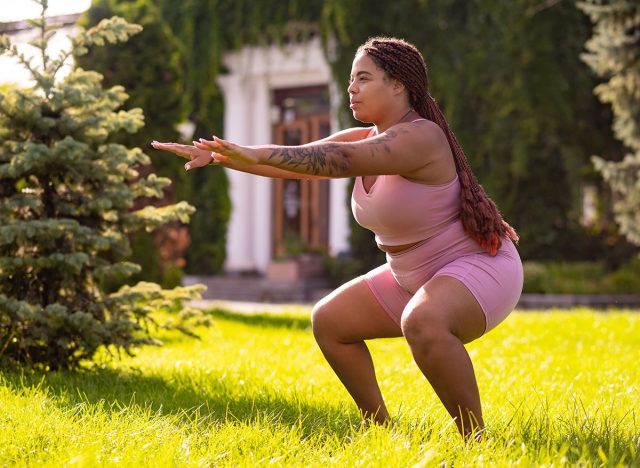
Squats are an excellent indicator of strength in aging adults because, for one, they channel real-life movement.
“Any time we get up off the couch or toilet, rise from a car seat, or stand up from the floor, we’re essentially performing a squat movement pattern. Our ability to perform squats directly translates into improved independence and ease with these real-world activities,” says Snodgrass.
In addition, squats engage every major muscle group in your lower body—the quads, hamstrings, glutes, core, hip, and lower leg muscles.
“Building strength in these muscles doesn’t just improve squat performance. It enhances joint mobility, reduces joint pain from conditions like osteoarthritis, lowers fall risk, and boosts overall lower-body function,” Snodgrass tells us.
And finally, squats promote healthy joints when done properly.
“Difficulty performing squats often highlights reduced strength, limited mobility, and challenges with activities like rising from a chair unassisted,” Snodgrass explains. “Proper squat progressions improve ankle mobility, knee tracking, hip alignment, and core stability—making them one of the most effective movements for maintaining joint health and functional ability.”
There are two main ways you can measure squat strength: load and volume. Below, Snodgrass breaks down each.
Volume: 30-Second Sit-to-Stand Test
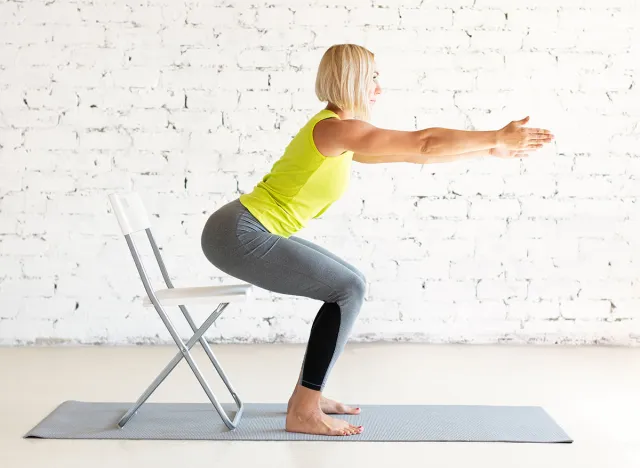
“Part of the Rikli-Jones Senior Fitness Test, this assessment counts how many times someone can rise from and return to a chair (17″) in 30 seconds,” Snodgrass tells us.
This test is very reliable because squat depth is standardized by the height of the chair.
A “very high score” means being able to perform 20+ reps, while “elite performance” means completing 26+ reps.
Load: Barbell Back Squat Standards
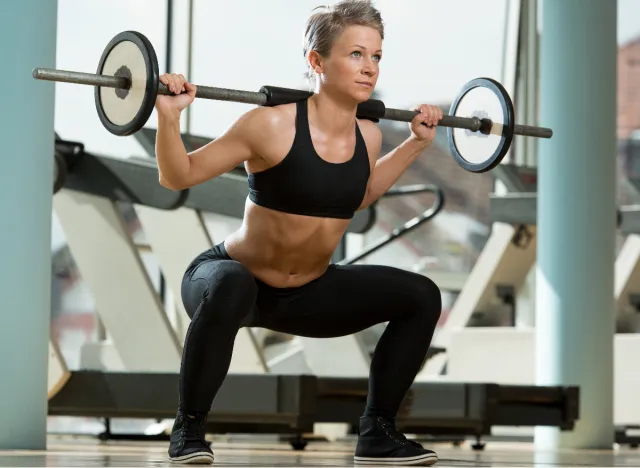
If you’re a regular gym-goer, the benchmarks below are for you.
- Women: 100% of your body weight = extremely strong
- Men: 125% of your body weight = extremely strong
- Elite lifters: 150 to 200% of your body weight (typically the result of years of training)
“Hitting either benchmark—20+ sit-to-stands or a bodyweight squat—signals exceptional real-world strength, mobility, balance, and neuromuscular function,” Snodgrass says.