5 Morning Exercises That Restore Knee Strength Faster Than Gym Workouts After 60
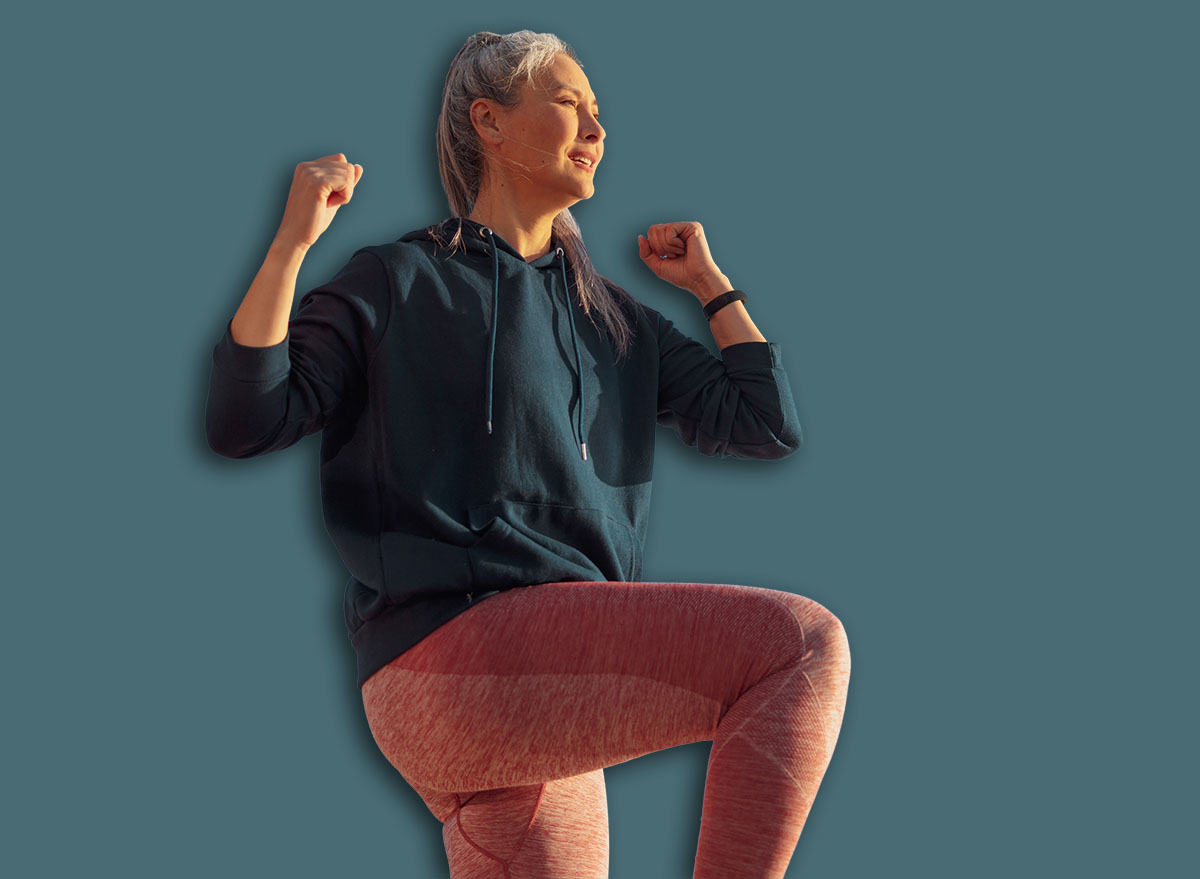
Strong knees help the rest of the day feel easier. They support every step, every trip up the stairs, every walk around the block, and every time you rise from a chair. A focused morning routine gives the legs an early dose of movement and strength, which can make the knees feel more supported before the day really gets moving.
Knee strength is never just about the knee joint itself. The quadriceps attach above and around it; the hamstrings influence how the lower leg moves; the calves cross the joint; and the hips help keep the knee tracking smoothly. Training the muscles that support and cross the knee provides the joint with more support from every direction.
When I work with adults rebuilding knee strength, progression matters as much as exercise choice. Start with a range that feels solid, use support to improve control, and make the movement more challenging only after the basics look smooth. A higher step can become a lower squat. A supported split squat can become a hands-free rep. Small progressions build confidence and strength without rushing the process.
These five morning exercises build that foundation through controlled bending, stepping, single-leg work, calf strength, and hip stability. Use them two to four mornings per week, keep the reps deliberate, and let your knees get stronger one well-executed rep at a time.
Wall Sit
Wall sits train the quadriceps, glutes, hamstrings, and core while giving your knees a steady, supported strength challenge. Holding the position maintains tension in the thighs without requiring much movement, which makes it a great early step for building confidence with knee loading. Start with a higher wall sit and gradually work toward a deeper position as your legs get stronger.
Muscles Trained: Quadriceps, glutes, hamstrings, core.
How to Do It:
- Stand with your back against a wall.
- Walk your feet forward slightly.
- Slide down until your knees bend to a comfortable angle.
- Keep your back supported and your chest lifted.
- Hold the position while breathing steadily.
- Press through your feet to stand back up.
Recommended Sets and Reps: Perform 3 sets of 20 to 40-second holds. Rest for 45 seconds between each set.
Best Variations: Higher wall sits, wall sit marches, ball-squeeze wall sits.
Form Tip: Keep your knees tracking with your toes and press through your whole foot.
Low Step-Up
Low step-ups train your quads, glutes, hamstrings, calves, and core through a movement that carries directly into daily life. The lead leg has to push your body upward while the knee stays aligned over the foot, making this a practical strength builder for stairs and curbs. A low step gives you plenty of room to focus on control before increasing the height.
Muscles Trained: Quadriceps, glutes, hamstrings, calves, core.
How to Do It:
- Stand facing a low, sturdy step or bottom stair.
- Place your whole foot on the step.
- Brace your core and keep your chest lifted.
- Press through your lead foot to stand tall on the step.
- Lower back down with control.
- Complete all reps, then switch sides.
Recommended Sets and Reps: Perform 3 sets of 8 to 10 reps per side. Rest for 45 to 60 seconds between each set.
Best Variations: Assisted step-ups, slow step-ups, low box step-ups.
Form Tip: Let the leg on the step do the lifting rather than pushing hard off the floor.
Supported Split Squat
Supported split squats give each leg focused work, while a wall, counter, or chair helps you stay balanced. The front thigh and glute handle most of the effort, while the back leg helps you maintain a stable stance. This is a strong progression from simple squats because it trains knee control on one side at a time.
Muscles Trained: Quadriceps, glutes, hamstrings, hips, core.
How to Do It:
- Stand beside a wall or sturdy chair for light support.
- Step one foot back into a split stance.
- Brace your core and keep your torso tall.
- Bend both knees and lower straight down.
- Press through your front foot to return to standing.
- Complete all reps, then switch sides.
Recommended Sets and Reps: Perform 3 sets of 8 to 10 reps per side. Rest for 45 to 60 seconds between each set.
Best Variations: Short-range split squats, assisted reverse lunges, tempo split squats.
Form Tip: Keep your front heel grounded and lower straight down instead of drifting forward.
Standing Calf Raise
Standing calf raises train the calves, ankles, and lower-leg muscles that cross the knee and help support each step. Strong calves give your legs more spring during walking and help control the ankle as you move through stairs, hills, and uneven ground. This simple exercise adds an important piece to a complete knee-strength routine.
Muscles Trained: Calves, ankles, lower legs.
How to Do It:
- Stand tall near a wall or chair for light support.
- Place your feet hip-width apart.
- Press through the balls of your feet to lift your heels.
- Pause briefly at the top.
- Lower your heels with control.
- Repeat for the full set.
Recommended Sets and Reps: Perform 3 sets of 12 to 15 reps. Rest for 30 to 45 seconds between each set.
Best Variations: Single-leg calf raises, slower calf raises, calf raise holds.
Form Tip: Lift straight up and down without rolling your feet outward.
Lateral Band Walk
Lateral band walks train the outer hips, glutes, thighs, and core. Strong hips help keep your knees moving in a cleaner line when you squat, step, or walk, which makes this exercise especially useful for building lower-body control. A light mini band around the legs provides enough resistance to wake up your hips without needing a heavy setup.
Muscles Trained: Glutes, outer hips, quadriceps, core.
How to Do It:
- Place a light resistance band above your knees or around your ankles.
- Stand with your feet hip-width apart.
- Bend your knees slightly and brace your core.
- Step one foot out to the side.
- Bring your other foot in without letting the band go slack.
- Continue for the full set, then repeat in the other direction.
Recommended Sets and Reps: Perform 3 sets of 8 to 12 steps per direction. Rest for 30 to 45 seconds between each set.
Best Variations: Bodyweight lateral steps, lower-band walks, monster mini-band walks, tempo band walks.
Form Tip: Keep your toes facing forward and maintain gentle tension on the band throughout each step.
How to Build Knee Strength After 60
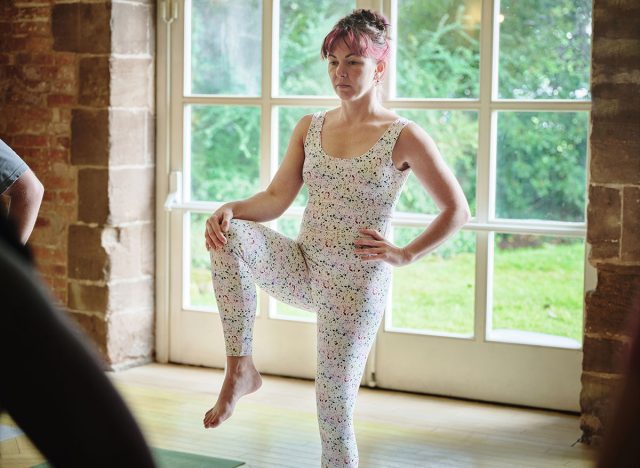
Knee strength builds best when the surrounding muscles get regular, progressive work. These exercises train the thighs, hips, calves, and lower legs from multiple angles, so the knees have a stronger support system during everyday movement.
- Start with control: Choose a range and variation that lets each rep feel steady. Good movement creates a strong foundation.
- Progress gradually: Add a few reps, increase a hold, use less support, or move to a slightly lower squat or higher step when the current version feels solid.
- Train the hips and calves: Strong hips help guide the knee, while strong calves support each step and push-off.
- Use both legs evenly: Single-leg exercises help each side build its own strength and control.
- Make it a morning habit: A short routine two to four days per week can build useful strength without needing a full gym session.
Your knees benefit from steady strength work around the whole lower body. Build the muscles above, below, and around the joint, and everyday movement can feel more supported, more controlled, and more confident.
References
- Bersotti, Felipe Marrese, et al. “Impact of Strength Training on Physical Function, Biomechanical Variables, and Pain Management in Older Adults with Knee Osteoarthritis: A Randomized Controlled Trial.” Journal of Bodywork and Movement Therapies, vol. 45, 2025, pp. 229–237. https://doi.org/10.1016/j.jbmt.2025.08.018.
- Küçük H, Ghadamyari N, Şahin FN, Çiçek G, Ceylan T, Güler Ö, Yaşar OM, Şensoy C, Arslanoğlu C, Doğan E, Arslanoğlu E. Strength training intervention for adult individuals with knee osteoarthritis: Establishing fidelity. Front Physiol. 2025 Jun 18;16:1583153. doi: 10.3389/fphys.2025.1583153. PMID: 40606231; PMCID: PMC12213381.