4 Bed Exercises That Restore Thigh Strength Faster Than Squats After 65

Lower-body strength can fade quietly after 65, especially when daily movement drops and your joints start dictating what feels possible. Luckily, rebuilding thigh strength doesn’t require deep squats, heavy loads, or standing workouts that feel intimidating first thing in the day. Bed-based exercises create a safer starting point where your muscles can work without worrying about balance or joint strain.
Training from the bed allows you to focus on muscle activation, control, and endurance. Those three qualities matter more than load when restoring strength later in life. When your thighs relearn how to produce force and stay engaged, everyday tasks like standing up, climbing stairs, and walking for longer periods feel noticeably easier.
These exercises come straight from years of coaching older adults who wanted strength without setbacks. Each move prioritizes joint comfort while still demanding effort from your thighs and hips. Done consistently, they help rebuild confidence in your legs and create a smoother transition back to standing strength. Up next are four bed exercises that do exactly that.
Glute Bridge
Glute bridges rebuild strength in your thighs and hips while keeping your spine supported. This position allows your muscles to work without pressure on your knees. Stronger glutes also help your thighs do their job more efficiently. Over time, this movement improves your ability to stand up and walk with better control. It’s one of the safest ways to restore lower-body strength from the bed.
Muscles Trained:
Glutes, hamstrings, quadriceps, core.
How to Do It:
- Lie on your back with your knees bent and feet flat on the bed.
- Place your arms at your sides for support.
- Brace your core and squeeze your glutes.
- Lift your hips until your body forms a straight line.
- Lower your hips back down with control.
Recommended Sets and Reps: Perform 3 sets of 12 to 15 reps. Rest for 30 seconds between each set.
Best Variations: Pause glute bridge, single leg bridge, bridge hold.
Form Tip: Press evenly through both feet and avoid arching your lower back.
Supported Lunge
The supported lunge introduces single-leg strength without demanding full balance. Using the bed for assistance keeps you stable while your thighs work independently. This builds strength, symmetry, and improves confidence when stepping or changing direction. The shorter range of motion makes it easier on your knees. It’s a strong bridge between bed exercises and standing movements.
Muscles Trained: Quadriceps, glutes, hamstrings, core.
How to Do It:
- Stand beside the bed and place one hand on it for support.
- Step one foot back into a comfortable split stance.
- Bend both knees and lower your back knee slightly.
- Push through your front foot to return to standing.
- Switch sides after completing your reps.
Recommended Sets and Reps: Perform 3 sets of 8 to 10 reps per side. Rest for 45 seconds between each set.
Best Variations: Short-range lunge, assisted split squat, slow tempo lunges.
Form Tip: Keep your chest tall and your front knee tracking over your toes.
Sit-to-Stand
Sit-to-stand directly trains one of the most important movements for independence. Using the bed for support reduces strain while allowing your thighs to work through a functional range. This exercise strengthens the muscles needed to get up from chairs and beds. It also improves coordination between your hips and knees. Consistent practice builds real-world strength fast.
Muscles Trained: Quadriceps, glutes, hamstrings, core.
How to Do It:
- Sit tall on the edge of the bed with your feet flat on the floor.
- Brace your core and lean slightly forward.
- Press through your feet and stand up.
- Pause briefly at the top.
- Sit back down under control.
Recommended Sets and Reps: Perform 3 sets of 8 to 12 reps. Rest for 45 seconds between each set.
Best Variations: Assisted stand, slow-tempo reps, partial-range reps.
Form Tip: Exhale as you stand to help reinforce strength and balance. Also, use pillows to raise your squats if needed to build strength and confidence!
Split Squat Hold
Isometric holds build thigh strength without repeated joint motion. Holding the split squat position forces your muscles to stay engaged while staying controlled. This improves endurance and stability around the knees and hips. It also builds confidence in single-leg positions. Consistently done short holds lead to meaningful strength gains.
Muscles Trained: Quadriceps, glutes, hamstrings, core.
How to Do It:
- Stand in a split stance with one foot forward and one back.
- Use the bed for balance if needed.
- Lower into a shallow split squat position.
- Hold the position while staying tall.
- Switch sides after the hold.
Recommended Sets and Reps: Perform 3 sets of 20 to 30 second holds per side. Rest for 45 seconds between each set.
Best Variations: Higher stance hold, supported hold, alternating holds.
Form Tip: Keep steady pressure through your front foot during the hold.
The Best Daily Habits for Rebuilding Thigh Strength After 65
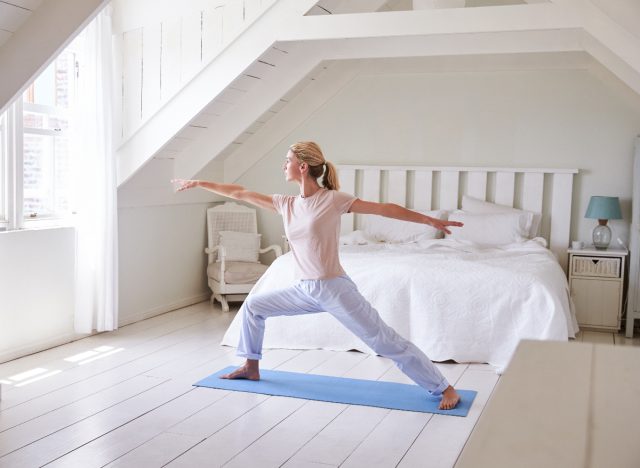
Restoring thigh strength works best when exercise and daily habits move in the same direction. Bed exercises kickstart muscle activation, but what you do between sessions determines how much strength you actually regain. Small, repeatable habits help your legs relearn how to produce force, stay steady, and support you through everyday movement. When those habits stay consistent, progress feels smoother and more reliable.
- Move often throughout the day: Short walks, gentle standing breaks, and light household chores reinforce the strength you build during exercise.
- Prioritize protein: Proper protein supports muscle repair and helps preserve strength as muscle recovery slows with age.
- Practice getting up and down: Controlled sit-to-stand practice from a bed or chair improves confidence and thigh endurance.
- Use support strategically: Holding onto the bed or a stable surface allows you to work harder without worrying about balance.
- Slow the movement down: Slower reps increase muscle engagement and reduce joint stress, especially for sensitive knees.
- Pay attention to posture: Staying tall through your chest and hips helps your thighs share the workload with your glutes.
- Build patience into the process: Strength returns gradually, and consistent effort matters far more than intensity.
References
- Ruegsegger, Gregory N, and Frank W Booth. “Health Benefits of Exercise.” Cold Spring Harbor perspectives in medicine vol. 8,7 a029694. 2 Jul. 2018, doi:10.1101/cshperspect.a029694
- Maccarone, Maria Chiara et al. “Effects of the Full-Body in-Bed Gym program on quality of life, pain and risk of sarcopenia in elderly sedentary individuals: preliminary positive results of a Padua prospective observational study.” European journal of translational myology vol. 33,3 11780. 26 Sep. 2023, doi:10.4081/ejtm.2023.11780
- Lonnie, Marta et al. “Protein for Life: Review of Optimal Protein Intake, Sustainable Dietary Sources and the Effect on Appetite in Ageing Adults.” Nutrients vol. 10,3 360. 16 Mar. 2018, doi:10.3390/nu10030360