5 Home Exercises That Rebuild Lower Back Strength Faster Than Gym Workouts After 60

Lower back discomfort often starts long before pain ever appears. After 60, the muscles that support your spine naturally weaken if they aren’t challenged regularly, making everyday tasks like bending, lifting, standing, and even walking feel more demanding. As a trainer, I’ve found that many people believe they need expensive gym equipment to rebuild strength. In reality, some of the most effective exercises require nothing more than your body weight and a small amount of space at home.
Many people mistakenly focus only on the lower back itself, but a healthy spine depends on much more than one muscle group. Your glutes, abdominal muscles, hips, and upper back all work together to stabilize the spine during movement. When one area becomes weak, the lower back often works overtime to compensate. That’s why I encourage clients to strengthen the entire support system instead of chasing isolated back exercises.
I’ve spent years helping adults over 60 regain confidence in their movement, and the biggest improvements usually come from mastering simple, functional exercises. These movements strengthen the muscles that protect your spine while improving posture, balance, and everyday mobility. Perform them consistently several times each week, and you’ll build the kind of back strength that makes daily activities feel easier instead of harder.
Bird Dog
Whenever someone asks me where to begin rebuilding lower back strength, bird dogs almost always top the list. This exercise teaches the deep stabilizing muscles surrounding the spine to work together while the arms and legs move independently. Rather than repeatedly bending the back, it reinforces the ability to maintain a strong, neutral spine during everyday movement. Clients frequently notice improved posture and greater confidence when lifting or reaching after adding bird dogs to their routine. It’s one of the safest and most effective exercises for developing lasting spinal stability.
How to Do It
- Begin on your hands and knees.
- Extend your right arm forward.
- Extend your left leg behind you.
- Hold briefly.
- Return slowly.
- Alternate sides for 10 repetitions per side.
Glute Bridges
Strong glutes reduce the workload placed on the lower back every time you stand, walk, or climb stairs. Unfortunately, prolonged sitting often weakens these muscles, forcing the spine to compensate during basic movements. I regularly include glute bridges because they strengthen the hips while teaching the pelvis and lower back to work together more efficiently. Clients often report less stiffness and greater ease getting out of chairs after only a few weeks. Better hip strength creates a healthier foundation for the entire spine.
How to Do It
- Lie on your back with your knees bent.
- Place your feet flat on the floor.
- Tighten your core.
- Lift your hips until your body forms a straight line.
- Lower with control.
- Perform 12 to 15 repetitions.
Superman Lift
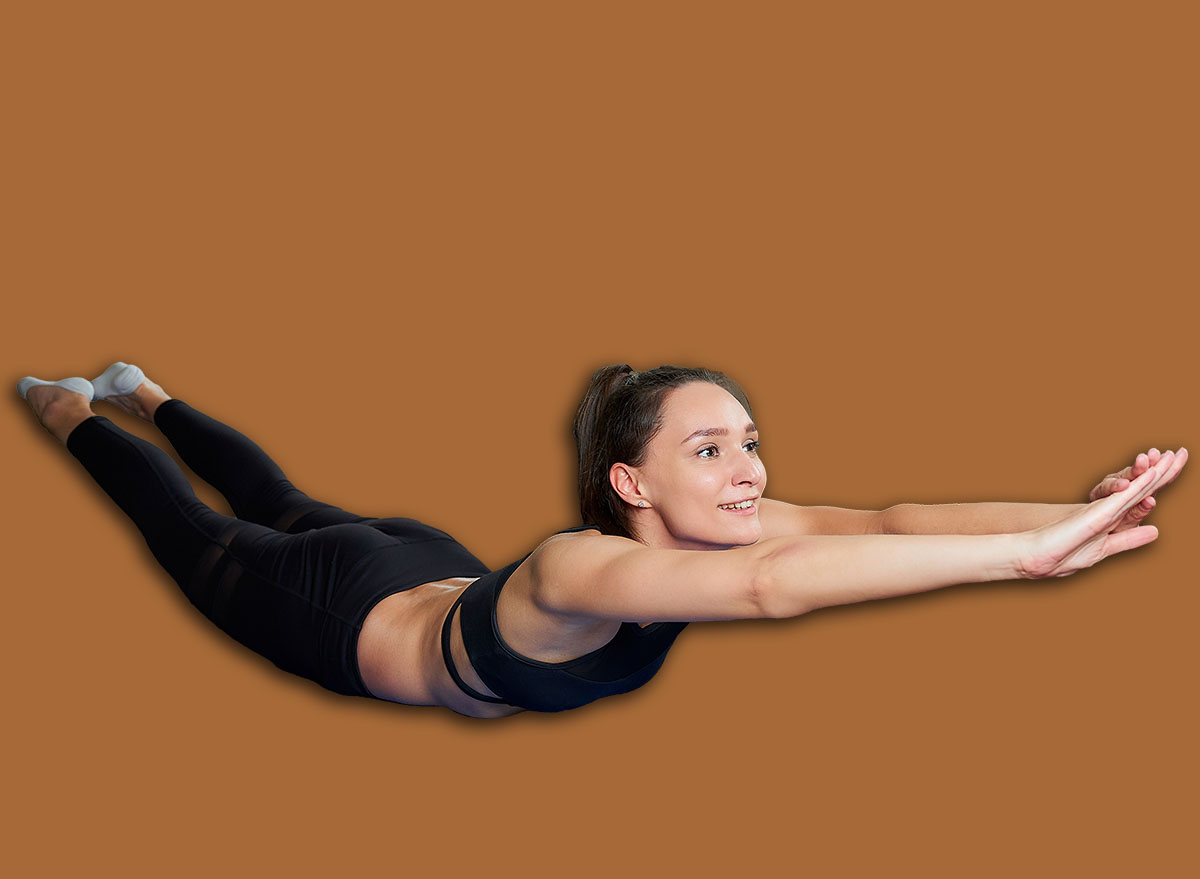
The muscles running along the spine play a vital role in keeping you upright throughout the day. Superman lifts strengthen those muscles while improving endurance in the entire posterior chain. I recommend lifting only as high as feels comfortable because controlled movement matters much more than range of motion. Clients often notice they can stand longer and maintain better posture after practicing this exercise consistently. Building endurance in these muscles helps reduce fatigue during everyday activities.
How to Do It
- Lie face down on the floor.
- Extend your arms in front of you.
- Lift your chest and legs slightly.
- Hold for one to two seconds.
- Lower slowly.
- Complete 10 to 12 repetitions.
Dead Bug
A stronger core creates a stronger lower back because the abdominal muscles help stabilize the spine before movement even begins. Dead bugs strengthen those deep core muscles without placing unnecessary stress on the lower back, making them an excellent complement to traditional back exercises. I frequently prescribe this movement because it improves coordination between the upper and lower body while reinforcing proper spinal alignment. Clients often discover their balance and posture improve right alongside their core strength. Better stability leads to healthier movement in every direction.
How to Do It
- Lie on your back.
- Raise your arms toward the ceiling.
- Lift your knees to 90 degrees.
- Extend one arm and the opposite leg.
- Return with control.
- Alternate sides for 10 repetitions each.
Standing Hip Hinge
I like finishing lower-back routines with a movement that teaches clients how to bend safely during everyday life. The standing hip hinge strengthens the glutes, hamstrings, and spinal stabilizers while reinforcing proper lifting mechanics. Instead of rounding the back, the exercise trains the hips to generate the movement, reducing unnecessary strain on the spine. Clients often tell me they feel much more confident picking up laundry baskets, gardening supplies, or grocery bags after mastering this pattern. It’s one of the most practical exercises you can perform because it prepares your back for the movements you’ll repeat every day.
How to Do It
- Stand with your feet hip-width apart.
- Place your hands on your hips.
- Push your hips backward.
- Keep your back flat as your torso leans forward.
- Drive your hips forward to stand tall.
- Perform 12 to 15 repetitions.