If You Can Hold a Plank This Long After 60, Your Core Strength Is Top-Tier
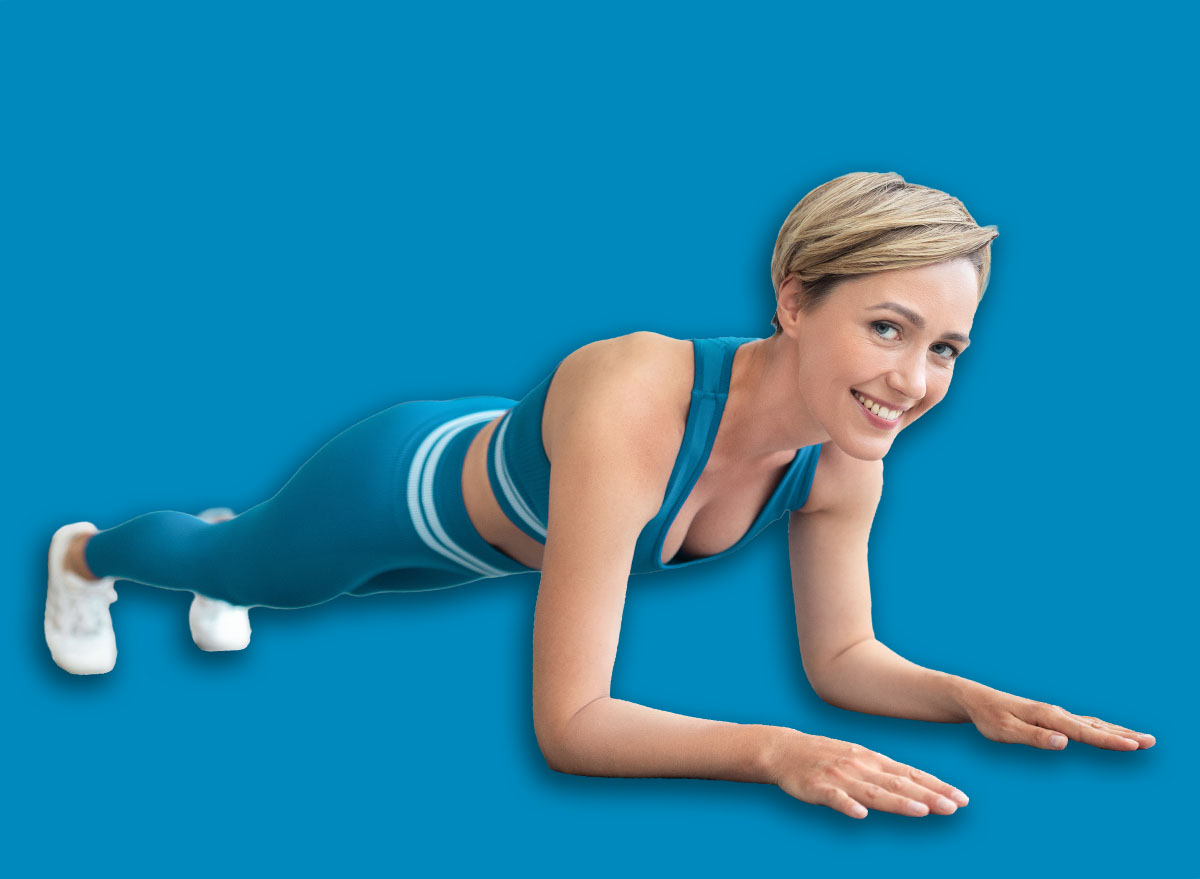

A strong plank has a certain look to it. Your body stays long, your hips hold steady, and the whole position feels intentional. It looks simple from the outside, but once you’re the one holding it, the clock slows down fast. Your shoulders start working, your midsection tightens, and the goal becomes staying organized without letting the position drift.
After 60, that ability matters outside the gym. Your core helps you stay upright, move with control, and support your spine during the daily stuff that adds up. Walking through a store, carrying groceries, standing for longer stretches, and getting up from the floor all require your midsection to do its job. A plank gives you a simple way to see how well that support system holds together.
From a coaching standpoint, I like planks because they tell me more than most people expect. I’m watching how someone creates tension, how they breathe while holding it, and whether they can keep their hips from sinking as fatigue builds. Time matters, but position tells the better story. A longer hold only counts when the body stays lined up from start to finish.
That’s why this test works so well. It measures core endurance and body control in a simple, repeatable way. Up next, we’ll break down why the plank deserves a spot in your routine, how to perform it correctly, what your hold time says about your strength, and how to build a stronger core after 60.
Why the Plank Builds Core Strength After 60
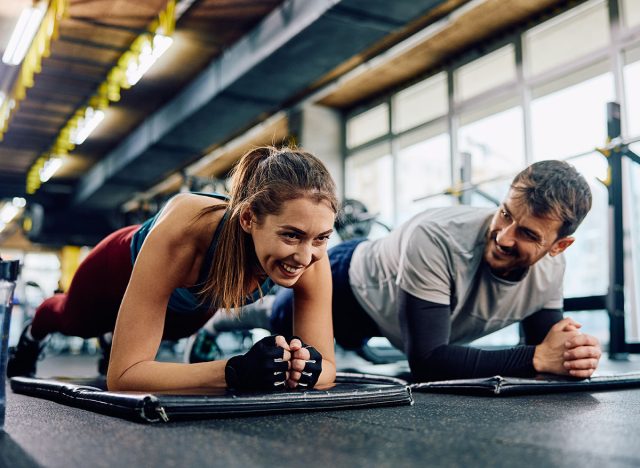
The plank trains your core to hold your spine and pelvis in a strong position. Your abs brace the front of your body, your obliques help control unwanted movement, and your glutes help keep your hips from dipping. Your shoulders and upper back also stay active so you can support yourself over your arms.
That full-body connection gives the plank a lot of value. Your core acts as the link between your upper and lower body. When that link holds strong, movement feels more efficient during walking, lifting, carrying, reaching, and getting up from the floor. The plank reinforces that connection without needing equipment or a complicated setup.
The endurance piece matters, too. Holding the position requires steady tension while you breathe and stay still. As time builds, the challenge becomes keeping your hips level and your body in one strong line. A solid plank shows that your core can stay engaged as fatigue starts to creep in.
How to Perform a Proper Plank Hold
A strong plank starts with alignment. Your elbows should sit under your shoulders, your ribs should stay pulled down, and your hips should line up with the rest of your body. Once you create that position, focus on holding tension through your core, glutes, and upper back. A clean setup makes the test more accurate and helps you feel the exercise where it should be.
How to Do It:
- Place your forearms on the floor with your elbows directly under your shoulders.
- Extend your legs behind you with your feet about hip-width apart.
- Brace your core by tightening your midsection and pulling your ribs down.
- Squeeze your glutes to keep your hips level with your shoulders.
- Hold a straight line from your head through your hips to your heels.
- Breathe steadily while maintaining the same position for the full hold.
A quick note on the movement standard. The hold counts when your body stays in a straight line, and your hips remain level. If your hips drop, your lower back arches, or your shoulders lose position, shorten the hold and build from there.
Best Variations: High Plank, Incline Plank, Side Plank, RKC Plank, Stability Ball Plank.
Plank Hold Test After 60: What Your Time Means
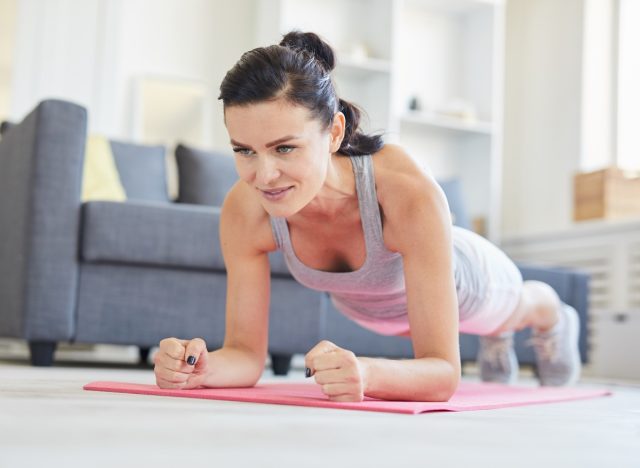
Your plank time gives you a simple way to see how well your core maintains tension. The number matters most when your position stays consistent. Keep your ribs down, your hips level, and your breathing steady from start to finish.
- Under 30 seconds: You’re building the foundation. Focus on learning how to brace and hold a clean position for shorter sets.
- 30 to 60 seconds: This is a solid base. Your core can support your body with good control, and you’re developing the endurance needed for daily movement.
- 60 to 90 seconds: You’re in strong territory. Your core holds position well as the effort gets more demanding.
- 90+ seconds: This is top-tier. Holding this position with steady form shows excellent core strength and control after 60.
RELATED: 5 Morning Exercises That Build Full-Body Strength Better Than CrossFit After 60
How to Build Core Strength and Plank Endurance
Building a stronger plank comes down to improving the tension you can maintain. The goal is a strong brace and a body position that looks the same from start to finish. This type of strength carries into daily movement because your core learns to support your spine while your arms and legs move around it. Better plank endurance can also help with posture, balance, and confidence during longer stretches of activity. A few focused sessions each week can make the plank feel more stable and help your hold time climb.
- Practice planks regularly: Start with two to three sets a few times per week. Keep each hold clean and controlled.
- Set your position before starting the timer: Stack your elbows under your shoulders, pull your ribs down, and squeeze your glutes.
- Use shorter holds with better quality: Sets of 20 to 40 seconds with strong form build the base for longer holds.
- Train your breathing: Slow, steady breaths help you maintain tension without bracing too hard too early.
- Strengthen your glutes and hips: Bridges, hip thrusts, and carries help support better pelvic control during planks.
- Add anti-rotation work: Pallof presses, suitcase carries, and side planks build stability through the trunk.
- Progress gradually: Add five to 10 seconds at a time as long as your position stays consistent.
- Retest every few weeks: A simple retest gives you a clear target and helps you track progress without overcomplicating your training.
A plank shows how well your body can create tension and hold alignment as fatigue builds. If you can hold a clean plank past 90 seconds after 60, your core strength sits in a top-tier range, and your body has a strong foundation for the movement you rely on every day.
References
- Park, Sihwa et al. “Effects of plank exercise on respiratory capacity, physical fitness, and immunocytes in older adults.” Journal of exercise rehabilitation vol. 19,6 332-338. 26 Dec. 2023, doi:10.12965/jer.2346536.268
- Dunsky, Ayelet. “The Effect of Balance and Coordination Exercises on Quality of Life in Older Adults: A Mini-Review.” Frontiers in aging neuroscience vol. 11 318. 15 Nov. 2019, doi:10.3389/fnagi.2019.00318