4 Morning Exercises That Reverse Muscle Loss Better Than Lifting Weights After 50
Muscle loss accelerates quickly after 50. Strength fades gradually at first, then everyday tasks suddenly start feeling heavier and more exhausting. Climbing stairs, carrying groceries, standing up from chairs, and walking long distances all become harder when the body loses muscle mass and stability. Many adults immediately turn to heavy weight training hoping to reverse the problem, but aggressive lifting routines often create joint pain, excessive soreness, and recovery issues that reduce consistency over time.
Morning movement provides a smarter and more sustainable approach for many adults over 50. Early exercise wakes up dormant muscles, improves circulation, and restores movement quality before stiffness builds throughout the day. Controlled bodyweight exercises also strengthen the legs, hips, core, and upper body together instead of isolating muscles through rigid machine patterns. That full-body activation helps rebuild practical strength while improving balance, posture, and coordination at the same time.
The four exercises below strengthen the muscles most responsible for healthy movement and long-term independence after 50. Each one challenges multiple muscle groups through controlled tension while remaining gentle enough for consistent daily practice. Perform them regularly, and your body will start feeling stronger, steadier, and more energized throughout the day.
Sit-to-Stand Squats
Few exercises rebuild lower-body strength more effectively than sit-to-stand squats. This movement directly trains one of the most important daily actions while strengthening the quads, glutes, hips, and core simultaneously. Many adults lose muscle mass because they stop challenging their legs through full standing movement patterns during everyday life. Sit-to-stands restore that lost strength while improving balance and coordination at the same time. The chair also provides safety and support, allowing the body to move confidently through every repetition. Adults over 50 often notice stronger walking endurance and easier stair climbing after practicing this exercise consistently.
How to Do It
- Sit near the front of a sturdy chair
- Place your feet shoulder-width apart
- Lean slightly forward
- Press through your heels
- Stand up smoothly
- Tighten your glutes at the top
- Lower slowly back into the chair
- Perform 10 to 15 repetitions.
RELATED: If You Can Do This Many Push-Ups Without Stopping After 50, Your Upper-Body Strength Is Elite
Standing Wall Push-Ups
Upper-body muscle loss often appears in weaker arms, rounded shoulders, and reduced pushing strength during daily tasks. Wall push-ups rebuild chest, shoulder, tricep, and core strength without placing excessive pressure on the joints. Many adults avoid push-up movements because floor versions feel intimidating or uncomfortable, but the wall setup creates a safer and more approachable angle. The movement also improves posture because the upper back and abdominal muscles stabilize continuously throughout every repetition. Adults over 50 frequently notice stronger arm endurance and improved upper-body control after adding wall push-ups consistently. Controlled movement and full-body tension matter far more than speed during this exercise.
How to Do It
- Stand facing a wall
- Place your hands against the wall at shoulder height
- Step your feet backward slightly
- Tighten your core gently
- Bend your elbows slowly
- Lower your chest toward the wall
- Press back to the starting position
- Complete 10 to 15 repetitions.
Standing Knee Drives
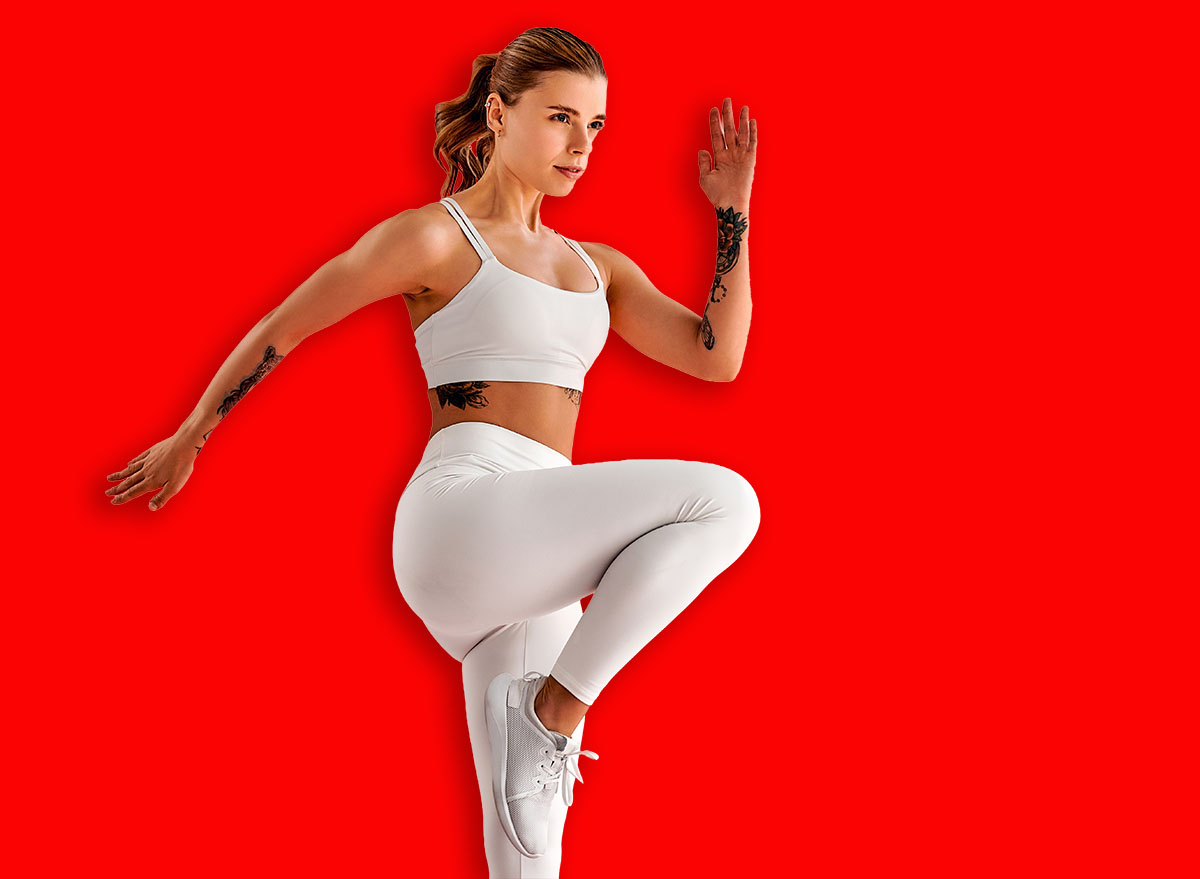
Standing knee drives strengthen the hips, core, and legs while improving balance and coordination. Many adults lose muscle mass in the lower body because walking patterns become slower and less dynamic over time. This movement restores explosive leg drive gently while forcing the core and supporting leg to stabilize continuously. The repeated knee lift also increases circulation and cardiovascular activity without harsh impact on the joints. Adults over 50 often feel more energetic and stable during daily movement after practicing controlled standing drills consistently. Faster movement increases intensity naturally without requiring external weights or equipment.
How to Do It
- Stand tall with feet shoulder-width apart
- Tighten your core
- Drive one knee upward
- Swing the opposite arm naturally
- Lower slowly with control
- Alternate sides continuously
- Maintain a tall posture
- Perform 20 total repetitions.
Glute Bridges
Strong glutes support nearly every lower-body movement after 50. When the hips weaken, posture declines, and the knees and lower back absorb more strain during walking and standing. Glute bridges strengthen the backside while improving pelvic stability and lower-body coordination. The movement also activates the deep core muscles that help stabilize the spine during movement. Many adults over 50 notice stronger balance, smoother walking mechanics, and reduced lower-back tightness after adding glute bridges consistently. Slow controlled repetition creates excellent muscular activation without stressing the joints or spine unnecessarily.
How to Do It
- Lie on your back with knees bent
- Place your feet flat on the floor
- Press through your heels
- Lift your hips upward
- Tighten your glutes at the top
- Hold briefly
- Lower slowly with control
- Perform 12 to 15 repetitions.