If You Can Hold a Plank This Long After 60, Your Core Stability Is Top-Tier
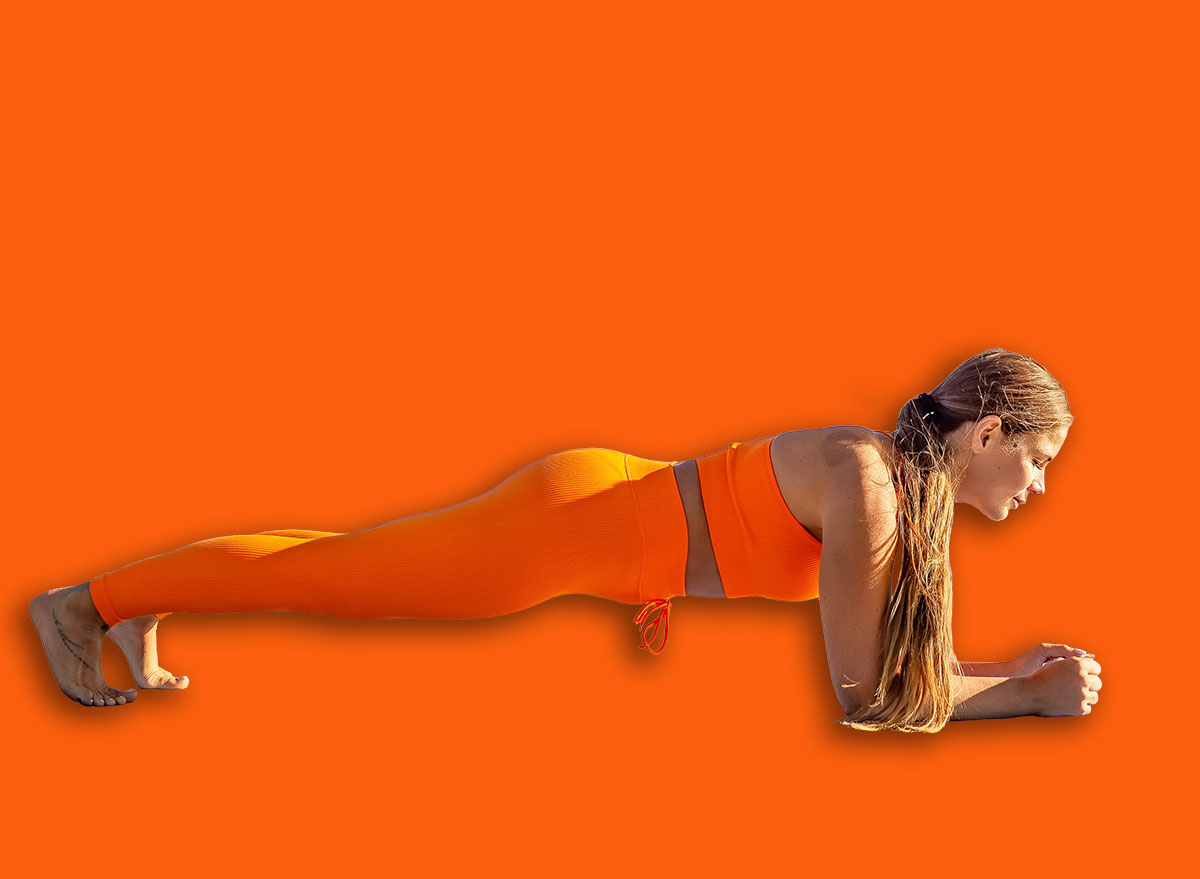

Planks are pretty seamless to learn, require strict form, and do not require any equipment. This makes them an excellent choice to include in your workouts, whether at home or on-the-go. Beginners starting out may normally hold a plank for roughly 15 to 20 seconds, and that’s perfectly fine. It’s more important to focus on proper form rather than trying to hold it longer. If you are patient and stick with the plank, you will improve over time. We spoke with Dr. Jaime Bayzick, Associate Professor of Practice in Physical Therapy at Arcadia University in Glenside, PA, and learned if you can hold a plank this long after 60, your core stability is top-tier.
“A plank might look simple, but it’s actually one of the better indicators of core stability after 60 because it requires the body to maintain alignment, control, and muscular endurance all at the same time,” Dr. Bayzick explains. “Unlike exercises that isolate a single muscle group, a properly performed plank challenges the entire trunk and forces multiple muscle systems to work together to stabilize the spine and pelvis.”
This becomes more essential than ever before as you age. Daily tasks like climbing flights of stairs, carrying shopping or grocery bags, and getting up and down from a chair all require solid trunk stability.
“Core stability isn’t just about strength, but also control,” Dr. Bayzick stresses.
Below, you’ll find the ideal plank hold time to strive for. If you’re able to hold it with proper form, that means your core is in great shape.
Plank Test: How Long Signals Top-Tier Core Stability After 60
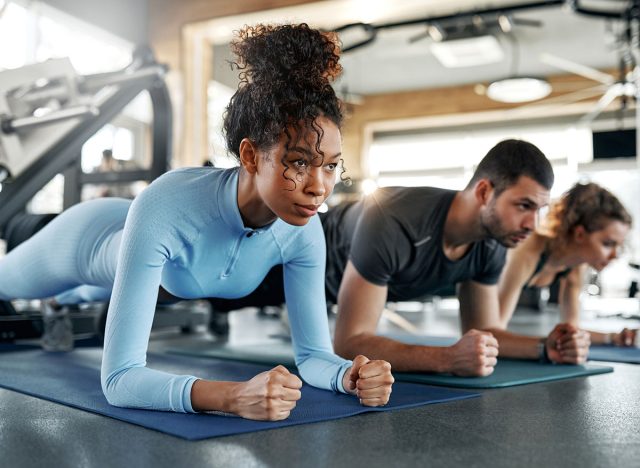
Keep in mind that there’s no ideal universal plank hold time—the benchmark majorly depends on body size, fitness level, shoulder tolerance, and injury history.
“But in general, most healthy adults over 60 fall somewhere in the 20–45 second range for a stable forearm plank,” says Dr. Bayzick. “Holding a plank for around 60 seconds with good form would place many older adults above average, while reaching 90 seconds or longer is typically what would be considered ‘top-tier’ core endurance after 60.”
In addition, there are some general differences between genders as endurance declines with age. Below, Dr. Bayzick breaks down some rough averages:
Adults in their 60s:
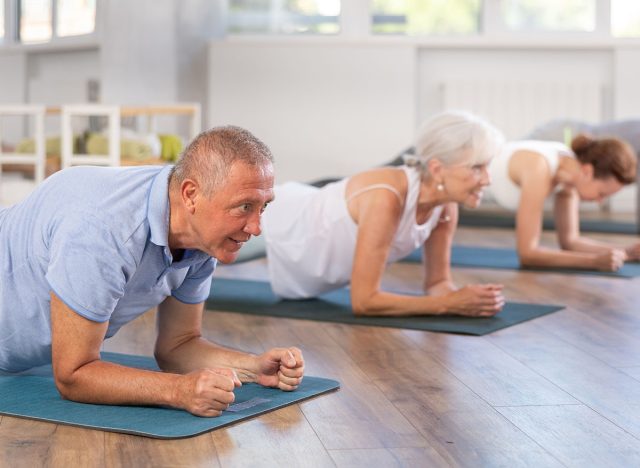
- Men: ~25 to 45 seconds
- Women: ~20 to 40 seconds
Adults in their 70s:
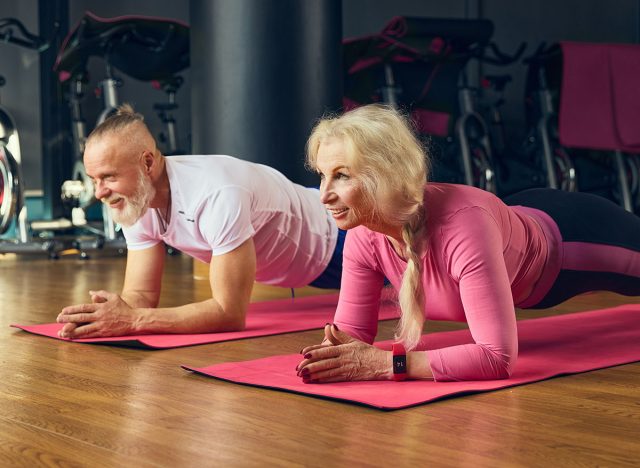
- Men: ~15 to 30 seconds
- Women: ~10 to 25 seconds
Adults in their 80s:
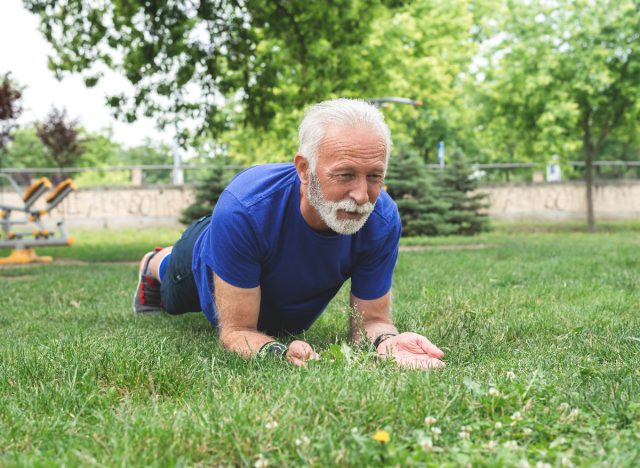
- Men: ~10 to 20 seconds
- Women: ~5 to 15 seconds
“Highly active older adults often perform well above those ranges, especially if they regularly strength train or practice activities requiring trunk endurance,” Dr. Bayzick notes.
Which Muscles Are Being Tested During Planks
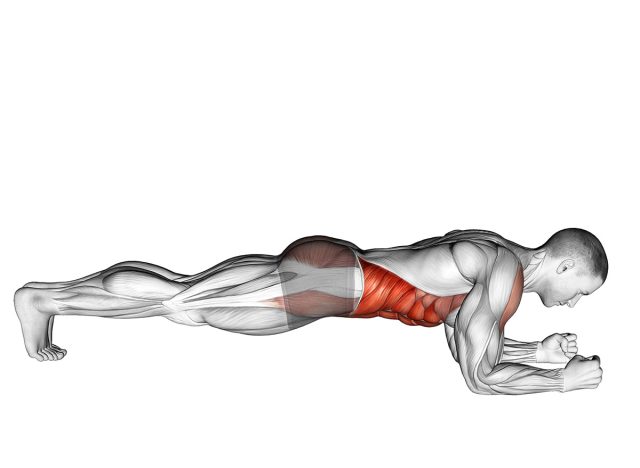
During a plank, various muscles are being put to work: the rectus abdominis, transverse abdominis, obliques, spinal stabilizers, shoulders, glutes, and muscles around the hips.
“The abdominal muscles, including the rectus abdominis, transverse abdominis, and obliques, help resist excessive movement of the spine. The spinal stabilizers, glutes, shoulders, and even the muscles around the hips all contribute as well. In many ways, the plank is less of an ‘ab exercise’ and more of a full-body stability exercise,” Dr. Bayzick explains. “The deeper stabilizing muscles of the trunk become especially important with age because they help support posture and keep the body efficient during movement. When these muscles weaken, the body often compensates elsewhere. People may develop poor posture, slower walking speed, reduced balance confidence, or increased strain on the lower back and hips.”
Basically, the muscles trained during planks are crucial for healthy aging.
According to Ngo Okafor, Founder, CEO, and Celebrity Trainer at Iconoclast Fitness, “They support posture, protect the spine, improve balance, and help us move safely and efficiently through everyday life.”
Even active adults may still experience a decline in core endurance over time because many common exercises don’t directly hone in on trunk stabilization.
“Walking is excellent for overall health, but it does not necessarily train the deep stabilizing muscles enough to maintain high-level core control,” Dr. Bayzick says.
Proper Form Is Essential
Proper form is the most important thing to keep in mind when working out. Dr. Bayzick says performing a technically solid 45-second plank is much more effective than holding a sloppy two-minute plank where your spine loses alignment.
“Proper form means maintaining a relatively straight line from the shoulders through the hips to the ankles while keeping the abdominal muscles engaged and breathing steadily throughout the hold,” Dr. Bayzick explains. “The shoulders should stay active rather than collapsing toward the floor, and the neck should remain relaxed in a neutral position instead of craning upward or downward. Once the hips start sagging or the lower back begins compensating excessively, the exercise becomes less about stability and more about simply tolerating discomfort, and, in some cases, may actually create more stress on the shoulders or lower back than it benefits.”
You’ll know that fatigue has taken over if you find yourself shrugging your shoulders, holding your breath, or lifting your hips excessively. At that point, the quality of your plank hold begins to decline and could potentially raise your risk of injury.
“In rehabilitation settings, quality of movement is almost always prioritized over numerical targets,” Dr. Bayzick says.
Why Core Stability Becomes Even More Important With Age
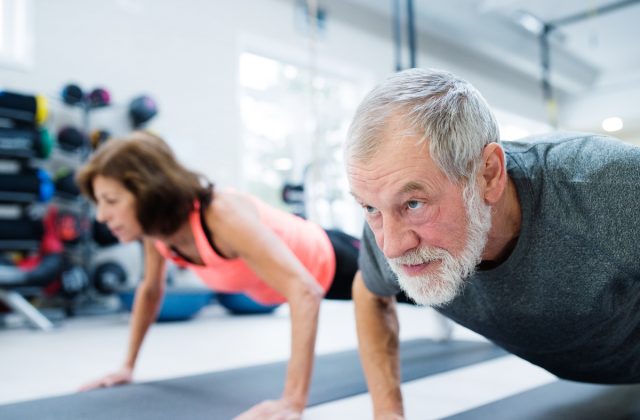
Aging brings many changes. Muscle mass and strength naturally declines; you may also experience reduced balance and coordination.
“A strong, stable core helps keep us upright, improves posture, reduces stress on the joints and spine, and lowers the risk of falls and injuries. In many ways, core stability is the foundation for staying strong, mobile, and independent later in life,” Okafor says.