If You Can Do This Many Push-Ups Without Stopping After 50, Your Upper-Body Strength Is Elite


Upper-body strength often declines faster than people expect after 50. Everyday tasks like carrying groceries, pushing doors open, lifting objects overhead, or getting up from the floor all depend on strong chest, shoulder, arm, and core muscles working together. Many adults lose that strength gradually because daily movement no longer challenges the upper body consistently. Over time, posture weakens, endurance fades, and simple tasks start demanding more effort.
The push-up remains one of the best tests for measuring real-world upper-body strength because it challenges multiple muscle groups simultaneously. Unlike machine exercises that isolate one area at a time, push-ups force the chest, shoulders, triceps, core, and stabilizing muscles to work together under bodyweight resistance. That full-body coordination makes the push-up an excellent benchmark for muscular endurance, control, and functional strength after 50. Strong push-up performance also reflects healthy shoulder stability and core engagement during movement.
Most adults over 50 struggle with push-ups because the exercise exposes weaknesses in the chest, triceps, shoulders, and core almost immediately. Fatigue builds quickly once posture breaks down or the hips begin sagging under tension. If you can hit the higher push-up ranges below using strict form, your upper-body strength stands well above average for your age group.
How to Do Push-Ups Properly
Push-ups only count when performed with strong technique. Many people shorten the range of motion, lift the hips too high, or rush through sloppy repetitions once fatigue appears. Proper push-ups strengthen the entire upper body while protecting the shoulders and lower back through controlled movement. Adults over 50 benefit most from smooth repetitions and full-body tension rather than chasing fast numbers with poor form. Strong alignment from head to heels matters just as much as repetition count during this test.
How to Do It
- Start in a strong plank position
- Place your hands slightly wider than shoulder-width
- Keep your body in a straight line
- Tighten your core and glutes
- Lower your chest toward the floor slowly
- Bend your elbows at roughly 45 degrees
- Press back upward under control
- Continue until you cannot maintain proper form.
What Your Results Mean
Fewer Than 5 Push-Ups

This range suggests weak upper-body endurance and limited muscular coordination through the chest, shoulders, triceps, and core. Many adults in this category struggle with pushing strength during daily tasks and fatigue quickly during upper-body activity. Posture and shoulder stability often need improvement as well. Building foundational strength should become a major priority because stronger upper-body muscles support safer movement and better long-term independence.
5 to 12 Push-Ups

This range reflects decent baseline strength and moderate muscular endurance. The upper body handles controlled bodyweight resistance, though fatigue likely appears quickly during longer efforts. Adults in this category generally manage everyday tasks well but still benefit greatly from improving endurance and shoulder stability. Consistent training often produces rapid progress from this level.
13 to 20 Push-Ups
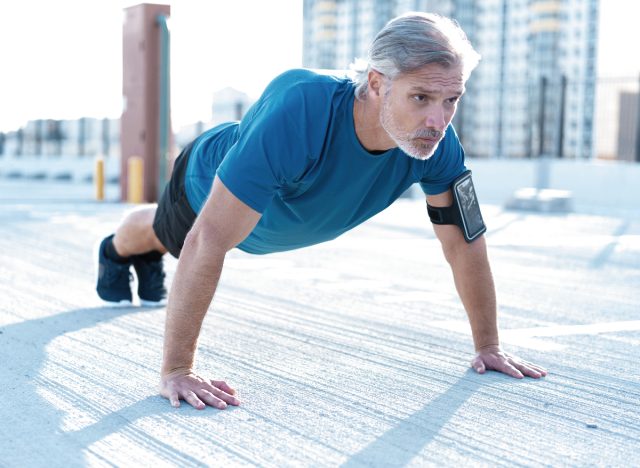
This range places you above average for most adults over 50. Your chest, shoulders, triceps, and core work together efficiently while maintaining solid muscular endurance. People who reach this benchmark often display better posture, stronger movement control, and greater upper-body resilience during daily activity. This level also reflects strong joint stability and good total-body coordination.
More Than 20 Push-Ups

This level qualifies as elite upper-body strength after 50. Completing more than 20 strict push-ups without stopping demonstrates exceptional muscular endurance, shoulder stability, and core control compared to most peers in the same age group. Adults who achieve this level often move with stronger posture, better balance, and greater confidence during physically demanding tasks. Reaching this benchmark places your upper-body strength well above average for adults over 50.
How to Improve Your Results
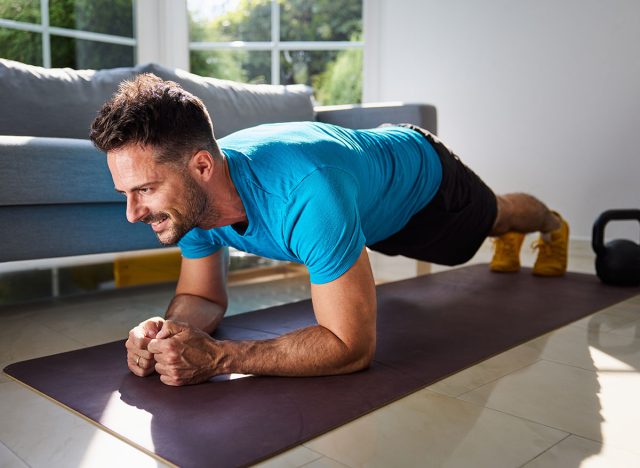
Improving push-up performance after 50 depends heavily on consistency and strong movement quality rather than rushing into high repetition counts. Start with incline push-ups against a wall, countertop, or bench if floor push-ups feel too difficult initially. Controlled repetitions strengthen the chest, shoulders, triceps, and core together while improving coordination and stability. Focus on maintaining a straight body line and steady tempo during every repetition.
Exercises like wall push-ups, shoulder blade squeezes, plank holds, and chair presses strengthen the supporting muscles required for stronger push-up performance. Walking regularly and improving posture throughout the day also help the shoulders and upper back stabilize more effectively during pushing movement. Many adults improve quickly once the core and glutes start contributing more during the exercise instead of relying entirely on the arms.
Test your push-ups every few weeks instead of daily so the muscles have time to recover and adapt. Even small increases in repetition count often translate into noticeable improvements in upper-body endurance and daily movement confidence. Strong technique, consistent practice, and gradual progression remain the keys to building elite upper-body strength after 50.