If You Can Complete This Pushup Variation After 50, Your Upper Body Is Top-Tier
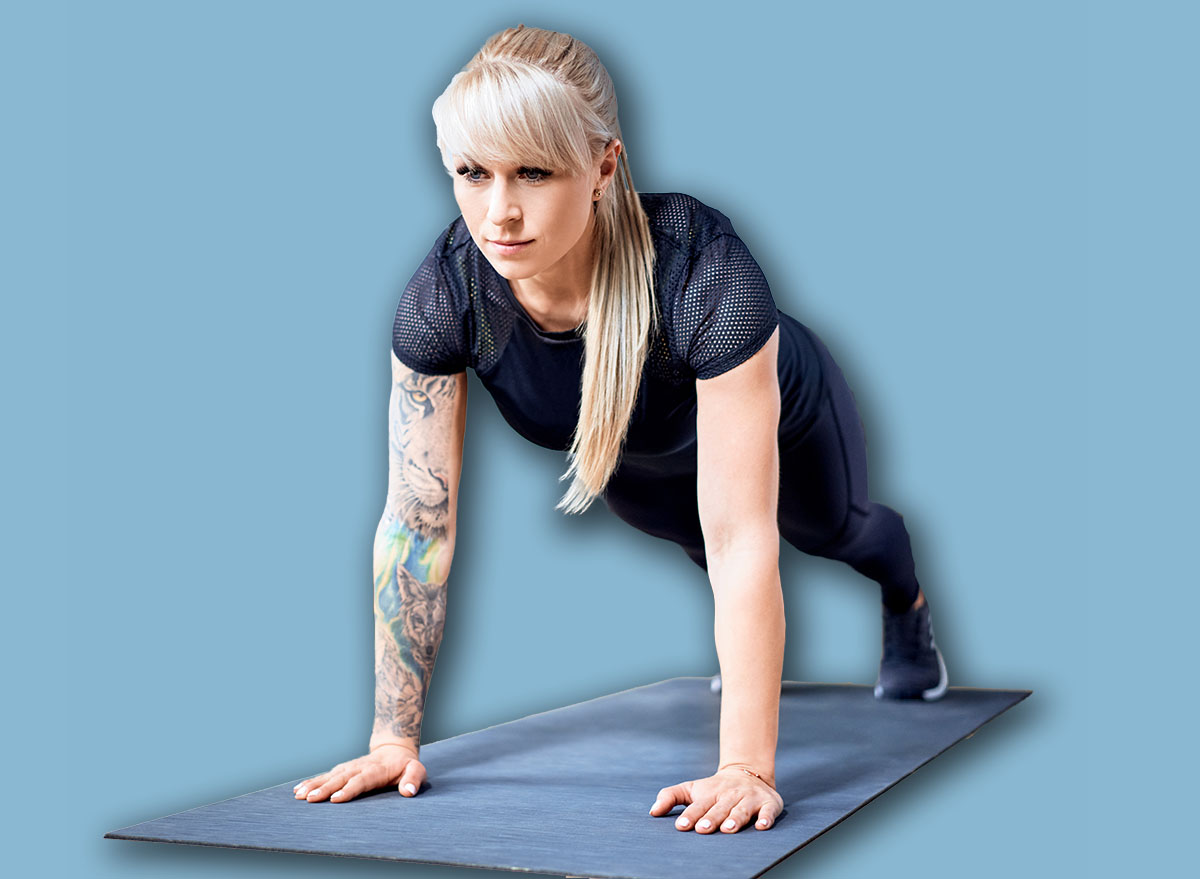

Pushups are probably one of the most incredible exercises you can add to your routine. You can do them anywhere, anytime, without equipment. It’s an amazing way to boost strength in your chest, core, arms, and shoulders. Not only that—you’ll improve your posture, balance, and functional fitness, enabling you to perform daily activities with ease. Get the picture? Well, gear up to challenge yourself. We spoke with Ash Wang, trainer at The Pack, who shares if you can complete this particular pushup variation after 50, your upper-body strength is top-notch.
You Lose Upper-Body Muscle and Strength as You Age

One of the biggest physical changes and road blocks you experience with age is sarcopenia, the natural loss of lean muscle and strength. The decline only speeds up with age if resistance training and a protein-packed diet aren’t part of your regular routine.
“Upper-body muscles are particularly affected because daily life tends to underload pushing and pulling patterns compared to lower-body movements like walking. Less frequent exposure to movement = higher risk of injury,” Wang tells us. “As we age, there is also a decline in neuromuscular efficiency, meaning the brain becomes less effective at recruiting muscle fibers, which impacts strength even before visible muscle loss occurs.”
The Key Mistake When Performing Pushups
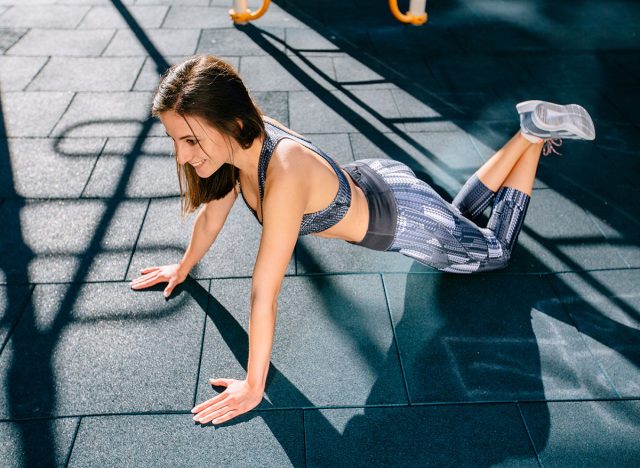
The most common mistake Wang has seen clients make is performing knee pushups if they’re unable to complete classic pushups.
“Knee pushups remove the requirement to create full core and hip stability, which is why you often see the hips shooting upward and a visible ‘break’ in what should be a rigid plank from shoulders to ankles,” Wang explains. “That break limits force transfer and reduces how much of the body the exercise actually trains.”
If You Can Complete This Pushup Variation After 50, Your Upper Body Is Top-Tier

A productive alternative is using an elevated surface, such as a plyometric box, workout bench, or sturdy table to complete hands-elevated pushups.
“This variation preserves the full-body plank, keeps the core and hips engaged, and allows pushups to be scaled appropriately. As strength improves, the height of the surface can be gradually lowered while maintaining proper alignment and control,” Wang explains. “Alternatively, a dumbbell chest press can work some of the muscles required for a pushup.”
How To Perform Hands-Elevated Pushups
- Place your hands on a sturdy elevated surface, slightly outside shoulder-width.
- Step your feet back so your body forms a straight line from your head to your heels.
- Activate your core.
- Bend your elbows to lower your chest toward your hands, descending until your chest is close to the surface.
- Press through your palms to rise back up.