If You Can Do This Many Pushups After 65, Your Upper-Body Strength Is Stronger Than 90% of Peers
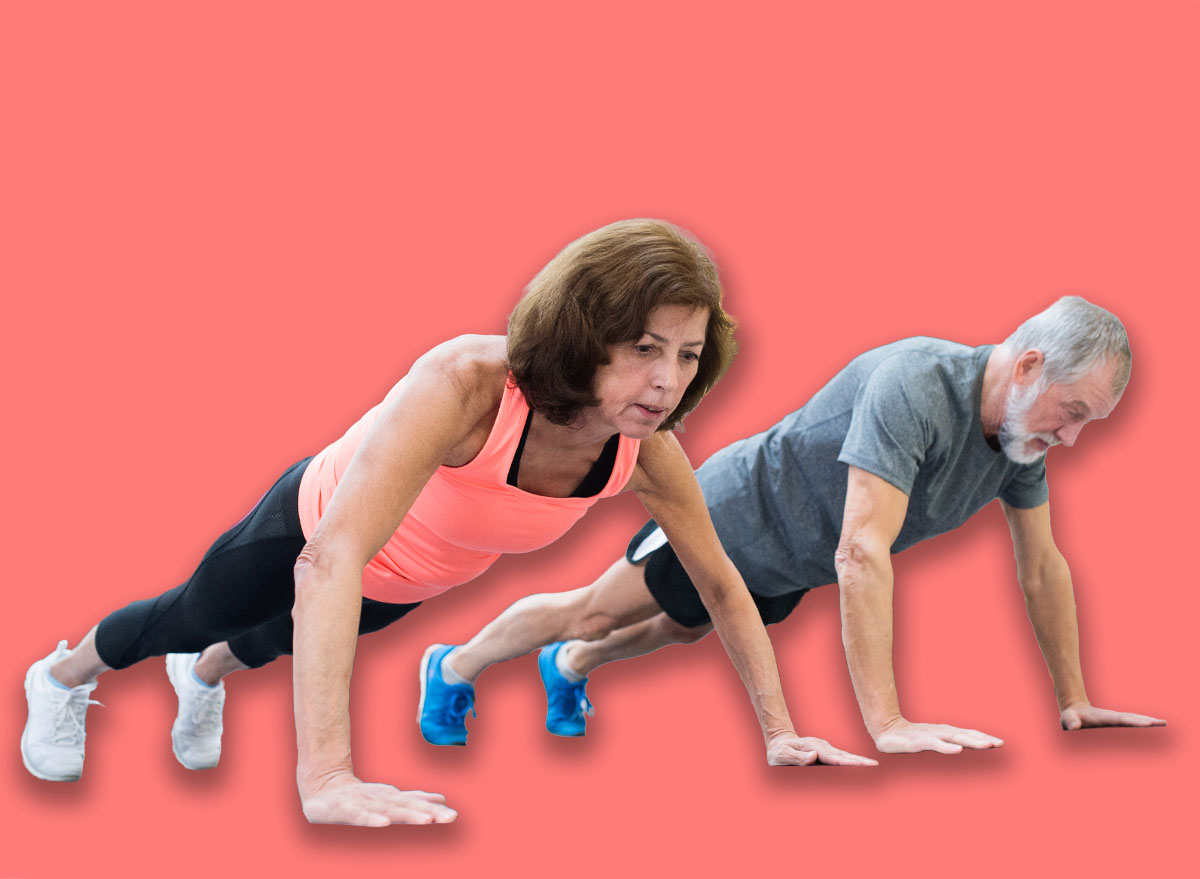

Pushups are a real powerhouse exercise everyone would benefit from. They’re a stellar movement that builds upper-body strength in your triceps, shoulders, chest, and core. This compound exercise also kicks up your posture and cardiovascular health. Believe it or not, since pushups engage your entire torso, they are helpful in protecting your lower back, too. Hey—we didn’t call them a powerhouse for nothing!
If you want to determine where your upper-body strength stands, pushups are the perfect test. If you can do this many pushups after 60, know that your upper-body strength is stronger than 90% of your peers.
Why Upper-Body Strength Naturally Declines After 65
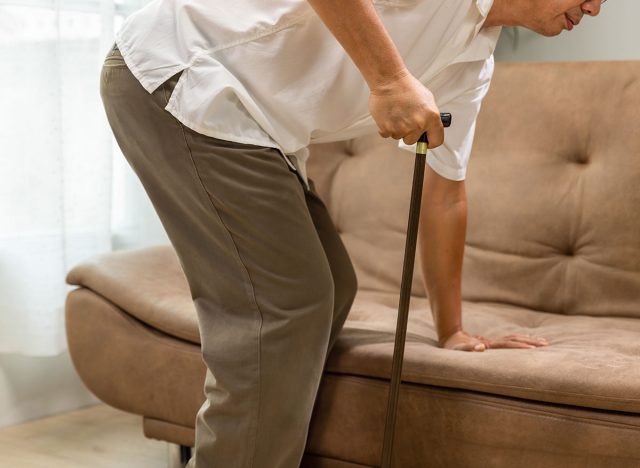
The main culprit behind declining strength after 65 is sarcopenia, the age-related loss of lean muscle mass and quality.
“Hormonal shifts (reduced testosterone and growth hormone), chronic low-level inflammation, and a decrease in “Type II” (fast-twitch) muscle fibers contribute to this decline,” explains Steve Stonehouse, Vice President of Programming and Education at Body Fit Training (BFT). “These fibers are responsible for power and explosive movements.”
Challenges Reduced Strength Presents in Daily Life

Lack of upper-body strength makes it more challenging to catch yourself from a fall or push yourself back up off the ground if you do fall. It also makes performing daily tasks like lifting grocery bags, opening heavy doors, or pushing a vacuum cleaner, difficult.
“[In addition,] getting out of a deep armchair or a bathtub requires a ‘push’ from the arms that many take for granted until that strength begins to fade,” Stonehouse adds.
Muscles Engaged During Pushups
Pushups are a compound exercise, meaning they fire up multiple muscle groups at the same time:
- Pectoralis Major (Chest): These are the main muscle movers utilized during any pushing motion.
- Anterior Deltoids (Front Shoulders): These are essential for lifting objects overhead and reaching forward.
- Triceps Brachii (Back of Arms): These are crucial for extending your elbows, including when pressing yourself up from a seated position.
- The Core (Rectus Abdominis and Obliques): When performing pushups, the core serves as a stabilizer to keep your spine neutral.
Importance of Pushups for Older Adults

“Strengthening these muscles creates a ‘functional shield,'” Stonehouse tells us. “Strong shoulders and triceps reduce the load on the actual shoulder joint, potentially preventing rotator cuff issues and chronic impingement.”
Fitness experts and healthcare professionals typically use pushups as a “proxy” for overall health, as it reveals more than muscular fitness.
“Because you lift your own body weight, the pushup measures how strong you are relative to your size,” Stonehouse tells us. “Research suggests that the ability to perform a higher volume of push-ups is associated with a lower risk of cardiovascular disease events in men. [In addition,] successful pushup requires the nervous system, muscular system, and skeletal system to work in perfect synchronization. If an adult over 65 can perform a pushup with good form, it indicates high levels of neuromuscular coordination.”
Pushup Benchmarks
While fitness standards may vary depending on the source, Stonehouse says the following benchmarks signal “above average” to “excellent” categories for those between the ages of 60 to 69.
- Above Average: 12 to 16 reps
- Excellent (Peak): 20 to 24+ reps
“These benchmarks usually refer to ‘standard’ pushups (on toes). If performing modified pushups (on knees), the target numbers are typically higher,” Stonehouse adds.