5 Resistance Band Moves That Flatten Your Apron Belly Faster Than Sitting All Day After 50
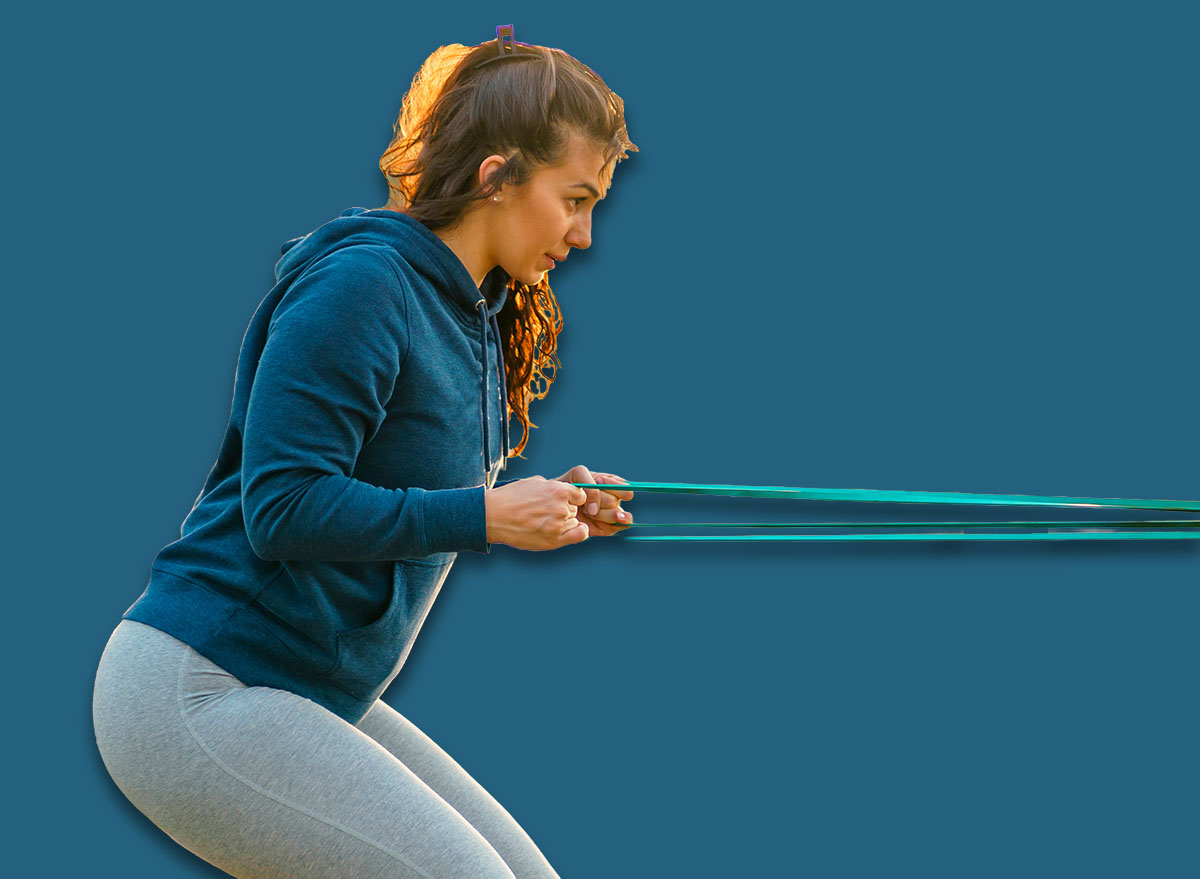

If you’re trying to flatten apron belly after 50, you have to move more and build muscle. Simple as that. But despite what countless social media ads promise, research shows that spot reduction is a myth and you can’t choose where your body burns fat just by exercising that body part more.
What you can do though is strengthen the muscles underneath your apron belly, increase your daily energy expenditure, and build lean muscle mass that results in a healthier body composition as you age. How? With resistance bands
Resistance bands are a joint-friendly option for strength training in the comfort of your home. Studies have found that resistance band training can improve muscular strength, physical function, balance, and body composition in older adults. That’s because resistance bands provide constant tension during movement, forcing your muscles to stay engaged from start to finish.
The best part? Just one resistance band can be used to work your legs, glutes, core, chest, back, and shoulders in a single workout. To learn which resistance band exercises are best and help you get started, we chatted with James Brady, CPT, a certified personal trainer at OriGym, who shares his five best resistance moves to flatten apron belly faster than sitting all day after 50. Keep reading to learn more.
(Then, when you’re finished, check out these 4 Wall Exercises That Build Glute Strength Faster Than Squats After 60.)
Banded Squats
Squats and their many variations are among the most efficient compound exercises you can perform because they engage multiple large muscle groups at the same time, including your quads, glutes, hamstrings, and core. This creates a larger metabolic demand and calorie burn than isolated core exercises.
How to do it:
- Stand on the center of a resistance band with your feet shoulder-width apart.
- Hold the handles or ends of the band at shoulder height.
- Engage your core and keep your chest lifted.
- Push your hips backward as if sitting into a chair.
- Bend your knees and lower into a squat.
- Keep your heels planted on the floor.
- Lower as far as comfortably possible.
- Pause for one to two seconds at the bottom of the movement.
- Drive through your heels to stand back up.
- Perform two to three sets of 10 to 15 reps. Rest for 60 to 90 seconds between sets.
Banded Rows
“Banded rows strengthen your upper back and improve posture, which can make the midsection appear flatter while also supporting functional strength as we age,” says Brady. Research shows that strengthening your upper back can help counteract the rounded shoulders and forward posture that often develop after years of sitting.
How to do it:
- Secure a resistance band at chest height.
- Hold the handles or ends with both hands.
- Step backward until tension develops in the band.
- Stand tall with your chest lifted.
- Flex your core throughout the movement.
- Pull your elbows backward toward your sides.
- Squeeze your shoulder blades together.
- Pause for one to two seconds at the end of the row.
- Slowly return to the starting position.
- Complete two to three sets of 10 to 15 reps, resting for 45 to 60 seconds between sets.
Banded Woodchops
“Banded woodchops challenge your core through rotation, helping to develop strength throughout the obliques and trunk, ” explains Brady. They also train your obliques (side abs) and deep trunk muscles more dynamically than traditional crunches.
How to do it:
- Secure a resistance band near shoulder height.
- Stand sideways to the anchor point.
- Hold the band with both hands.
- Position your feet slightly wider than hip-width apart.
- Brace your core before starting.
- Pull the band diagonally across your body.
- Rotate through your torso while maintaining control.
- Finish near your opposite hip.
- Slowly return to the starting position.
- Aim for two to three sets of 10 to 15 reps per side. Rest for 45 to 60 seconds between sets.
Banded Chest Press
The standing banded chest press strengthens your chest, shoulders, triceps, and core. Since the exercise is performed standing, your core muscles must remain active throughout the movement to maintain stability.
How to do it:
- Anchor resistance band behind you at chest height.
- Hold one handle in each hand.
- Step forward slightly to create tension.
- Stand tall with your core engaged.
- Position your hands near your chest.
- Press both arms forward until almost straight (avoid locking your elbows).
- Pause for one to two seconds at full extension.
- Slowly return to the starting position.
- Perform two to three sets of 10 to 15 reps, resting for 45 to 60 seconds between sets.
Banded Deadlifts
Deadlifts strengthen many of the muscles that tend to weaken with age, including your glutes, hamstrings, lower back, and core. These muscles are essential for maintaining posture, mobility, and functional strength as you age.
How to do it:
- Stand on the center of a resistance band.
- Grip the handles or ends firmly in each hand.
- Position your feet hip-width apart.
- Maintain a slight bend in your knees.
- Brace your core and keep your back straight.
- Push your hips backward.
- Lower your torso until you feel tension in your hamstrings.
- Keep the band close to your body.
- Drive your hips forward to return to a standing position.
- Complete two to three sets of 10 to 12 reps. Rest for 60 to 90 seconds between sets.