5 Bodyweight Moves That Firm Your Upper Body Better Than Gym Machines After 50
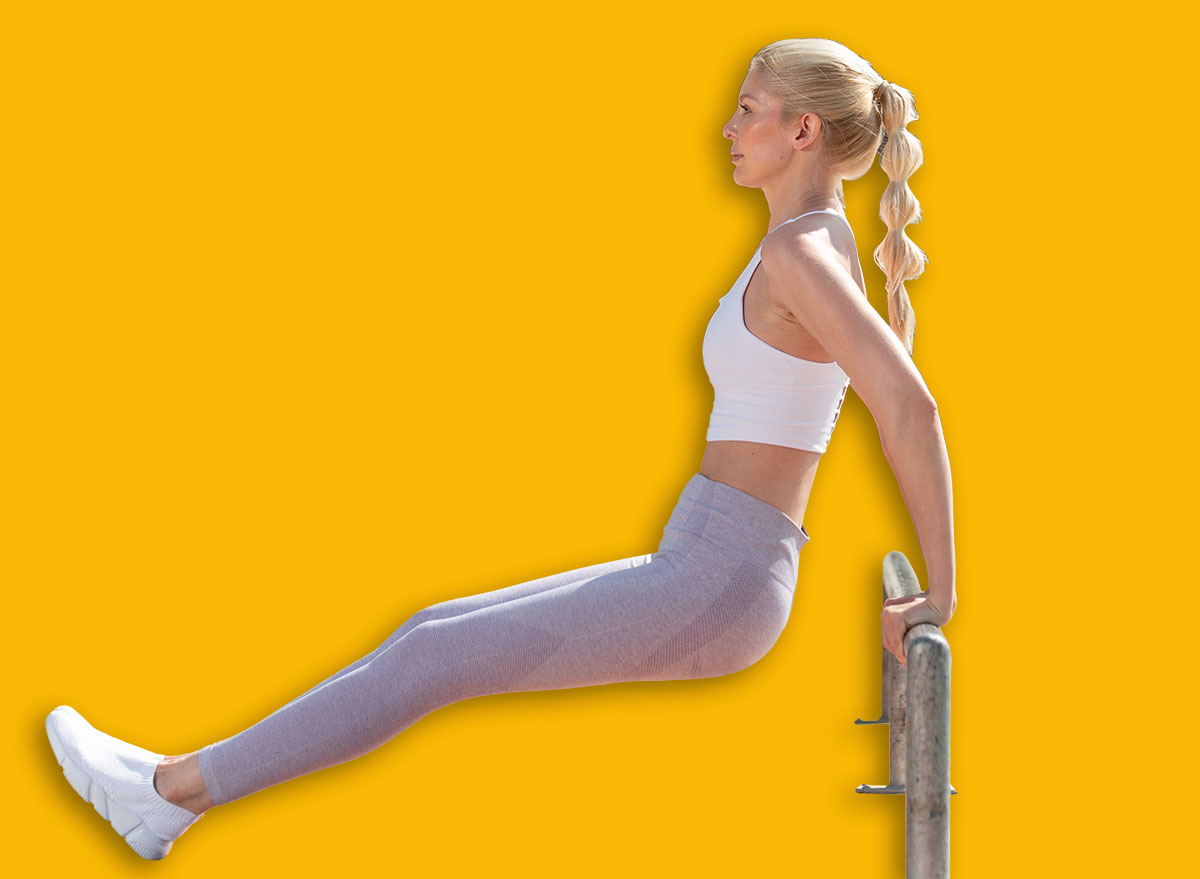

One of the main components of healthy aging is retaining your functional strength. Instead of focusing on how much weight you can lift, functional strength is more about how well your body performs daily tasks, including carrying groceries, pushing open heavy doors, lifting luggage, getting up from the floor, and maintaining good posture.
Unlike most gym machines, bodyweight exercises require your muscles to coordinate movement while stabilizing your joints and controlling your body position. Studies have also found that bodyweight exercises can help improve strength, muscular endurance, balance, and mobility in older adults. The best part? Bodyweight exercises require little to no equipment and can be modified to suit any fitness level.
However, knowing which bodyweight exercises are best for building a stronger upper body can feel daunting, especially with all the conflicting information online. That’s why we chatted with James Brady, CPT, a certified personal trainer at OriGym, who shares his top five bodyweight moves designed to firm your upper body better than gym machines after 50.
“As we age, maintaining functional strength becomes just as important as building muscle,” explains Brady. “Bodyweight movements mimic real life activities more closely than fixed path machines. They also engage the core and smaller stabilizing muscles that machines often bypass.”
The following five exercises target your chest, shoulders, arms, upper back, and core while improving the kind of practical strength that matters most after 50. Read on to learn more.
(And when you’re done, be sure to check out these 5 Home Exercises That Restore Leg Strength Faster Than Gym Machines After 60.)
Push-ups
No list of upper body bodyweight exercises would be complete without the classic push-up. This foundational exercise will work your chest, shoulders, triceps, and core to help build a seriously toned upper body.
How to do it:
- Begin in a high plank position with your hands slightly wider than shoulder-width apart.
- Position your shoulders directly over your hands.
- Keep your body in a straight line from head to toe.
- Flex your core and glutes.
- Slowly bend your elbows to lower your chest toward the floor.
- Keep your elbows angled slightly backward.
- Lower until your chest is just above the floor.
- Push through your palms to return to the starting position.
- Repeat for two to three sets of 8 to 15 reps. Rest for 60 to 90 seconds between sets.
Incline Push-ups
Incline push-ups offer many of the same benefits as traditional push-ups while reducing stress on your shoulders, wrists, and elbows. “By elevating the hands on a bench or sturdy surface, you reduce stress on the joints while still strengthening the chest, shoulders, and arms,” explains Brady.
How to do it:
- Place your hands on a sturdy bench, countertop, or elevated surface.
- Walk your feet backward until your body forms a straight line.
- Engage your core and maintain upright alignment.
- Keep your shoulders away from your ears.
- Slowly bend your elbows.
- Lower your chest toward the elevated surface.
- Pause for one to two seconds near the bottom position.
- Push yourself back to the starting position.
- Perform two to three sets of 8 to 15 reps, resting for 60 to 90 seconds between sets.
Tricep Dips
It’s common to notice a loss of strength and muscle tone in the back of your arms (a.k.a. your triceps) as you age. Fortunately, tricep dips target these muscles while also engaging your chest and shoulders.
How to do it:
- Sit on the edge of a sturdy chair or bench.
- Place your hands beside your hips with fingers pointing forward.
- Move your hips slightly off the edge.
- Extend your legs comfortably in front of you.
- Slowly bend your elbows to lower your body.
- Keep your elbows pointing backward.
- Lower only as far as your shoulder mobility allows.
- Press through your hands to return to the starting position.
- Complete two to three sets of 8 to 12 reps. Rest for 60 to 90 seconds between sets.
Plank Shoulder Taps
Plank shoulder taps combine upper body strength with core stability and balance. “The shoulders, arms, chest, and abdominal muscles all work together to resist movement,” says Brady. “This type of integrated training can help improve posture and overall functional fitness.”
How to do it:
- Start in a high plank position.
- Position your hands directly beneath your shoulders.
- Widen your feet slightly for stability.
- Brace your core and glutes.
- Lift your right hand and tap your left shoulder.
- Return your hand to the floor.
- Repeat with the opposite hand.
- Minimize side-to-side movement through your hips.
- Aim for two to three sets of 10 to 20 total taps per side, resting for 45 to 60 seconds between sets.
Inverted Rows
Inverted rows are one of the best bodyweight exercises for strengthening your upper back and toning your biceps. “Many people find inverted rows offer more practical benefits than seated rowing machines because they require greater body control and coordination,” Brady explains.
How to do it:
- Position yourself beneath a secure bar, suspension trainer, or Smith machine bar.
- Grip the bar with your hands slightly wider than shoulder-width apart.
- Extend your body into a straight line.
- Keep your core engaged during the entire movement.
- Pull your chest toward the bar.
- Squeeze your shoulder blades together at the top of the movement (avoid shrugging your shoulders).
- Lower yourself slowly with control.
- Complete two to three sets of 8 to 12 reps. Rest for 45 to 60 seconds between sets.