5 Seated Exercises Men Over 65 Need to Maintain Leg Strength
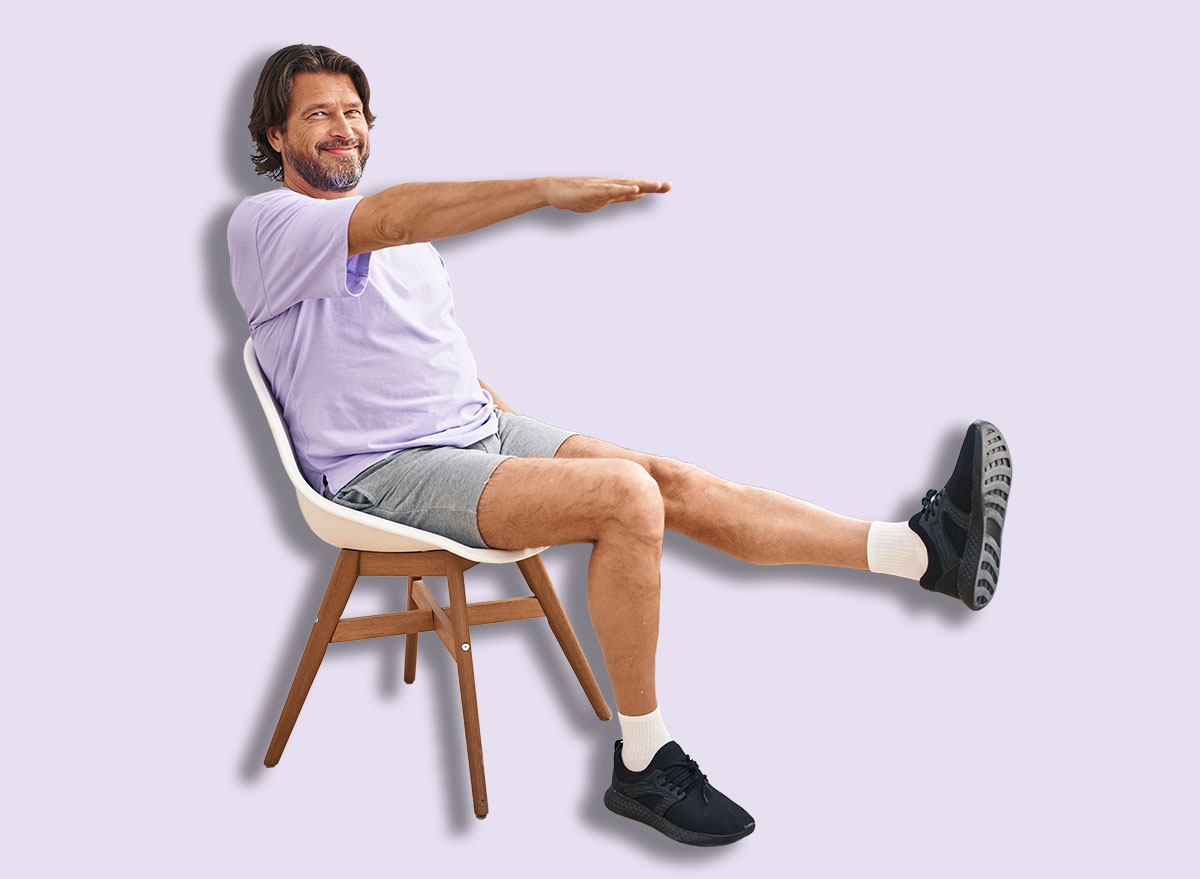

Leg strength after 65 doesn’t disappear because men stop trying. Leg strength fades because daily movement becomes smaller, safer, and more supported. Chairs, cars, and caution reduce how often the legs work through meaningful ranges under tension. Over time, muscles lose the signal to stay strong, even in men who remain active.
Maintaining leg strength at this age requires frequent, joint-friendly stimulation rather than heavy lifting or high-impact work. Seated exercises remove balance demands while still forcing the muscles to contract, control, and coordinate. When performed correctly, they rebuild strength that transfers directly into standing, walking, and climbing stairs.
These five seated exercises target the muscle groups men lose fastest after 65: quadriceps, hamstrings, glutes, and hip stabilizers. Done daily with control and intent, they preserve leg strength, improve confidence, and support independence without stressing joints.
Seated Leg Extension With Hold
This exercise targets the quadriceps, the primary muscle group responsible for standing up, climbing stairs, and controlling knee stability. After 65, quad strength often declines quickly because the knees stop extending fully under tension. This seated extension restores that lost signal by forcing the muscle to contract through range and then hold under load.
The brief hold at the top dramatically increases time under tension without requiring heavy resistance. That sustained engagement strengthens the muscle fibers responsible for endurance and joint control. When performed daily, this movement helps preserve knee strength and reduces the feeling of “weak legs” during everyday tasks.
How to Do It
- Sit tall near the edge of a chair
- Extend one leg straight
- Hold briefly with control
- Lower slowly and switch sides.
Seated March With Core Lock
Hip flexor strength and coordination play a major role in walking speed and balance. This seated march isolates that pattern while removing fall risk. By lifting one knee at a time while staying upright, the legs must work independently while the core stabilizes the torso.
The slow tempo prevents momentum and forces the muscles to stay engaged longer. This movement also reinforces coordination between the hips and trunk, which supports smoother walking mechanics and reduces fatigue. Daily practice maintains leg lift strength essential for stepping, turning, and getting in and out of vehicles.
How to Do It
- Sit tall with feet flat
- Brace core gently
- Lift one knee slowly
- Lower with control and alternate.
Seated Hamstring Press-Down
Hamstrings weaken when sitting dominates the day, yet they play a critical role in knee stability and walking efficiency. This press-down variation restores hamstring activation by forcing the back of the thigh to engage against the floor. The chair provides support while the muscle works in isolation.
Pressing downward rather than lifting reduces joint strain while still delivering a strong contraction. Holding the press increases time under tension, helping preserve muscle tone and endurance. This exercise supports smoother strides and better knee control during daily movement.
How to Do It
- Sit tall with one foot flat
- Press heel firmly into the floor
- Hold tension briefly
- Relax and switch sides.
RELATED: The 6-Minute Daily Routine That Restores Upper-Body Strength Better Than Weight Training After 55
Seated Hip Abduction Hold
Hip stabilizers often weaken unnoticed, yet they protect balance and knee alignment. This seated abduction challenges those muscles without requiring standing or resistance bands. Pressing the knees outward while seated forces the outer hips to engage continuously.
The static hold builds endurance in muscles responsible for lateral stability. When these muscles stay strong, walking feels steadier and transitions feel more controlled. Daily performance helps prevent the gradual loss of side-to-side leg strength common after 65.
How to Do It
- Sit upright with feet planted
- Press knees outward gently
- Hold without leaning
- Relax slowly.
Seated Heel Raise With Pause
Calf strength often declines when walking speed slows and stride length shortens. This seated heel raise restores lower-leg strength essential for push-off during walking and balance recovery. Even seated, lifting the heels forces the calves to contract against body weight.
Adding a pause at the top increases muscle engagement without joint stress. Strong calves support circulation, endurance, and confidence during standing and walking. Daily practice maintains lower-leg strength that often gets overlooked.
How to Do It
- Sit tall with feet flat
- Lift heels off the floor
- Pause briefly at the top
- Lower slowly with control.