If You Can Do This Many Squats After 50, Your Conditioning Is Top-Tier
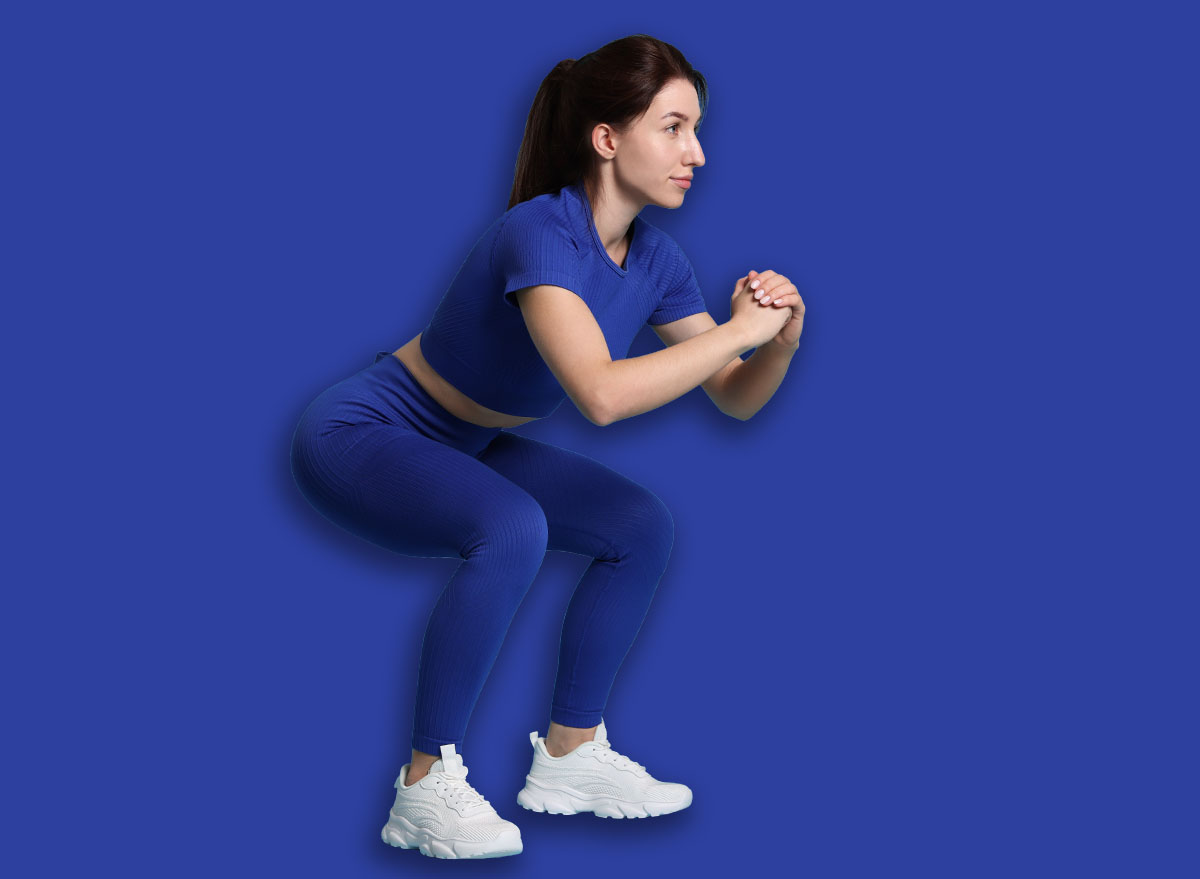

Squats are one of the easiest ways to see how well your body handles repeated work. You lower, stand, reset your breath, and go again. It sounds simple, but once the reps start adding up, the test gets honest fast. Your legs have to keep producing force, your core has to hold position, and your breathing has to stay under control long enough to keep the set moving.
After 50, muscle endurance deserves more attention. Strength tells you how much force you can produce. Endurance tells you how well you can maintain that strength without your form falling apart or your pace slowing too much. Muscle endurance is helpful during long walks, stairs, yard work, travel days, hikes, and anything else that keeps you on your feet longer than expected.
I often return to squats with clients because they show so much in such a simple movement. I can watch how someone lowers, how they stand back up, how their knees track, and how their posture holds as fatigue builds. A few reps tell you about mechanics. A longer set gives you a better look at conditioning, durability, and how well the lower body can keep working.
A strong and capable lower body changes how you move through life. Your quads, glutes, hamstrings, hips, and calves support nearly every step, stand, climb, and transition you make. This squat test gives you a clear way to check your conditioning without needing equipment. Up next, we’ll break down why squats are such a strong marker, how to perform them correctly, what your rep count means, and how to build better lower-body endurance after 50.
Why Squats Are a Strong Conditioning Test After 50
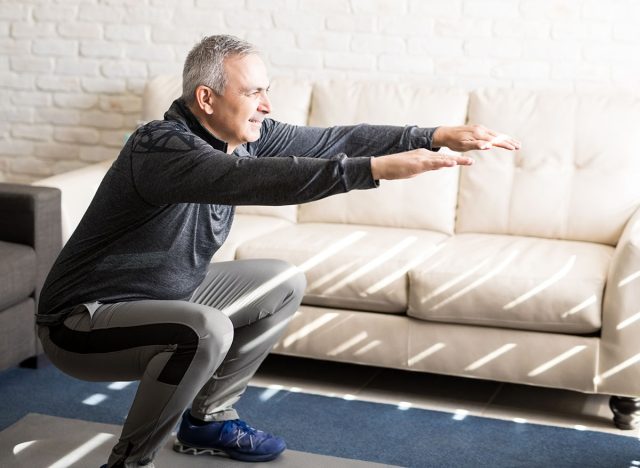
Squats bring strength and conditioning together in one movement. Your legs drive each rep, but your core, hips, and breathing must stay engaged. When you perform squats continuously, your body has to manage effort across multiple systems at once. That makes the test more useful than it looks.
The lower body carries a huge workload during daily life. Getting out of a chair, climbing stairs, walking uphill, loading groceries, and moving through a busy day all require repeated lower-body effort. Squats train that same pattern in a clear and measurable way. The better you handle repeated squats, the more prepared your legs tend to be for real-world demands.
Muscle endurance plays a major role here. Each rep asks your quads and glutes to produce force, then recover just enough to repeat. As the set continues, your breathing, posture, and pace become part of the challenge. Strong conditioning means you can keep moving with control instead of needing frequent stops.
Squats also reinforce joint control through the hips, knees, and ankles. Repeated reps help build strength through a useful range of motion while improving your ability to stay balanced and coordinated. When your lower body can keep that pattern consistent, you’re showing more than leg strength. You’re showing the capacity to keep working.
How to Perform Continuous Squats With Proper Form
A clean squat starts with a strong setup. Your feet should feel grounded, your torso should stay tall, and your knees should track in line with your toes. Once the set begins, aim to make every rep look the same. Your score only means something when the reps stay consistent from start to finish.
How to Do It:
- Stand with your feet about shoulder-width apart, and your toes slightly turned out.
- Brace your core before you begin the first rep.
- Sit your hips back and down while bending your knees.
- Lower until your thighs reach at least parallel or your deepest controlled position.
- Drive through your feet to stand tall.
- Repeat each rep at a steady pace without stopping.
Movement standard: A squat counts when your thighs reach at least parallel, with your feet planted and your torso controlled. Use a box, chair, or supported variation if you’re still building toward that depth.
Best Variations: Box Squat, Goblet Squat, Heels-Elevated Squat, Tempo Squat, Supported Squat.
Squat Test After 50: What Your Rep Count Means

Your rep count should reflect clean, repeatable movement. Keep your depth, posture, and pace consistent. Once you start cutting depth, shifting your weight, or losing control, record the number of reps you completed with strong form.
- Under 20 reps: You’re building the base. Focus on steady reps, clean depth, and better control through the full movement.
- 20 to 40 reps: This is a solid range after 50. Your legs can handle repeated effort, and your conditioning supports a longer set.
- 40 to 60 reps: You’re in strong territory. Your lower body continues to produce force while your breathing and posture remain consistent.
- 60+ reps: This is top-tier conditioning, and let’s be honest, you’re moving! Completing 60 or more clean squats without stopping shows excellent lower-body endurance, control, and work capacity after 50.
How to Build Better Squat Conditioning After 50
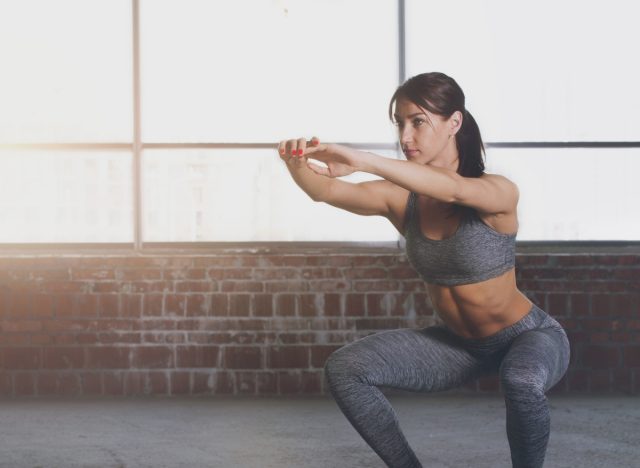
Improving your squat count comes down to building endurance without letting movement quality slide. The goal is to make your legs stronger, improve your ability to repeat effort, and keep your breathing steady as the reps build. You’ll get more from consistent practice than from turning every session into a max test. Some days should focus on smooth volume. Other days can include slower reps, pauses, or light loading to build strength in the positions that matter. Over time, those pieces help your legs handle more work with less drop-off.
- Practice squats consistently: Start with two to three squat sessions per week. Keep the reps clean and controlled.
- Use submaximal sets: Stop a few reps before your form changes. This builds volume without forcing sloppy reps.
- Build volume gradually: Try multiple sets of 10 to 20 reps before testing one long set.
- Add tempo work: Slow lowerings help build control, strength, and time under tension.
- Use pause squats: Holding the bottom position for one to two seconds builds strength and confidence at depth.
- Strengthen your glutes and hamstrings: Bridges, hip thrusts, step-ups, and deadlifts support stronger squat mechanics.
- Train your breathing: Match your breath to your pace so longer sets feel smoother and more controlled.
- Retest every few weeks: Use the same depth and pace each time so your progress stays easy to measure.
References
- García-Hermoso A, Cavero-Redondo I, Ramírez-Vélez R, Ruiz JR, Ortega FB, Lee DC, Martínez-Vizcaíno V. Muscular Strength as a Predictor of All-Cause Mortality in an Apparently Healthy Population: A Systematic Review and Meta-Analysis of Data From Approximately 2 Million Men and Women. Arch Phys Med Rehabil. 2018 Oct;99(10):2100-2113.e5. doi: 10.1016/j.apmr.2018.01.008. Epub 2018 Feb 7. PMID: 29425700.
- Hong AR, Hong SM, Shin YA. Effects of resistance training on muscle strength, endurance, and motor unit according to ciliary neurotrophic factor polymorphism in male college students. J Sports Sci Med. 2014 Sep 1;13(3):680-8. PMID: 25177199; PMCID: PMC4126309.