4 Wall Exercises That Build Lower Back Strength Faster Than Squats After 60


A stronger lower back usually starts with the muscles around it. Your glutes, hamstrings, hips, core, and upper back all help keep your spine supported when you stand, walk, bend, lift, or hold a posture for a while. Wall exercises provide those areas with a simple way to work with greater control, which can make them especially useful after 60.
Squats train your legs well, but lower back strength requires more than just bending your knees and standing back up. Your body also needs a strong hinge, steady hips, active glutes, and enough core control to keep your spine supported. The wall helps by giving you feedback. You can feel where your hips are moving, where your back is positioned, and how well your body holds alignment through each rep.
When I coach lower back strength, I usually focus on how well someone can control the movement before adding load. Can the hips move without the spine doing all the work? Can the glutes finish the rep? Can the core stay lightly braced while the legs move? Wall exercises make those checkpoints easier to feel because the wall gives you a reference point while your muscles still do the work.
Use these four exercises as a simple lower-back support routine. Move slowly, keep your breathing steady, and focus on building strength through your hips, glutes, hamstrings, and core. A few controlled rounds can help your lower back feel stronger and better supported through daily movement.
Hip Hinge to Wall
The hip hinge to wall trains your glutes, hamstrings, core, and lower back while teaching your hips to move with control. Reaching your hips back toward the wall gives you a clear target, which helps you learn the hinge pattern more easily. This movement builds the strength you use when bending, lifting, picking things up, or standing back up from a forward position. Keep the range smooth and let your hips lead the rep.
Muscles Trained: Glutes, hamstrings, lower back, core.
How to Do It:
- Stand about a foot in front of a wall with your back facing it.
- Place your feet hip-width apart.
- Brace your core and soften your knees.
- Push your hips back toward the wall.
- Tap the wall lightly with your hips.
- Drive your hips forward to return to standing.
Recommended Sets and Reps: Perform 3 sets of 10 to 12 reps. Rest for 45 seconds between each set.
Best Variations: Bodyweight good mornings, banded good mornings, dumbbell RDLs.
Form Tip: Keep your spine long and move through your hips.
Wall Glute Bridge
Wall glute bridges train your glutes and hamstrings while your core helps keep your pelvis steady. Placing your feet on the wall creates a strong setup for pressing through your heels and feeling the work in the backside of your body. Stronger glutes give your lower back more support during walking, stairs, standing, and lifting. Pause at the top of each rep, letting the glutes finish the movement.
Muscles Trained: Glutes, hamstrings, core, lower back.
How to Do It:
- Lie on your back with your feet flat against a wall.
- Bend your knees to a comfortable angle.
- Brace your core and press your heels into the wall.
- Lift your hips until your body forms a straight line from shoulders to knees.
- Squeeze your glutes at the top.
- Lower your hips with control.
Recommended Sets and Reps: Perform 3 sets of 10 to 15 reps. Rest for 45 seconds between each set.
Best Variations: Wall bridge holds, single-leg wall glute bridges, mini-band wall glute bridges.
Form Tip: Press through your heels and keep your ribs down as your hips lift.
Wall Plank
Wall planks train your abs, shoulders, glutes, and deep core while keeping the position more approachable than a floor plank. Your midsection has to brace to keep your body aligned, and your glutes help support your pelvis. This kind of bracing strength helps your lower back because the core learns to hold steady while your body supports its own weight. Step farther from the wall to increase the challenge.
Muscles Trained: Core, shoulders, glutes, chest.
How to Do It:
- Stand facing a wall.
- Place your hands on the wall at shoulder height.
- Step your feet back until your body forms a straight line.
- Brace your core and squeeze your glutes.
- Hold the position while breathing steadily.
- Step forward to come out of the hold.
Recommended Sets and Reps: Perform 3 sets of 20 to 40-second holds. Rest for 30 to 45 seconds between each set.
Best Variations: Wall plank with shoulder taps, lower-angle wall plank, wall plank with knee drives.
Form Tip: Keep your ribs stacked over your hips and your body in one long line.
Wall-Supported Hip Extension
Wall-supported hip extensions train your glutes and hamstrings while the wall gives you balance support. Extending one leg behind you strengthens hip extension, which helps power walking, stairs, and standing tall. This exercise also teaches your glutes to work without your lower back taking over the movement. Keep the lift small, squeeze at the top, and stay tall through your torso.
Muscles Trained: Glutes, hamstrings, core, hip stabilizers.
How to Do It:
- Stand facing a wall with your hands lightly placed against it.
- Shift your weight onto one foot.
- Brace your core and keep your chest tall.
- Extend your opposite leg straight behind you.
- Squeeze your glute at the top.
- Lower your foot with control and switch sides after your reps.
Recommended Sets and Reps: Perform 3 sets of 10 to 12 reps per side. Rest for 30 to 45 seconds between each set.
Best Variations: Banded hip extensions, paused hip extensions, slower tempo hip extensions.
Form Tip: Lift from your glute and keep your lower back quiet.
How to Build Lower Back Strength With Wall Exercises
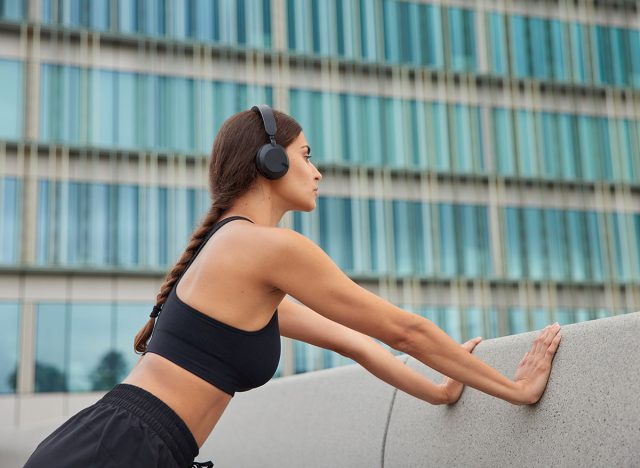
Wall exercises work best when the wall helps you find better positions while your muscles still create the effort. Keep your movements smooth, brace lightly, and focus on making your hips, glutes, hamstrings, and core support the lower back from every angle.
- Build your hinge pattern: Hip hinges teach your glutes and hamstrings to help with bending and lifting. Better hinge control gives your lower back a stronger support system.
- Train your glutes with purpose: Wall glute bridges and hip extensions strengthen the muscles that help your hips drive movement. Stronger glutes can make standing, walking, and climbing stairs feel more supported.
- Use your core as a brace: Wall planks help your abs support your spine. A steady core gives your lower back more help during daily movement.
- Move with control: Slower reps make it easier to feel the right muscles working. Smooth movement also helps you build strength without rushing through positions.
- Progress one step at a time: Add reps, longer holds, pauses, a light band, or a slightly harder angle once the exercises feel comfortable.
Stronger lower back support comes from building the team around your spine. Use the wall for feedback, keep the reps clean, and let your hips, glutes, hamstrings, and core build the strength that helps you move through the day with more confidence.
References
- Gordon R, Bloxham S. A Systematic Review of the Effects of Exercise and Physical Activity on Non-Specific Chronic Low Back Pain. Healthcare (Basel). 2016 Apr 25;4(2):22. doi: 10.3390/healthcare4020022. PMID: 27417610; PMCID: PMC4934575.
- Chang WD, Lin HY, Lai PT. Core strength training for patients with chronic low back pain. J Phys Ther Sci. 2015 Mar;27(3):619-22. doi: 10.1589/jpts.27.619. Epub 2015 Mar 31. PMID: 25931693; PMCID: PMC4395677.