5 Standing Exercises That Restore Full-Body Strength Faster Than Gym Memberships After 65
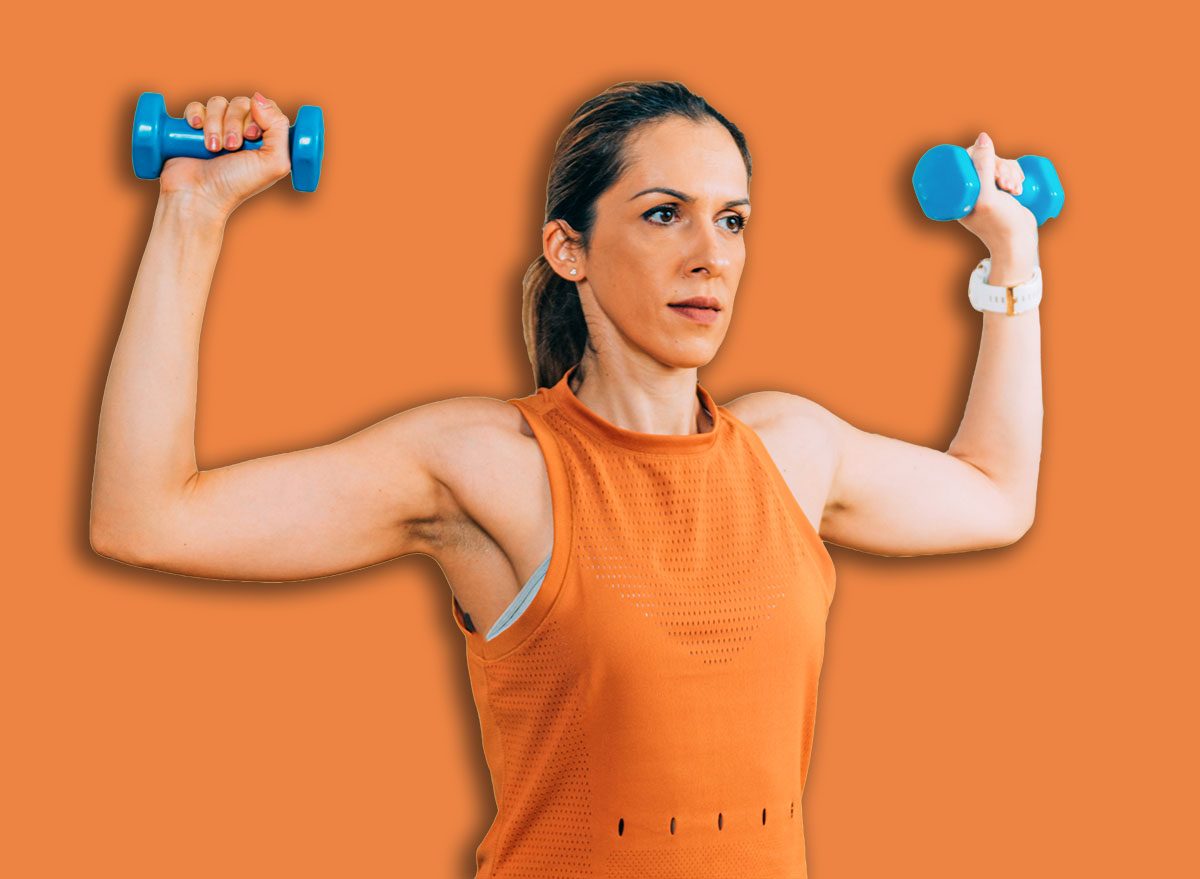

Your body needs regular exercise to maintain muscle strength, move with ease, and lead an active, independent life. After all, a strong, stable body is what keeps you mobile and ready to take on simple daily tasks. The best part? You don’t need a room full of gym machines to achieve real results. In fact, all you need is your body weight to get started.
“Standing exercises support full-body strength differently than seated or machine-based exercises because they inherently require greater core activation,” explains
Joe LaCerra, Owner and Personal Trainer at W.O.L.F Gyms. “Standing exercises teach your body greater resiliency and proprioception. While seated and machine-based exercises certainly have their place, one should always include standing exercises in their plan to challenge body mechanics, especially when aging, as trips and falls become more likely. The more capability your body has in a standing position, the less likely these falls are to occur.”
Standing workouts require you to move against resistance while staying balanced and controlling your posture. Even when an exercise mainly engages the legs or arms, your core, hips, and smaller supporting muscles still play a role.
“This is one reason carefully chosen standing exercises give you so much bang for your buck. They teach different parts of the body to work together during the same movements we use every day- squatting, stepping, pushing, pulling, lifting, and carrying,” says Hazel Anderson, PT, DPT, ScD, DipACLM, Associate Professor, Doctor of Physical Therapy Program; Diplomate, American College of Lifestyle Medicine; University of St. Augustine for Health Sciences. “That strength can make climbing stairs, carrying groceries, completing household tasks, and recovering from a stumble feel more manageable.”
To get you on the right track, we learned five standing exercises to add to your exercise routine that can help restore full-body strength faster than gym memberships after 65.
Goblet Squats
“This movement strengthens your quads and glutes while forcing your body to maintain a strong core and neutral spine by holding the weight directly in front of you,” LaCerra tells us.
- Stand tall, feet slightly wider than shoulder-width.
- Grasp a dumbbell with both hands, and hold the weight in front of your chest with your elbows pointing down and tucked in.
- Hinge at the hips and bend your knees to squat, keeping the weight in place.
- Squat as far as you can with a straight back.
- Push through your heels to return to the starting position.
Romanian Deadlifts
Romanian deadlifts strengthen your glutes, hamstrings, and spinal erectors.
“Too often, people avoid bending out of fear of injuring their spine. A properly executed Romanian deadlift will actually make your spine more resilient over time,” LaCerra tells us.
- Stand tall with your feet hip-width apart.
- Hold a dumbbell in each hand.
- Bend your knees slightly and hold the weights in front of your thighs.
- Press your hips back as you lower the dumbbells down your leg. Maintain a straight back as you do so.
- Squeeze your glutes to return to the start position.
Standing Dumbbell Shoulder Press
“This exercise brings the upper body into the equation, strengthening the shoulders and triceps primarily. By performing this movement standing, you are engaging your core and working on your overhead strength,” LaCerra points out.
- Stand tall with your feet hip-width apart.
- Hold a dumbbell in each hand at shoulder level, palms facing forward.
- Press the weights overhead, extending your arms.
- Use control as you lower the weights back to shoulder height.
Squat to Chair
“The squat to chair is one of my favorite lower-body exercises because it practices the same movement used to stand from a chair, get out of a car, or get on and off the toilet,” Anderson says.
- Begin by standing tall in front of a sturdy chair with your feet hip-width apart on the ground.
- Activate your core and keep your chest lifted.
- Bend at the knees and hips and lower slowly into a squat—as if you’re about to sit down. Make sure your weight stays in your heels.
- Lightly touch the surface of the chair with your glutes.
- Press through your heels to rise back up.
- Perform 8 to 12 controlled reps.
Incline Pushups
“Incline pushups strengthen the chest, shoulders, triceps, and core—the muscles used to push open doors, move objects, and push up from an armrest or the floor,” Anderson tells us. “A wall is a great starting point. As strength improves, moving the hands to a countertop or lower stable surface increases the amount of body weight the upper body must support.”
- Stand tall, facing a wall.
- Place your hands on the surface shoulder-width apart.
- Walk your legs back so you’re at a straight incline from your head to your heels.
- Keep your legs together and rise onto the balls of your feet. Engage your core and keep your gaze forward.
- Bend your elbows to lower your body until your chest lines up with your elbows.
- Return to straight arms.
- Complete 8 to 12 controlled reps.