The 6-Minute Standing Routine That Shrinks Belly Faster Than Gym Workouts After 50

Too many people think that losing belly fat is impossible once they hit a certain age, forty or fifty often being the “magic numbers” cited. I run TRAINFITNESS, the UK’s leading PT course provider, and I’ve worked in fitness since I left school. I can tell you that information is flat out wrong. The issue is that most programmes are one-size-fits-all and don’t take into account the things that change as we get older. Here’s a simple standing routine that targets belly fat where traditional gym workouts fall short, with exactly how to do each move.
Why Most Gym Workouts Fail After 50

A lot of gym programmes don’t work for older adults as they are treating belly fat as if it’s the same issue at 50 as it was at 30. It’s worlds apart. After we hit 50, our body’s hormonal landscape has completely changed, our metabolism has dropped, and how we store fat is totally different.
So many of these programmes have endless crunches and sit-ups, which is a massive mistake. While these exercises work your stomach muscles, they do pretty much zero for the fat that’s sitting on top of them. Plenty of people have really strong abs that are hidden under a layer of fat, and no amount of sit-ups will change that, as spot reduction isn’t a thing. Your body chooses where it loses fat from, and often, belly fat is the last to go.
A lot of workout programmes also rely too much on machines and seated exercises. These have their place but they don’t require the core to stabilise during the exercise. When we sit or lie down, our abs aren’t actively engaged like when we are standing and moving. We miss out on the functional calorie burn that comes from our entire body working together.
High-intensity interval training (HIIT) is recommended regularly, but for a lot of people over 50 it can be too demanding on their joints or not something that can be sustained. A programme needs to be stuck to, and if you can’t do that because it leaves you exhausted or injured, it makes no difference how effective it is theoretically.
Then there’s what I call the “cardio trap.” You can spend an hour on the bike or treadmill and it burns calories during that session, but does very little for the metabolism afterwards. Our bodies adapt quickly to steady-state cardio and become much more efficient at it, meaning we burn fewer calories doing exactly the same workouts over time.
Most gym workouts also don’t address the slowdown in metabolism that happens post-50. The basal metabolic rate drops in everyone by approx 2-3% a decade after 30. This doesn’t sound like a load but it soon adds up: 150-200 fewer calories burned a day for simply existing. Workouts need to actively counteract this by building and maintaining muscle mass, otherwise you’re fighting an uphill battle.
Why Standing Exercises Work
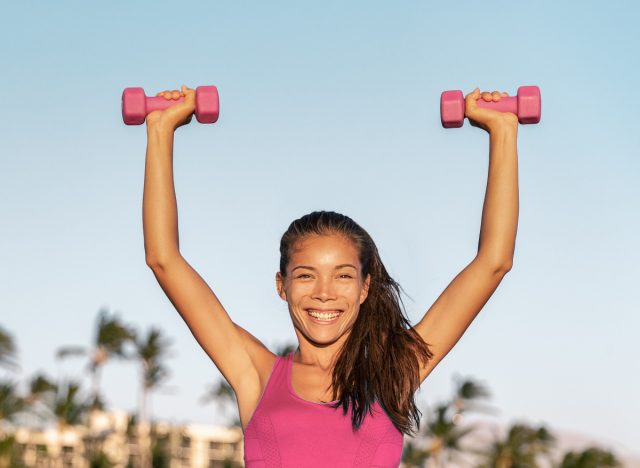
Standing exercises force your entire body to work as a unit. Your core has to stabilise you constantly, your legs have to support your body weight, and your upper body has to maintain position. This integrated effort burns significantly more calories than isolated exercises because you’re recruiting multiple muscle groups at once.
When you’re standing, your core is always engaged just to keep you upright. Add movement on top of that, twisting, bending, reaching, and your abdominal muscles work even harder. This constant activation builds strength and endurance in your core while simultaneously burning the fat covering it.
Standing exercises also improve insulin sensitivity better than seated work. Better insulin response means your body handles carbohydrates more effectively, storing less as fat around your midsection. This matters enormously after 50 when insulin resistance becomes more common.
The functional nature of standing exercises translates directly to everyday movements. You’re training the same patterns you use to get out of chairs, climb stairs, carry shopping, and play with grandchildren. This means you’re more likely to stay active outside the gym, which compounds your calorie burn throughout the day.
Standing work also triggers a greater release of hormones that support fat loss, particularly growth hormone and testosterone (yes, women produce testosterone too, just in smaller amounts). These hormones decline naturally after 50, but resistance training, especially compound movements performed standing, helps maintain higher levels.
There’s also the simple fact that standing exercises are harder to cheat on. When you’re sitting or lying down, it’s easy to let momentum do the work or to compensate with the wrong muscles. Standing forces you to maintain proper form or you’ll lose balance, which means you’re getting genuine work from the intended muscle groups.
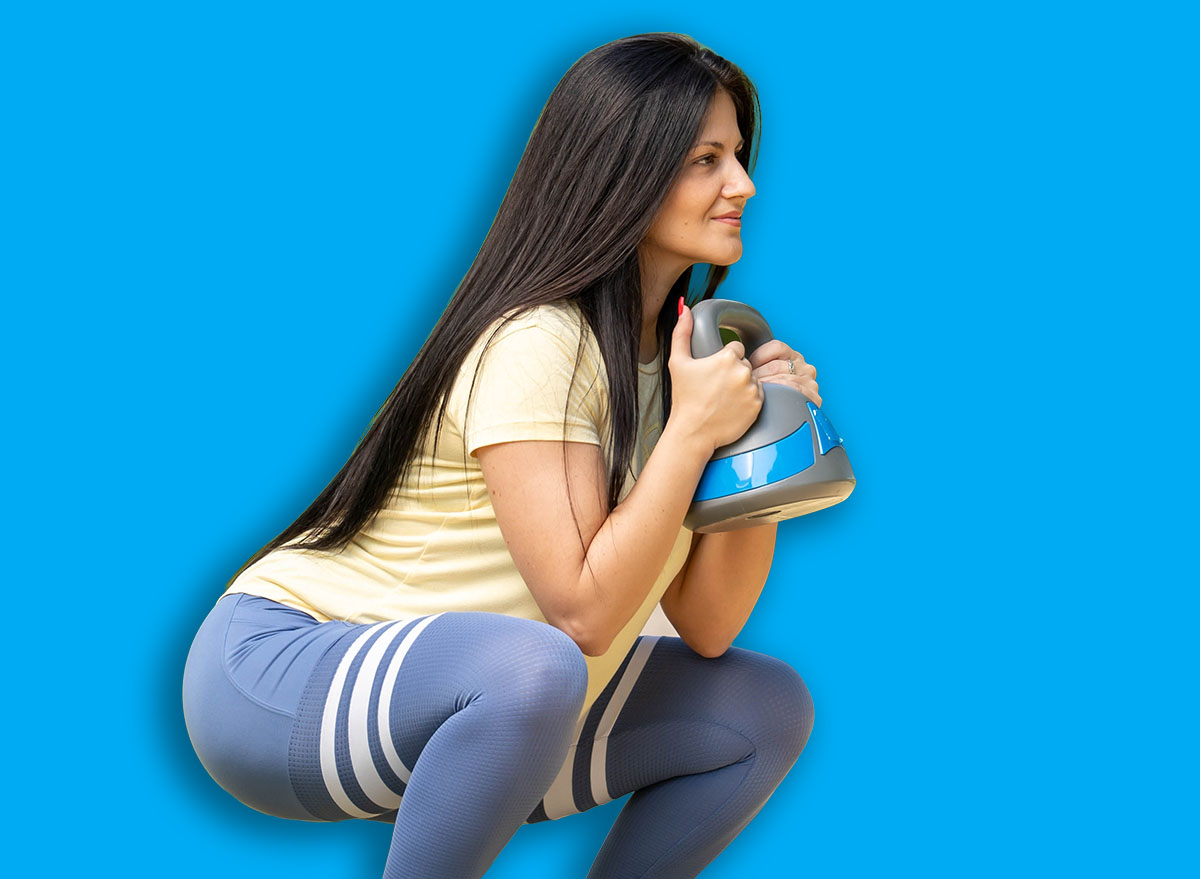
Goblet Squats
Goblet squats work your legs, glutes, and core simultaneously, creating a massive metabolic demand. Your quads and glutes are the largest muscle groups in your body, so working them burns significant calories during and after your workout. The front-loaded weight forces your core to brace hard to keep you upright, directly targeting the deep abdominal muscles that pull your waist in.
Muscles Trained: Quads, glutes, core, upper back
How to Do It:
- Hold a dumbbell or kettlebell vertically at chest height, gripping it by the top end with both hands
- Stand with feet slightly wider than hip-width, toes pointed slightly outward
- Keep your chest up and elbows pointing down
- Lower yourself by pushing your hips back and bending your knees, as if sitting into a chair
- Go as deep as you can while keeping your heels on the floor and your chest up
- Drive through your heels to stand back up, squeezing your glutes at the top
Avoid These Mistakes:
- Don’t let your knees cave inward as you squat. Your knees should track in line with your toes throughout the movement. If they’re collapsing inward, you’re putting stress on your knee joints and not engaging your glutes properly.
- Don’t round your lower back at the bottom of the squat. If you can’t maintain a neutral spine, you’re going too deep for your current mobility. Reduce your range of motion and work on hip flexibility separately.
- Don’t come up onto your toes. Your weight should stay in your heels and midfoot throughout. If you’re rising onto your toes, your weight is too far forward and you’re missing out on the glute activation.
Recommended Sets and Reps: 3 sets of 10-12 reps
Form Tip: If your back rounds at the bottom, don’t force depth. Work within a range where your spine stays neutral and build from there.
Romanian Deadlifts
Romanian deadlifts hammer your posterior chain: your hamstrings, glutes, and lower back. This creates a strong metabolic response while building muscle that increases your resting metabolic rate. The hip hinge movement pattern also requires intense core bracing to protect your spine, which strengthens the muscles around your midsection and improves posture that makes your stomach appear flatter.
Muscles Trained: Hamstrings, glutes, lower back, core
How to Do It:
- Stand with feet hip-width apart, holding dumbbells in front of your thighs with palms facing your body
- Keep a slight bend in your knees and lock it there. Your knees don’t move during this exercise.
- Push your hips back as if closing a car door with your bum, lowering the weights down your thighs
- Keep the weights close to your body and your back straight
- Lower until you feel a stretch in your hamstrings, usually around mid-shin height
- Drive your hips forward to stand back up, squeezing your glutes at the top
Avoid These Mistakes:
- Don’t squat instead of hinging. Your knees shouldn’t move much during this exercise. The movement comes from your hips pushing back, not from bending your knees.
- Don’t round your back. Your spine should stay neutral from start to finish. If your back rounds, you’re either going too low or the weight is too heavy. This isn’t just ineffective, it’s dangerous.
- Engage your core before you start the movement. You should brace your abs as if someone’s about to punch you in the stomach before you begin each rep. This protects your spine and makes the exercise more effective for your midsection.
Recommended Sets and Reps: 3 sets of 10-12 reps
Form Tip: Brace your abs as if someone’s about to punch you in the stomach before you begin each rep. This protects your spine and makes the exercise far more effective.
Standing Dumbbell Press
Pressing weight overhead while standing requires your entire core to stabilise your spine against the load. Your abs, obliques, and lower back all fire intensely to keep you from tipping backward. This builds serious core strength while burning calories from the shoulder and arm work. The standing position also means your legs and glutes are engaged to keep you stable.
Muscles Trained: Shoulders, triceps, core, obliques, glutes
How to Do It:
- Stand with feet hip-width apart, holding dumbbells at shoulder height with palms facing forward
- Engage your core and squeeze your glutes
- Press the weights straight up until your arms are fully extended overhead
- Don’t lean back. Keep your ribs down and core tight.
- Lower the weights back to shoulder height with control
Avoid These Mistakes:
- Don’t arch your lower back as you press. This happens when your core isn’t engaged properly or the weight is too heavy. The arch puts stress on your lower back and completely defeats the purpose of the core work.
- Don’t press the weights forward instead of straight up. The weights should travel in a vertical line above your head. If they’re going forward, you’re losing stability and missing out on the core engagement.
- Don’t hold your breath. You need to breathe throughout the movement. Exhale as you press up, inhale as you lower. Holding your breath increases blood pressure unnecessarily and reduces your performance.
Recommended Sets and Reps: 3 sets of 10-12 reps
Form Tip: Keep your ribs pulled down throughout. The moment your ribs flare up, your lower back takes over and your core stops working.
Bent-Over Rows
Rows build your back muscles while forcing your core to hold you in the bent-over position. This static hold of your torso is incredibly demanding on your abs and lower back. Strong back muscles also improve your posture dramatically, which makes your stomach look flatter instantly by preventing the forward slouch that pushes your belly out.
Muscles Trained: Lats, rhomboids, rear delts, biceps, core, lower back
How to Do It:
- Stand with feet hip-width apart, holding dumbbells in front of your thighs
- Push your hips back and bend forward at the waist until your torso is at about 45 degrees
- Let the weights hang straight down from your shoulders
- Pull the weights up to your ribcage, leading with your elbows
- Squeeze your shoulder blades together at the top
- Lower the weights back down with control
Avoid These Mistakes:
- Don’t jerk the weights up using momentum. This should be a controlled pull, not a yanking motion. If you’re using momentum, the weight is too heavy and you’re not actually working your back muscles effectively.
- Don’t let your torso rotate as you pull. Your chest should stay facing the floor throughout. If one shoulder is lifting higher than the other, you’re rotating rather than pulling straight up, which means you’re not engaging your core properly.
- Don’t stand too upright. If you’re barely bent over, you’re turning this into an upright row rather than a bent-over row. The forward lean is what makes this exercise work your core so effectively.
Recommended Sets and Reps: 3 sets of 10-12 reps
Form Tip: Your chest should stay facing the floor the whole time. If one shoulder starts lifting higher than the other, drop the weight.
Farmer’s Carries
Farmer’s carries are deceptively simple but brutally effective. Carrying heavy weights while walking forces your entire core to work overtime to keep your spine stable and prevent you from leaning. This exercise also burns a significant number of calories because you’re moving your entire body weight plus additional load. The constant tension in your core throughout the carry builds endurance in your abdominal muscles.
Muscles Trained: Core, obliques, traps, forearms, glutes, legs
How to Do It:
- Pick up heavy dumbbells or kettlebells, one in each hand
- Stand tall with your shoulders back and chest up
- Engage your core as if bracing for a punch
- Walk forward with controlled steps, keeping your shoulders level
- Don’t lean to either side. Fight to stay perfectly upright.
- Walk for 30-40 seconds or about 20 metres
Avoid These Mistakes:
- Don’t lean to one side. Your shoulders should stay level throughout the walk. If one shoulder is dropping, your core isn’t engaged properly and you’re missing the point of the exercise.
- Don’t look down at the ground. Your head should be up, eyes forward. Looking down rounds your upper back and throws off your posture, making the exercise less effective and potentially causing neck strain.
- Don’t use weights that are too light. This should be challenging. If you can walk around chatting comfortably, the weight isn’t heavy enough to create the core demand needed for results. You should feel like you’re working hard to maintain your posture.
Recommended Sets and Reps: 3 sets of 30-40 seconds with 60-90 seconds rest between sets
Form Tip: If you can walk around chatting comfortably, the weight isn’t heavy enough. You should feel like you’re working hard just to maintain your posture.
How Often to Train
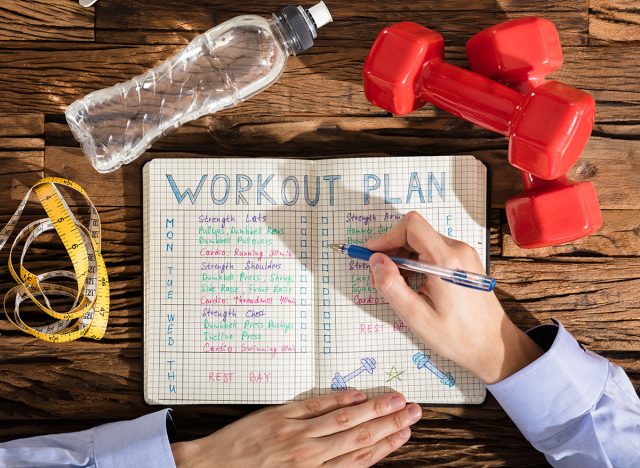
Three to four days per week is the sweet spot for most people over 50. This gives you enough training stimulus to see real changes while allowing adequate recovery between sessions. Your muscles don’t grow during workouts. They grow during recovery. Skip the recovery and you’ll undermine your results.
I’d structure it as Monday, Wednesday, Friday, with optional Saturday if you’re feeling good and have been training consistently for at least a month. This spacing gives you at least 48 hours between sessions, which is what your body needs to repair and adapt, especially after 50 when recovery takes longer than it used to.
Can you do it daily? No, and you shouldn’t try. Daily training without rest days leads to accumulated fatigue, increased injury risk, and diminished returns. You might feel like you’re being dedicated, but you’re actually working against yourself. Your body releases cortisol when it’s overtrained, and elevated cortisol actively promotes belly fat storage. So training every day can literally make it harder to lose belly fat.
If you feel like you need to do something on your off days, go for a walk, do some gentle stretching, or practice your balance work. Light movement that doesn’t tax your muscles is fine and can even help recovery. Just don’t do another resistance training session.
The other consideration is that after 50, your hormonal environment makes recovery slower. Growth hormone and testosterone levels are lower than they were in your 30s and 40s, which means your body needs more time to rebuild muscle tissue after it’s been broken down during training. Respect this reality rather than fighting against it.
Consistency over months matters infinitely more than frequency over weeks. Three sessions per week done consistently for six months will give you dramatically better results than six sessions per week done for three weeks before you burn out or get injured.
What Results to Expect

After 30 days of consistent training three to four times per week, most people lose 1-2 inches from their waist measurement. This isn’t dramatic, but it’s noticeable. Your clothes will fit slightly better, particularly around the waistband. You won’t see abs yet, but you’ll feel your stomach getting firmer when you engage your core.
The changes you’ll notice first aren’t always visible in the mirror. You’ll move more easily. Getting out of chairs feels less effortful. Your posture improves, which makes your belly look flatter even before you’ve lost significant fat. You’ll have more energy throughout the day because your metabolism is starting to respond to the regular training stimulus.
After 60 days, expect 2-4 inches off your waist if you’ve been consistent with training and reasonably sensible with your eating. Not extreme dieting, just making basic improvements like cutting back on processed foods and watching your portion sizes. The combination of increased muscle mass, improved metabolic function, and fat loss creates visible changes at this point.
Your stomach will look noticeably flatter. The bloated appearance many people carry will have reduced significantly. Your core will be measurably stronger, and exercises that felt impossible at the start will now be manageable. You’ll stand taller naturally because your core muscles are doing their job of supporting your spine properly.
Beyond the tape measure, your body composition will have shifted. You’ll have lost fat while maintaining or even building muscle, which means the changes in how you look and feel will be greater than the numbers suggest. Muscle is denser than fat, so you might lose less weight on the scale than you expect while losing significant inches from your waist.
It’s worth noting that these timeframes assume you’re also paying attention to what you eat. You can’t out-train a bad diet, especially after 50 when your metabolism isn’t as forgiving. You don’t need to follow a rigid meal plan, but you do need to be in a calorie deficit to lose fat. The exercise creates the metabolic environment for fat loss and preserves your muscle mass, but the calorie deficit is what actually drives fat loss.
Individual results vary based on starting point, how much weight you need to lose, your consistency with training, your nutrition, sleep quality, stress levels, and genetics. Someone carrying 30 pounds of excess fat will see faster initial changes than someone carrying 10 pounds. But everyone who sticks with it consistently will see measurable improvement.
The most important thing to remember is that this isn’t a quick fix. The changes build on each other. Month three will be better than month two, which will be better than month one. This is about creating a sustainable approach that keeps working long-term, not a crash programme that gives you short-term results before everything comes back.