If You Can Do This Many Step-Ups in 60 Seconds After 60, Your Lower-Body Power Is Top-Tier
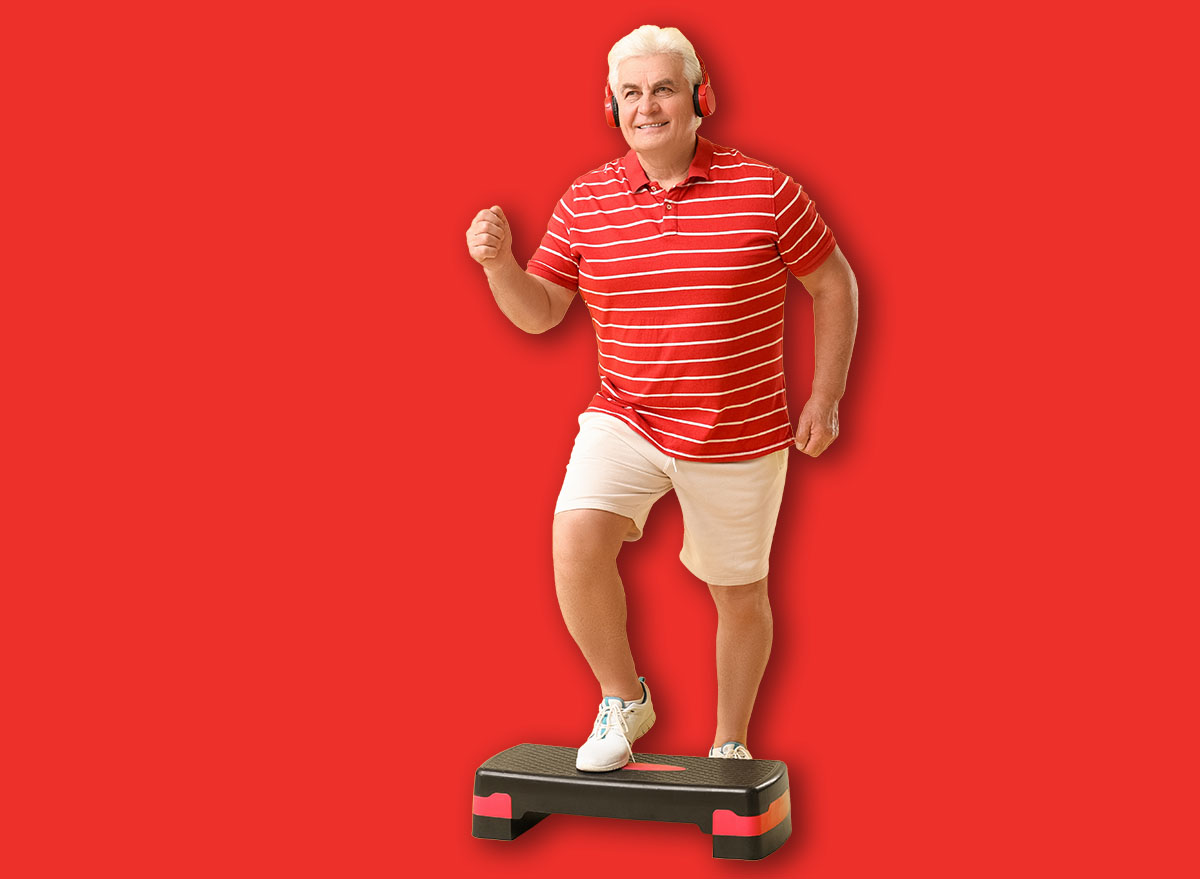

If you’re looking for a quality dose of resistance for your lower-body workout on conditioning day, step-ups are a tried-and-true staple. They target the muscles in your buttocks, hamstrings, and quadriceps. All you need is a sturdy step stool—or the first step on a staircase—and you’ll be ready for action. Step-ups are so productive that your ability to do them well is pretty impressive. We learned from Steven Pungello, a Chiropractor at Full Stride Spine & Sport who specializes in treating runners and other athletes, that if you can do a certain number of step-ups in 60 seconds after age 60, your lower-body power is top-tier.
Why Step-Ups Are a Powerful Move After 60
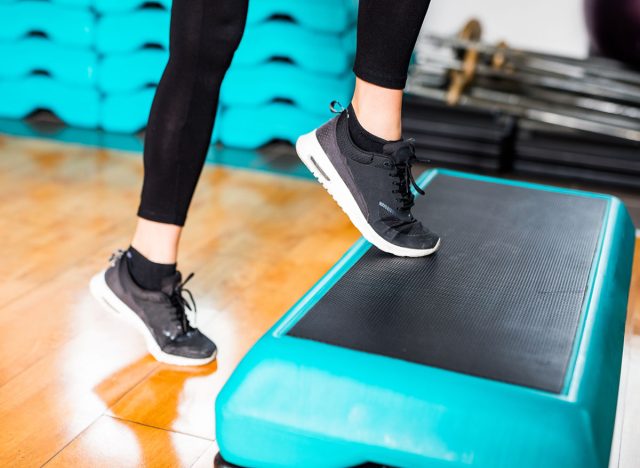
According to Pungello, step-ups are an excellent way to put your power and strength to the test, one leg at a time.
“One leg might be weaker than the other, and in a squat movement pattern the other leg can compensate. This is a great test to expose a deficit between your two sides,” he shares.
This bodyweight move mainly trains your quads and glutes. It’s also a solid challenge for your ankle mobility and cardiovascular system when performing it at a more rapid pace, to ensure you have the endurance needed to tackle a full flight of stairs.
How to Do It
- Begin by standing tall, facing a workout bench or low step.
- Hold an optional dumbbell in each hand.
- Place your left foot firmly onto the surface, keeping your core engaged and chest tall.
- Press through your left heel to lift your body until your left leg is straight and you’re standing on the surface.
- Use control to lower back to the start position.
- Repeat on the other side.
Here’s What Your Results Mean
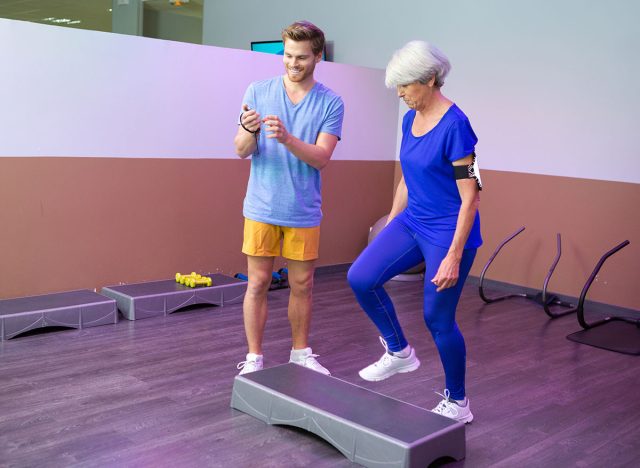
Pungello breaks down exactly what to do to ace this step-up test and challenge your lower-body power.
“To do this test, find a step and lead with the same leg on each attempt going up and down (right leg up, left leg up, right leg down, left leg down),” he instructs. “Do this for 60 seconds each side and record your number. Completing over 25 reps would be considered elite, but anything over 20 would still be good. Additionally, testing your heart rate after can be another good metric to track.”
The Importance of Preserving Lower as You Age
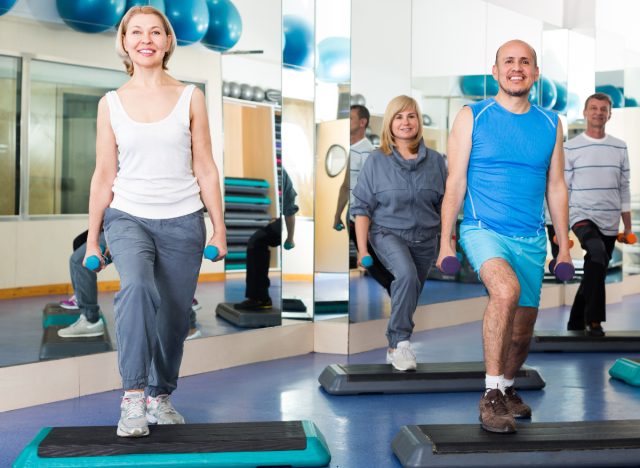
Power and strength tend to quickly decline as you age. Power is basically how well you’re able to use your strength. So, as you grow older, you can preserve your strength through regular workouts, but not many take things a step further to perform more explosive exercises.
“Many people over 60 just do slow and steady exercise but also need to incorporate faster, more explosive movements to accomplish activities like climbing stairs,” Pungello says. “Similar to riding a bike, walking up stairs faster is actually easier. If you go slow, there is more time on one leg where you are unbalanced and have a high potential to fall. Having the endurance/power in your legs to get up stairs or hills decreases the risk of falling and helps to improve cardiovascular fitness.