5 Standing Exercises That Flatten Apron Belly Faster Than Gym Machines After 50
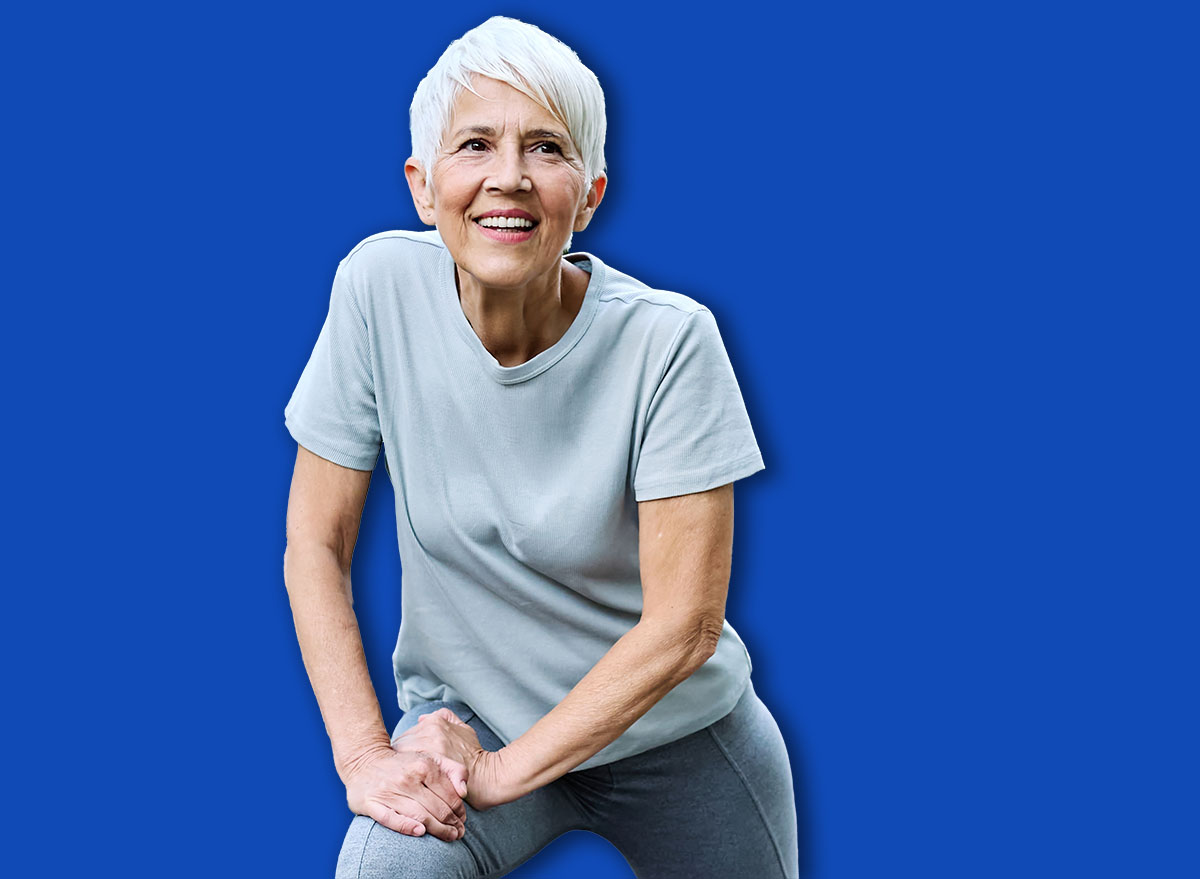
An apron belly can feel different from general “belly fat” because of where it sits and how it changes the way clothes fit, how the lower abdomen looks, and how the midsection feels during movement. It’s still tied to overall body composition, which means the best workout plan needs to create enough total effort to support fat loss while keeping strength in the picture.
Gym machines can load one muscle group well. The apron-belly goal usually calls for a session that asks more of the body at once. Standing exercises help because they keep you upright, active, and engaged from head to toe, which can make a short workout feel more productive than moving from one seated machine to the next.
With clients over 50, I also want the training to feel repeatable. A workout that leaves someone wiped out for three days won’t build much momentum. The better approach is controlled intensity: exercises that raise your breathing, challenge larger muscles, and keep your core working without turning every move into an ab exercise.
The five exercises below use standing strength, rotation, and low-impact conditioning to create that effect. Use them as a circuit, keep your form sharp, and build the challenge gradually as your conditioning improves.
Goblet Squat to Calf Raise
The goblet squat to calf raise combines lower-body strength with a little extra finish at the top. The squat trains your thighs and glutes, while the calf raise adds more work through the lower legs and keeps the movement active. Holding the weight at your chest also keeps your core engaged throughout the full rep.
Muscles Trained: Quadriceps, glutes, hamstrings, calves, core.
How to Do It:
- Stand with your feet about shoulder-width apart and hold a dumbbell or kettlebell at your chest.
- Brace your core and keep your chest lifted.
- Lower into a squat you can control.
- Press through your feet to stand tall.
- Rise onto the balls of your feet for a calf raise.
- Lower your heels and repeat.
Recommended Sets and Reps: Perform 3 sets of 10 to 12 reps. Rest for 45 to 60 seconds between sets.
Best Variations: Bodyweight squat to calf raise, goblet squat, slow-tempo goblet squats.
Form Tip: Stand fully before lifting your heels so the calf raise feels controlled.
Standing Band Wood Chop
Standing band wood chops train your core through rotation while your hips and legs help control the movement. The band creates resistance as you pull it across your body, engaging your abs and obliques while working your shoulders and lower body. Keep the motion smooth and let your torso rotate without yanking through your arms.
Muscles Trained: Obliques, abs, shoulders, upper back, glutes, hips.
How to Do It:
- Anchor a resistance band slightly above shoulder height.
- Stand sideways to the anchor and hold the band with both hands.
- Brace your core and set your feet about hip-width apart.
- Pull the band diagonally across your body toward your opposite hip.
- Rotate through your torso and hips as you pull.
- Return to the start with control, then switch sides.
Recommended Sets and Reps: Perform 3 sets of 10 to 12 reps per side. Rest for 30 to 45 seconds between sides.
Best Variations: Low-to-high wood chops, shorter-range wood chops, slow-tempo wood chops.
Form Tip: Keep your ribs stacked and rotate with control instead of twisting aggressively.
Alternating Forward Lunge With Reach
The alternating forward lunge with reach adds lower-body work, balance, and a mild conditioning effect. Each step asks the front leg to absorb and drive, while the reach keeps your trunk active and your posture organized. Use bodyweight first, then hold a light dumbbell if you want more challenge.
Muscles Trained: Quadriceps, glutes, hamstrings, calves, core, shoulders.
How to Do It:
- Stand tall with your feet hip-width apart.
- Step forward with your right foot.
- Lower into a controlled lunge.
- Reach both arms forward at chest height.
- Press through your front foot to return to standing.
- Alternate sides for the full set.
Recommended Sets and Reps: Perform 3 sets of 8 to 10 reps per side. Rest for 45 to 60 seconds between sets.
Best Variations: Supported forward lunges, reverse lunges with reach, slow-tempo lunges.
Form Tip: Keep your front heel planted and step only as far as you can control.
Low-Impact Jack With Overhead Reach
Low-impact jacks raise the pace of the workout without requiring jumping. Stepping one foot out at a time keeps the movement joint-friendly, while the overhead reach engages the shoulders and helps raise your heart rate. Keep the rhythm brisk and controlled.
Muscles Trained: Glutes, calves, quadriceps, shoulders, core.
How to Do It:
- Stand tall with your feet together and arms by your sides.
- Step your right foot out to the side.
- Reach both arms overhead.
- Bring your right foot back to center as your arms lower.
- Repeat on the left side.
- Continue alternating at a steady pace.
Recommended Sets and Reps: Perform 3 sets of 30 to 45 seconds. Rest for 30 to 45 seconds between sets.
Best Variations: Smaller step jacks, faster step jacks, slow-tempo step jacks.
Form Tip: Stay tall and let your arms move smoothly overhead without shrugging.
Dumbbell Front-Rack March
The dumbbell front-rack march turns marching in place into a stronger full-body exercise. Holding the weights at your shoulders makes your core work harder to maintain an upright posture as your knees lift. It’s simple, scalable, and useful for adding intensity without needing much space.
Muscles Trained: Core, hip flexors, glutes, quadriceps, shoulders, upper back.
How to Do It:
- Stand tall with a dumbbell in each hand at shoulder height.
- Brace your core and keep your elbows slightly forward.
- Lift your right knee toward hip height.
- Lower your foot with control.
- Lift your left knee and continue alternating.
- Keep your torso tall for the full set.
Recommended Sets and Reps: Perform 3 sets of 20 to 30 seconds. Rest for 30 to 45 seconds between sets.
Best Variations: Bodyweight marches, single-dumbbell front-rack marches, slow-tempo marches.
Form Tip: Keep the weights steady and avoid leaning back as your knees lift.
How to Use These Standing Exercises After 50
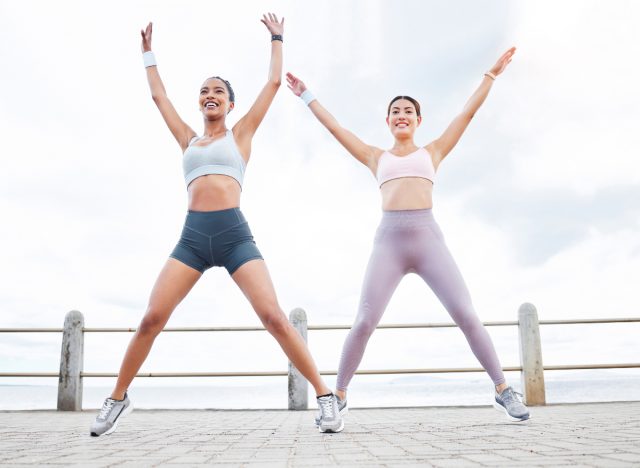
Use these exercises as a circuit two to four times per week. Complete one set of each move in order, rest for 60 to 90 seconds, then repeat for two to three total rounds.
- Keep the effort steady: The circuit should raise your breathing while still letting you control every rep.
- Use manageable resistance: Pick weights and bands that challenge you without pulling your posture out of position.
- Make the conditioning moves count: Step jacks and front-rack marches work best when you keep a consistent pace.
- Progress one piece at a time: Add a few reps, extend the timed sets, increase resistance slightly, or reduce rest between rounds.
- Support the training outside the workout: Walking, protein-rich meals, hydration, and consistent sleep all help body-composition changes show up more clearly.
Flattening an apron belly takes more than isolated ab work. Standing exercises help create a stronger overall training effect, which can make your routine more effective for building strength, burning calories, and supporting a leaner midsection.
References
- Lopez, Pedro et al. “Resistance training effectiveness on body composition and body weight outcomes in individuals with overweight and obesity across the lifespan: A systematic review and meta-analysis.” Obesity reviews: an official journal of the International Association for the Study of Obesity vol. 23,5 (2022): e13428. doi:10.1111/obr.13428
- Pandey, Arvind Kumar et al. “Histological and biochemical study of the superficial abdominal fascia and its implication in obesity.” Anatomy & cell biology vol. 49,3 (2016): 184-188. doi:10.5115/acb.2016.49.3.184