5 Strength Moves That Work Better Than Gym Machines to Stay Pain-Free After 55


Pain is the single biggest reason people over 55 give up on training, and after nearly 40 years as a personal trainer, I’ve watched it happen countless times. For the last 20 of those years, I’ve been training the next generation of fitness professionals at TRAINFITNESS. What I’ve learned is that machines are often part of the problem rather than the solution. Five well-chosen free-standing moves can teach the body to handle real-life loads without the niggles that send people back to the sofa.
Where Pain Shows Up First

Lower back pain is the one I see most often, and it almost always shows up first. Years of sitting weakens the glutes, shortens the hip flexors, and leaves the lower back trying to do work it was never built to do. Knees come a close second, though most knee pain in this age group actually starts at the hips. Weak glutes mean the knee has to track inwards under load, and over time the joint complains.
Shoulders are the third common spot, normally from rounded posture and a rotator cuff that’s been untrained for decades. The pattern is almost always the same: weak in the right places, tight in the wrong places, and asked to suddenly perform when life demands it.
Why Free-Standing Moves Win

Machines lock you into a single path. They tell the working muscle exactly when to fire and when to switch off, and they do all the stabilizing work for you. That’s the problem.
In real life, nothing stabilizes you. You pick up a grandchild, carry shopping, twist to reach a top shelf. The small muscles that hold the joints in safe positions are precisely the muscles that need training, and machines politely take them off the job.
Free-standing work makes the whole system fire together, which is what protects the joints when you’re caught off balance. It also trains the brain to coordinate movement, which is the bit that goes first and hurts most when it does.
Hip Hinge
The back extension machine pins the hips and works the lower back muscles in isolation. The hip hinge teaches the body to bend at the hips while keeping the spine long, which is the single most useful pattern for protecting the lower back in real life. Every time you pick anything up off the floor, this is what you should be doing.
Muscles Trained: Hamstrings, glutes, lower back
How to Do It:
- Stand with feet hip-width apart, soft bend in the knees
- Place your hands on the front of your thighs
- Push the hips backward, sliding the hands down the thighs towards the knees
- Keep the chest tall and the spine long
- Stop when you feel a steady stretch in the hamstrings or your hands reach roughly knee level
- Squeeze the glutes and stand back up
Avoid These Mistakes:
- Don’t bend the knees instead of pushing the hips back
- Don’t round the lower back
- Don’t look up, which kinks the neck
Form Tip: Stand with your back, bottom, and head against a wall, then push the hips back to slide the bottom along the wall before standing back up. The wall keeps the spine honest and makes a great beginner variation.
Bodyweight Squat to Chair
The leg press lets you lift twice your bodyweight with a rounded lower back and never know you’re doing it. The squat to chair gives you a clear depth target and forces the legs to coordinate with the trunk, which is what protects the back and knees in everyday life.
Muscles Trained: Quads, glutes, hamstrings, core
How to Do It:
- Stand in front of a sturdy chair, feet hip-width apart, toes pointing slightly out
- Push the hips back as if sitting down
- Lower until your bottom lightly touches the chair
- Keep the chest up and the weight through the middle of the foot
- Push back up to standing through the heels
Avoid These Mistakes:
- Don’t let the knees collapse inwards
- Don’t let the heels lift off the floor
- Don’t drop straight down — push the hips back first
Form Tip: Use a higher seat, like an armchair or a dining chair with a cushion on it, if you’re just starting out. Chair arms or a kitchen worktop for assistance on the way up are perfectly fine.
Split Squat
Leg extensions strengthen the quad in isolation and have been linked to knee niggles in older adults. The split squat trains the leg one side at a time, builds balance, and strengthens the glute on the working side, which is the muscle that actually protects the knee.
Muscles Trained: Quads, glutes, hamstrings, hip flexors
How to Do It:
- Stand in a split stance with one foot forward, one foot back, roughly two foot lengths apart
- Rest one hand on a chair or worktop for balance if needed
- Lower the back knee straight down towards the floor, bending both knees
- Stop when the front thigh is parallel to the floor or the back knee gently kisses the floor
- Push through the front heel to return to standing
- Complete all reps on one side before swapping
Avoid These Mistakes:
- Don’t step the feet too close together, which forces the front knee out over the toes
- Don’t let the torso fall forwards
- Don’t push off the back foot — stand up through the front leg
Form Tip: Shorten the range if you’re new to this one. Lower only a couple of inches at first and build the depth over weeks. Holding a worktop with both hands for full support is a smart place to start.
Incline Press Up
The seated chest press pins the back and isolates the chest. The incline press up turns the whole body into the working unit, with the trunk muscles holding everything together. That’s what keeps the shoulders happy.
Muscles Trained: Chest, shoulders, triceps, core
How to Do It:
- Place both hands on the edge of a sturdy worktop, shoulder-width apart
- Walk the feet back until the body is at a comfortable angle, straight from heels to head
- Bend the elbows and lower the chest towards the worktop
- Push back to the start position
- Aim for slow, controlled repetitions
Avoid These Mistakes:
- Don’t let the hips sag, which loads the lower back
- Don’t lift the chin to look up
- Don’t flare the elbows out to 90 degrees, which puts the shoulder in a vulnerable position — keep them at roughly 45 degrees
Form Tip: Do it against a wall instead of a worktop if you need an easier entry point. The closer to upright you are, the lighter the load.
Single-Arm Bent Over Row
The lat pulldown sits you down and removes the trunk from the equation. The single-arm row works the back, trains the trunk to resist twisting, and gets you used to a hinged position with a load, which protects the spine for everything else you do.
Muscles Trained: Upper back, lats, biceps, core
How to Do It:
- Stand next to a sturdy chair with your left side closest to it
- Place your left hand on the chair seat or on a worktop, hinging at the hips so the spine is long and roughly parallel to the floor
- Hold a lightweight in the right hand – a 32- 64 oz water bottle works fine to start
- Pull the weight up towards the hip, leading with the elbow
- Lower under control
- Complete all reps on one side before swapping
Avoid These Mistakes:
- Don’t shrug the shoulder up to the ear
- Don’t twist the body to throw the weight up
- Don’t round the lower back
Form Tip: Hold both hands on a worktop and use no weight to start. Pull one elbow back as far as it will go, then the other. Build the pattern before adding load.
How Often to Train
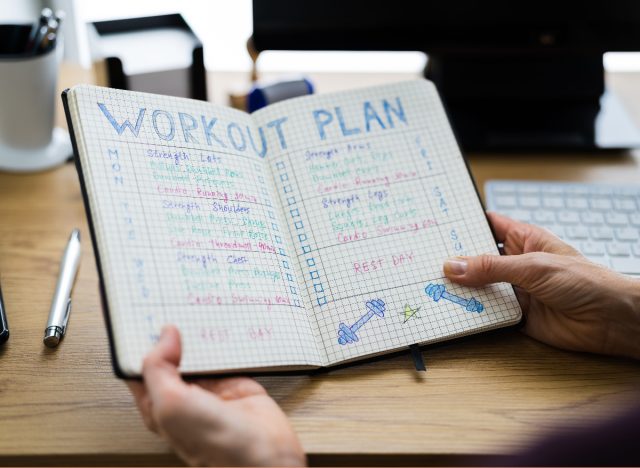
Three days a week is the sensible starting point. The body needs a day in between for the muscles to recover and rebuild.
Start with two sets of 8 to 12 reps per move for the first month. Stop a couple of reps short of failure. The aim is to finish each set knowing you could have done two or three more.
After a month, add a third set, or stretch the rep range to 12 to 15. Past six weeks, start adding a small amount of weight to the row and the squat, or progress the press-up by walking the feet further back from the worktop.
The whole session takes 25 to 30 minutes once you’re moving smoothly. Long enough to do real work, short enough that nobody talks themselves out of it.
What to Expect in 4 to 6 Weeks

The first thing most people notice, often by the end of the second week, is that everyday tasks feel less of an effort — carrying shopping, climbing stairs, getting up off the floor. The body has started remembering how to work as a system.
By four weeks, most clients report that the niggles they’ve been living with have backed off. A grumpy lower back stops grumbling on long walks. A clicky knee gets less clicky. Not always, but often.
By six weeks, the change is visible to family. Standing taller, walking more confidently, climbing stairs without holding the rail. Strength gains in the actual moves are typically 30 to 50 percent over this period, which is faster than most people expect.
The bit that matters most is what doesn’t happen. The falls, the strains, the weeks lost to a tweaked back. That’s where the real return on this kind of training shows up.
Before You Start

If you’ve had any joint surgery, a heart issue, blood pressure that isn’t well managed, or you’ve fallen recently and haven’t been checked over, talk to your GP before you start.
Anyone with a diagnosed disc problem, osteoporosis, or a chronic shoulder issue should run the hip hinge and the row past a physio. The patterns are safe when done well, but personalized advice is worth far more than a generic article.
Stop if you feel sharp pain rather than steady muscle work, pain that lingers more than a couple of hours after the session, numbness or tingling down a limb, or dizziness when changing position. If you experience any of those, stop and get it looked at before carrying on.