This 15-Minute Standing Routine Reverses Muscle Loss Better Than Supplements After 55
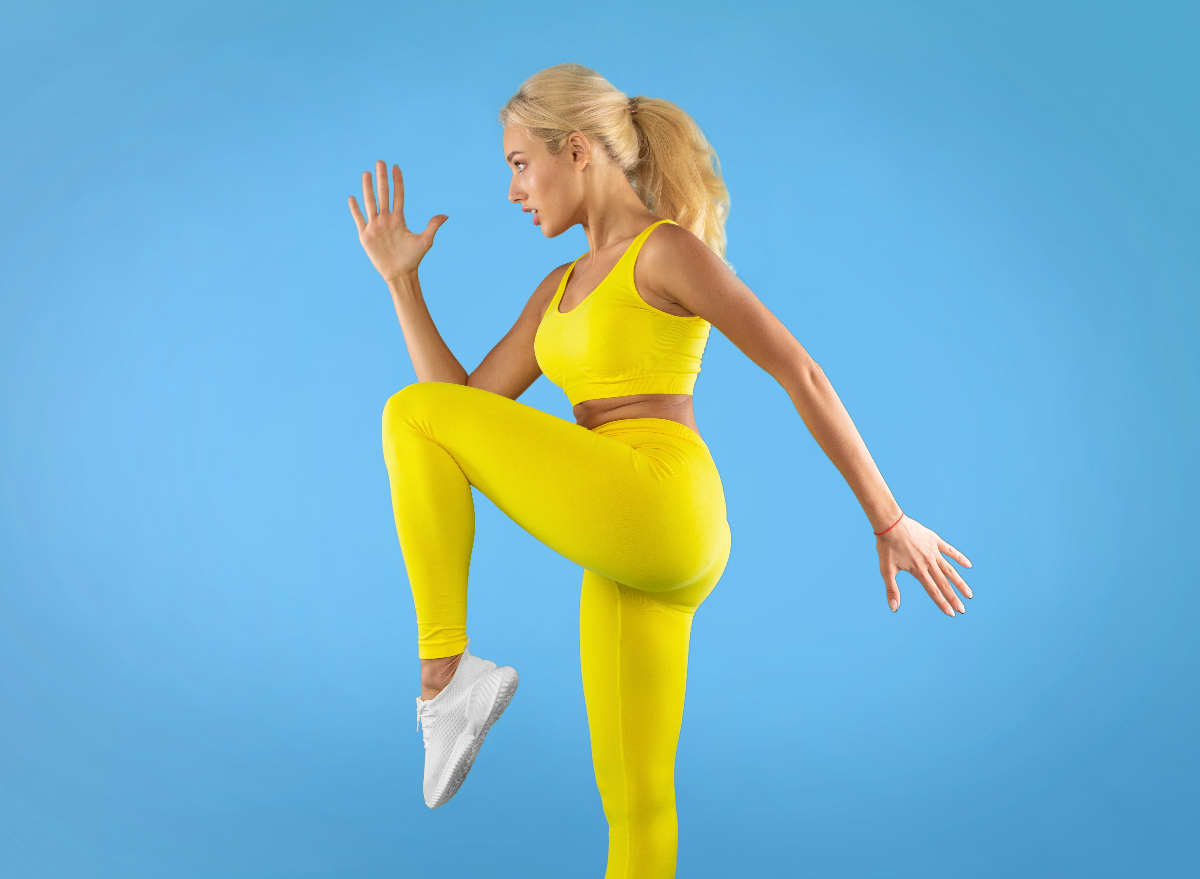

Most people assume taking supplements is the answer to age-related muscle loss. But while protein powders, creatine, and collagen have their place for holding on to muscle mass, the real way to combat muscle loss is exercise. Specifically, consistent resistance training at least two to three times per week.
Research shows that after you turn 55, natural muscle loss known as sarcopenia accelerates, with adults losing as much as 1 to 2% of muscle mass per year. If left unchecked, sarcopenia can impact everything from your balance and energy levels to your posture and independence.
Fortunately, ETNT is here to help. We chatted with James Brady, personal trainer at OriGym, who explains why you don’t need a gym or hour-long workouts to fight back against muscle loss. In fact, doing just 15 minutes a day of intentional, standing strength training can stimulate muscle fibers, improve circulation, increase mobility, and restore functional power far more than supplements alone.
“This 15-minute routine will target every major muscle group, helping reverse age-related muscle loss (sarcopenia) through natural resistance and bodyweight strength,” says Brady.
Read on for the workout and detailed instructions. Then, when you’re done, don’t miss these 5 Chair Moves That Slim Your Waist Faster Than Crunches After 50.
March & Reach
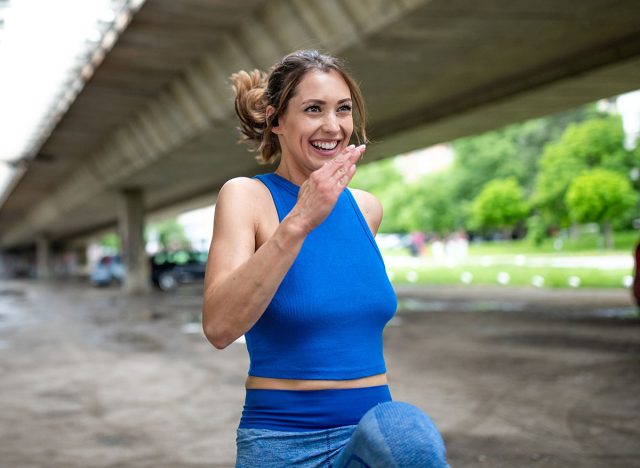
This energizing warm-up is a joint-friendly way to wake up your entire body. The marching motion activates your hip flexors and lower abs, while the overhead reach opens the shoulders and lengthens the spine. Together, they elevate your heart rate and warm up your muscles.
How to do it:
- Stand tall with your feet hip-width apart.
- March in place, lifting each knee to hip height if possible.
- As each knee lifts, reach the opposite arm overhead.
- Keep your chest up high and your core engaged.
- Continue for two minutes at a steady, comfortable pace.
Why it works: “This simple move warms up your joints, boosts circulation, and primes your muscles for strength work, all while improving your posture and coordination,” explains Brady.
Beginner tip: Keep your steps smaller and your arms lower until the movement feels natural.
Avoid this mistake: Don’t lean back as you lift your knees; stay tall to protect your spine.
Chair-Assisted Squats
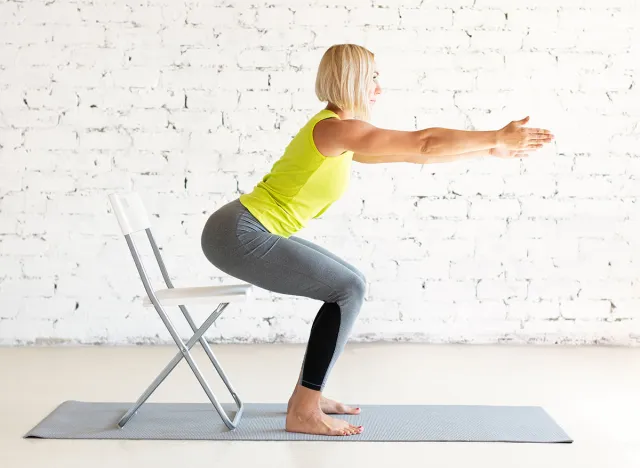
This classic lower-body move is one of the most effective ways to maintain strength and independence after 55. Chair-assisted squats reinforce safe movement patterns, strengthen the muscles needed for sitting, standing, and stair climbing, and build the powerful leg and hip strength that helps prevent falls.
How to do it:
- Stand facing a chair with your feet shoulder-width apart.
- Lower your hips back and down until you nearly touch the seat.
- Push through your heels to stand back up.
- Complete three sets of 12 reps. Rest for 60 to 90 seconds between sets.
Why it works: “Squats essentially strengthen everything from your thighs, glutes, and hips, which is the foundation for walking, climbing stairs, and maintaining balance,” says Brady.
Beginner tip: Keep your hands lightly touching the chair for support if you feel unstable.
Avoid this mistake: Don’t let your knees cave inward. To avoid this, turn your toes slightly outward as you squat.
Standing Rows with a Towel
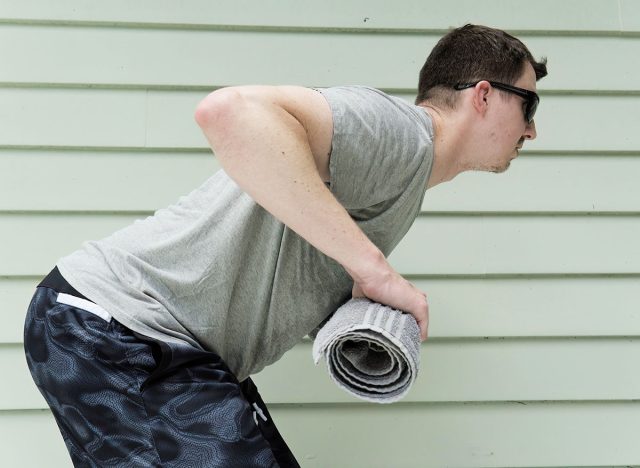
This simple but effective pulling exercise strengthens your upper back, an area that commonly weakens with age. They can also counteract the hunched posture caused by years of sitting and help improve balance, mobility, and breathing.
How to do it:
- Hold a towel at chest height while gripping both ends tight.
- Pull the towel apart as you draw your elbows behind you.
- Squeeze your shoulder blades together.
- Pause, then release with control.
- Continue for two minutes at a steady pace.
Why it works: “This move builds upper-back and arm strength while improving posture, crucial for preventing slouching and shoulder weakness over time,” Brady says.
Beginner tip: Focus on squeezing between the shoulder blades, not just pulling your arms.
Avoid this mistake: Don’t shrug your shoulders. Keep them down to target the right muscles.
Side Leg Raises
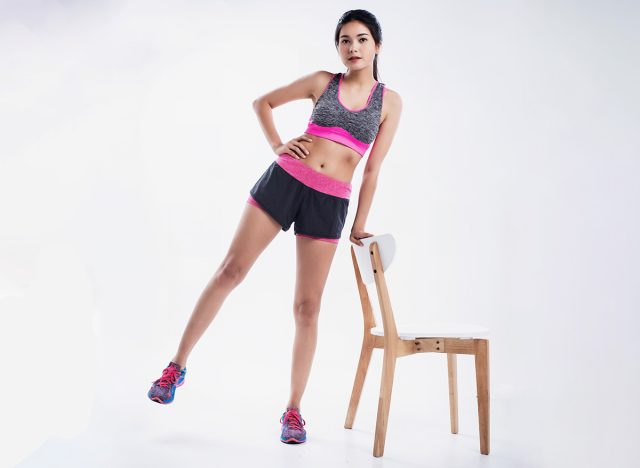
Side leg raises target your hip abductors, a group of muscles essential for balance, pelvic stability, and smooth walking. As you age, weak hips become a major contributor to falls and lower-back tension. This exercise will help strengthen those overlooked muscles while improving joint alignment.
How to do it:
- Hold a chair lightly for balance.
- Lift one leg straight out to the side.
- Pause for one to two seconds at the top.
- Lower slowly to the starting position.
- Repeat for three sets of 10 to 15 reps per leg. Rest for 60 to 90 seconds between sets.
Why it works: “Side leg raises really burn your hips and outer thighs (while also making them stronger), which are really great for balance and fall prevention,” explains Brady.
Beginner tip: Keep the leg lifts small. Just a few inches off the ground is enough at first.
Avoid this mistake: Don’t lean to the side. Your torso should stay upright.
Standing Push-Offs
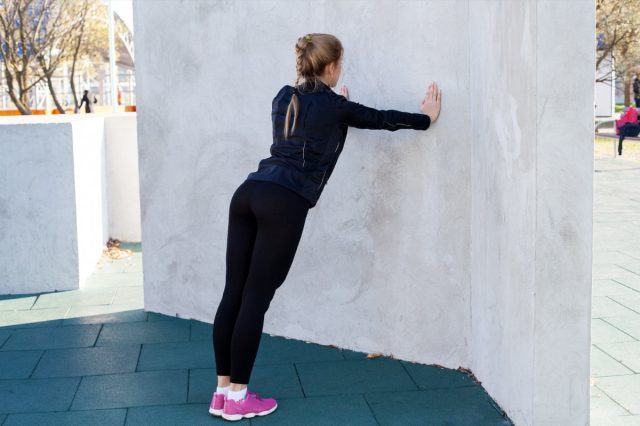
This wall-based push-up variation helps build functional upper-body strength by targeting your chest, shoulders, triceps, and core. These are the muscles you rely on for everyday tasks like pushing open doors, lifting groceries, and maintaining healthy posture.
How to do it:
- Stand at arm’s length from a wall.
- Place your palms flat on the wall.
- Slowly bend your elbows to bring your chest toward the wall.
- Push back to the starting position.
- Perform three sets of 10 to 12 reps. Rest for 60 to 90 seconds between sets.
Why it works: “A wall push-up builds upper-body and core strength,” Brady says.
Beginner tip: If it’s too challenging at first, stand closer to the wall.
Avoid this mistake: Don’t flare your elbows out to the sides. Instead, keep them angled at about 45 degrees.
Heel Raises & Holds
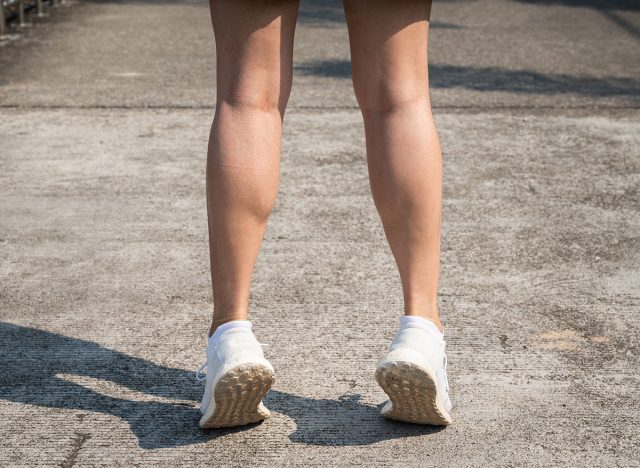
Heel raises strengthen your calves and ankles, which are muscles that are crucial for walking, stability, and balance. Strong lower legs also help support better posture, reduce fall risk, and boost circulation.
How to do it:
- Stand with your feet hip-width apart.
- Lift your heels off the ground while balancing on your toes.
- Hold for one to two seconds.
- Lower slowly to the starting position.
- Complete three sets of 15 to 20 reps. Rest for 60 to 90 seconds between sets.
Why it works: “This move helps keep your calves and ankles strong, helps your walking stability, and boosts blood flow to the lower legs,” says Brady.
Beginner tip: Lightly touch a chair or wall with fingertips if you feel unsteady.
Avoid this mistake: Don’t rush through the exercise. Always go slow and focus on proper form.