If You Can Do This Many Burpees After 45, Your Fitness Level Is Elite for Any Age
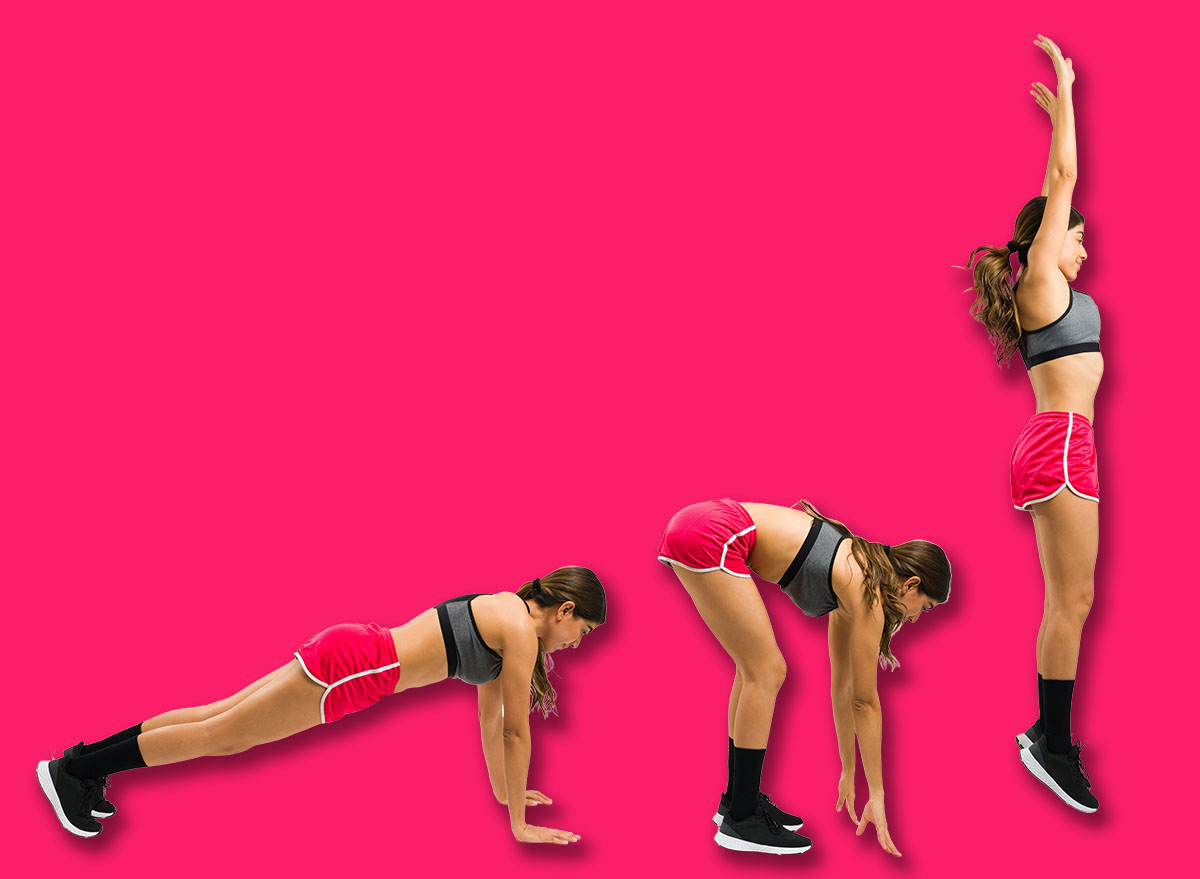

Burpees remain the great equalizer of fitness tests. They demand strength from the floor to standing, coordination between upper and lower body, core stability under fatigue, and enough cardiovascular capacity to keep moving when your lungs start negotiating for a break. After 45, that combination matters even more. Joints need efficient mechanics, muscles need real power endurance, and your engine needs to recover between reps without falling apart. When someone over 45 knocks out crisp burpees at a steady pace, they demonstrate the rare blend of athleticism that carries over to nearly every real-world movement.
Most workouts isolate pieces of fitness. Burpees refuse to play that game. Each rep combines a squat, plank, push-up, and vertical jump into a single continuous sequence that quickly exposes strength leaks. Weak hips slow your squat return. A soft core kills your plank control. Limited shoulder strength saps your push-up. Low power output shrinks your jump height. Conditioning gaps reveal themselves across rounds. Every rep tells the truth, which is exactly why burpees remain one of the simplest and most brutal fitness benchmarks after 45.
In this article, you’ll learn how to perform a perfect burpee so every rep actually counts, how many quality reps place you into elite territory for your age, and the smartest ways to improve both your technique and your score.
How to Perform a Perfect Burpee
An excellent score means nothing without great reps behind it. Before chasing numbers, you need a burpee that trains your body effectively from start to finish. Each phase of the movement builds on the last, and minor technical errors compound quickly when fatigue sets in. Efficient burpees protect your joints, conserve energy, and maintain high power output throughout each rep. That combination turns a burpee from a survival grind into a repeatable performance skill you can steadily improve.
- Stand tall with your feet about shoulder width apart and your arms relaxed at your sides.
- Squat down while planting your hands flat on the floor just inside your feet.
- Step or jump your feet back into a strong plank with your body locked in a straight line.
- Lower into a push-up until your chest touches the floor, keeping your elbows tucked at roughly 45 degrees.
- Press back up to full plank and maintain tight core tension.
- Jump or step your feet forward until they land just outside your hands.
- Drive upward through your legs and explode into a vertical jump while reaching your arms overhead.
- Land softly through bent knees, reset tall posture, and begin your next rep immediately.
Burpee Ranking Scores After 45

Burpee testing works best when expectations feel transparent and honest. A score is meaningful only if every rep follows the same standard, so athletes can compare performance fairly. Two minutes provides the perfect testing window. It demands a pacing strategy, muscular endurance, and aerobic capacity simultaneously while keeping form breakdown visible. This test shows exactly where your total fitness stands without requiring machines, long workouts, or complicated calculations.
Test Protocol: Perform as many strict burpees as possible in 2 minutes using perfect technique on every rep. Count only reps that include full chest to floor contact and a jump with arms overhead.
Ranking Scores
- Beginner: 10 to 18 reps
- Intermediate: 19 to 29 reps
- Advanced: 30 to 39 reps
- Elite: 40 or more reps
Reaching the elite tier after 45 reflects an athlete who combines technical efficiency, muscular endurance, and cardiovascular capacity at a level many younger trainees never touch.
How to Improve Your Burpee Technique and Score

Improving your burpee score demands more than simply doing burpees harder or more often. The fastest progress comes from building the pieces that support each phase of the movement while learning how to protect energy output under fatigue. Strength in transitions, stability under load, and smart conditioning strategies allow you to perform clean reps even when the clock speeds up. Training with intention transforms burpees from a punishment exercise into a powerful performance tool that steadily rewards consistency.
- Dial in your plank control: Train front planks, shoulder taps, and slow push-ups to lock in midline tension so your body stays rigid through the floor phase.
- Strengthen your push-ups: Use controlled-tempo push-ups and incline variations so chest and triceps fatigue never stall your rise from the floor.
- Build hip drive strength: Prioritize goblet squats and kettlebell deadlifts to reinforce strong squatting mechanics and powerful transitions to standing.
- Develop explosive leg power: Perform jump squats or box jumps with full recovery to maintain jump height and landing control under fatigue.
- Train intervals rather than just maximum tests: Use short bouts of burpees, 15 to 20 seconds each, with equal rest periods to build speed while keeping technique sharp.
- Sharpen breathing mechanics: Practice controlled nasal breathing during recovery blocks to help your heart rate drop quickly between effort waves.
- Refine your pacing strategy: Break your target rep goal into manageable mini-sets so early adrenaline does not sabotage late performance.
- Commit to joint preparation: Warm up shoulders, ankles, hips, and wrists before every burpee session to maintain mobility and reduce irritation.