4 Chair Exercises That Flatten Belly Fat Faster Than Gym Equipment After 60

Let’s face it: getting older is no walk in the park. After 60, belly fat in particular becomes an unwanted culprit for many people. Even if your diet hasn’t changed much, that soft overhang around your midsection becomes more and more challenging to keep off as your body becomes more impacted by age-related muscle loss (a condition known as sarcopenia). And while it’s tempting to fight belly fat accumulation with more crunches, more cardio, and more workouts, the reality is that what most people over 60 actually need is more strength in the muscles that control their metabolism.
That’s exactly what Kris Herbert, CPT, a certified personal trainer and owner of The Gym Venice, prioritizes when training clients in their 60s, 70s, and beyond. “You cannot target belly fat directly. Spot reduction is not a real thing,” Herbert explains. “However, building muscle—especially in large movers like the glutes, quads, and hamstrings—can help boost metabolism, increase daily calorie burn, and make it easier for your body to tap into fat stores over time.”
This is where chair exercises can become extremely useful for people over 60. Research shows that chair exercises are easy on the joints, accessible for all fitness levels, and allow you to safely increase time under tension, which is one of the most effective ways to stimulate muscle gain without weights. “Consistently challenging the muscles over time is the most effective way to drive meaningful change,” says Herbert.
If you want a flatter stomach, stronger muscles, better balance, and a routine you can actually stick to after 60, these four expert-recommended chair-based moves will take you further than hours on gym machines ever could. Read on to learn more.
(Next up: Don’t miss This 7-Minute Standing Routine Strengthens Arms Better Than Weight Machines After 50.)
Sit-to-Stand Squat
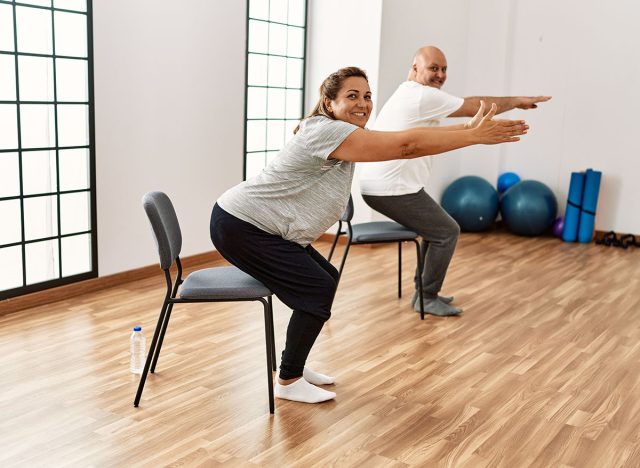
This squat variation is one of the most effective lower-body exercises you can do at any age. Herbert calls it “one of the best lower-body builders using major muscles that significantly influence metabolism.” That’s because every rep mimics a real-life movement like getting up from a chair, climbing stairs, or standing from the sofa.
How to do it:
- Sit tall with good posture at the edge of a sturdy chair with your feet shoulder-width apart.
- Drive your heels into the floor and stand up powerfully in about one second.
- Lower back down in two to three slow, controlled seconds.
- Perform two to three sets of eight to 10 reps. Rest for 90 to 120 seconds between sets.
Why it works:
- Strengthens glutes, quads, hamstrings
- Increases time under tension without adding weight
- Trains essential daily movements
Progressions:
- Cross arms over chest
- Hover above the chair instead of fully sitting
- Hold a pillow or backpack
Incline Chair Pushup
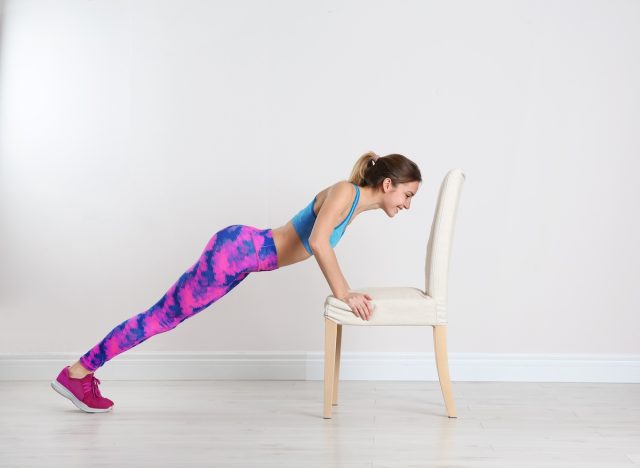
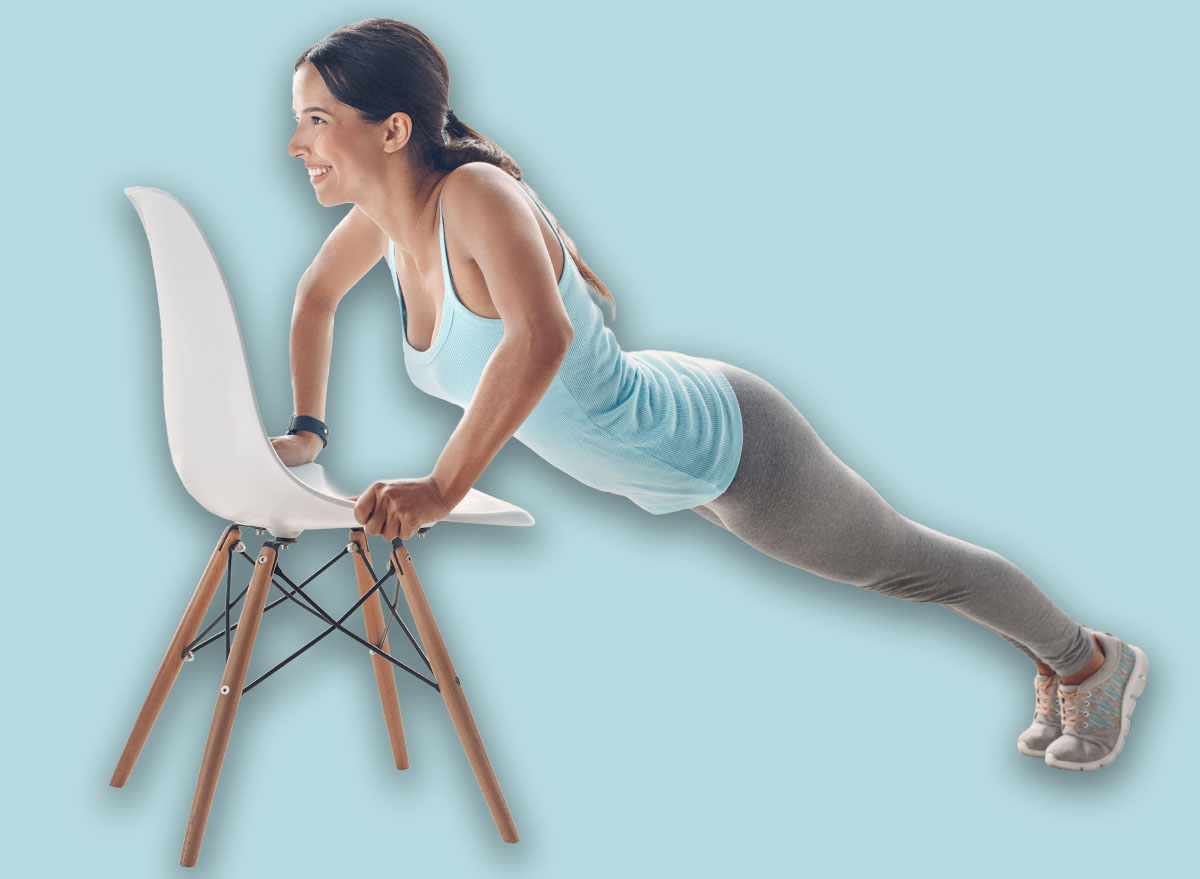
Most gym machines isolate one muscle group at a time, but incline chair pushups challenge the chest, shoulders, triceps, and core all at once, and without straining your wrists or shoulders. Herbert describes it as “an upper-body strength builder that also challenges core stability.” The incline position makes pushups accessible for adults over 60 while still delivering big time upper-body strength gains.
How to do it:
- Place your hands on the chair back (easier) or chair seat (more challenging).
- Walk your feet back into a comfortable incline.
- Lower your body toward your hands over three seconds, then press back up in one second.
- Complete two to three sets of 10 to 12 reps. Rest for 60 to 90 seconds between sets.
Why it works:
- Strengthens chest, arms, and shoulders
- Trains core stability
- Reduces joint stress compared to floor pushups
- Improves pushing strength for daily life tasks
Progressions:
- Move your hands lower
- Add a one to two second pause at the bottom of the movement
Seated V-Crunch Hold
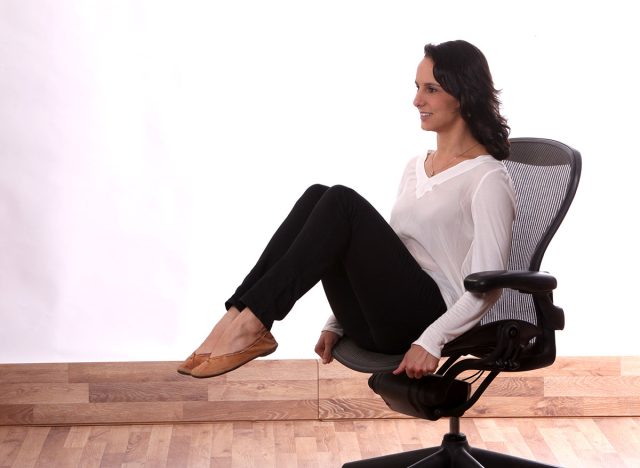
Unfortunately, many people over 60 avoid core training because they can’t comfortably get on or up from the floor. The good news though is this seated variation solves that. The seated V-crunch hold trains your deep stabilizing core muscles that are responsible for posture, spinal support, and the “tightening” effect around the waist. Herbert calls it “a core-strengthening move that does not require getting on the floor.”
How to do it:
- Sit near the front of the chair.
- Lean back slightly with your chest lifted.
- Lift both feet a few inches off the floor with bent knees.
- Hold for 20 to 30 seconds while breathing steadily (this is one rep).
- Repeat two to three times, resting for 60 to 90 seconds between holds.
Why it works:
- Strengthens deep abdominal stabilizers
- Builds core endurance for balance and mobility
- Reduces back strain by improving trunk control
Progressions:
- Release your hands from the chair
- Extend one or both legs
- Increase hold to 45 seconds
Chair-Assisted Step-Back Lunge
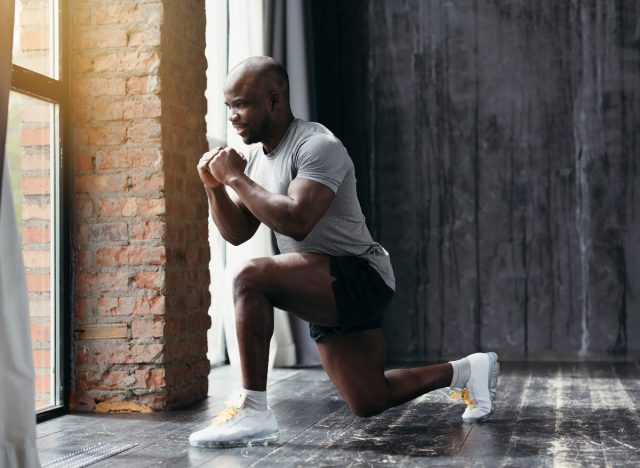
Single-leg exercises are a fantastic metabolic booster because they force your body to work harder using multiple muscle groups at once. This movement will also test your balance, strengthen your glutes and quads, and help improve functional movements like stepping off curbs or going down stairs. Herbert says that this exercise “targets major calorie-burning muscles” and can help reduce fall risk as you age.
How to do it:
- Stand tall beside a sturdy chair and hold the chair with your inside hand.
- Step your outside leg straight back (about one chair-length).
- Bend both knees while lowering straight down.
- Drive through your front heel to return to standing position.
- Complete all reps on one leg, then switch.
- Aim for two to three sets of 12 to 15 reps per leg. Rest for 90 to 120 seconds between sets.
Why it works:
- Builds single-leg strength and balance
- Targets major muscle groups that burn the most calories
- Improves strength for daily stepping and stair movement
Progressions:
- Lower until the back knee is one inch off the floor
- Use just fingertips or no support
- Add a pause at the bottom