The 5-Day Glute Bridge Challenge That Restores Hip Strength After 60
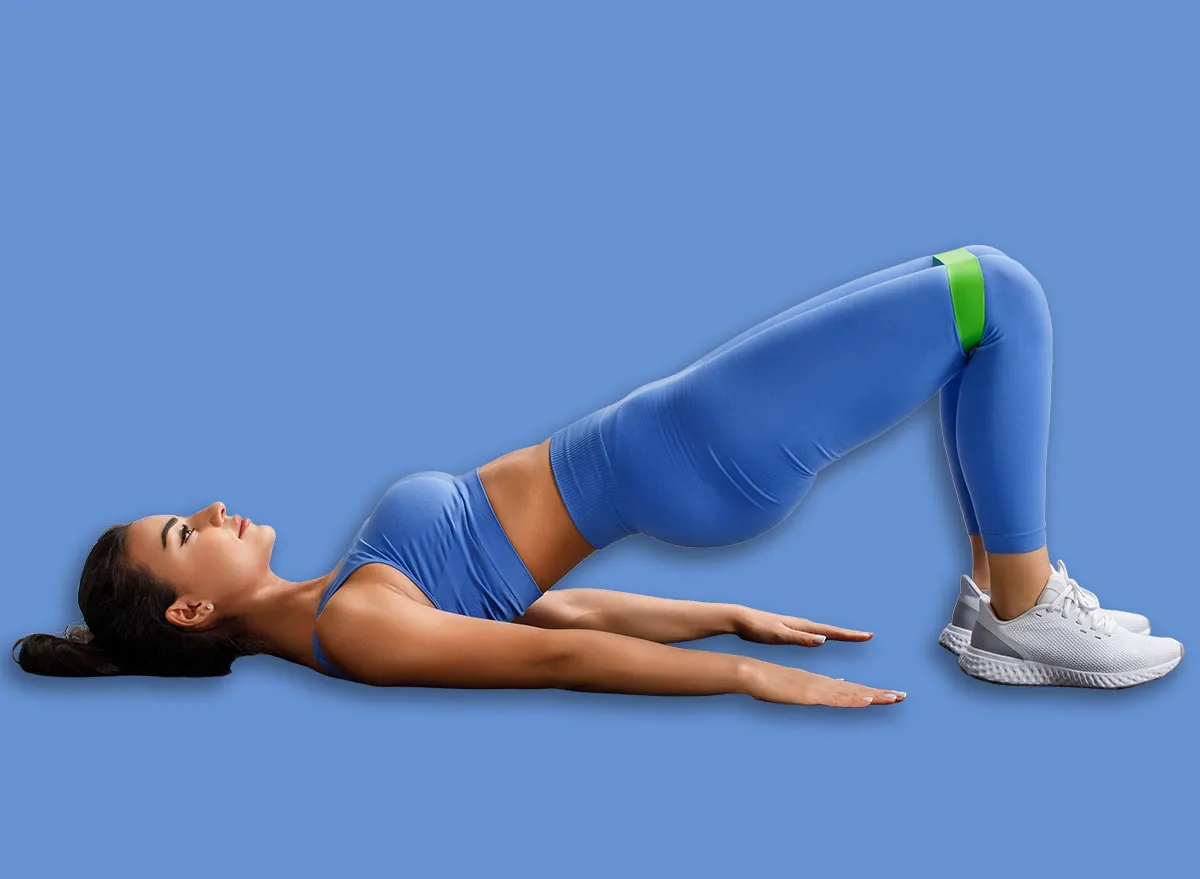

If you spend a solid part of the day sitting at a desk, there’s a good possibility your hip flexors are tight, and your glute muscles are inactive. The best solution for this is to add glute bridges to your workout routine. It’s a highly effective bodyweight exercise that’s chock-full of benefits. The movement involves lying on your back with knees bent and feet planted on the mat. You then raise your hips toward the ceiling. It’s quite a productive way to reverse the effects of sitting.
“You don’t need fancy equipment. You don’t need to follow wild programming. All you have to do is find a spot to lie flat on the floor and you’re ready to go,” explains Rosie Borchert, NASM-CPT with REP Fitness, who blends training, education, and content work within the strength and conditioning space. “The glute bridge targets the gluteus maximus, while the gluteus medius and minimus help stabilize the hips. The hamstrings assist as you lift your hips, the core engages to maintain proper spinal alignment, and the hip abductors help keep the knees aligned while providing support through the bridge.”
So, if you’re ready to stretch out your hips and wake up your gluteal muscles, we have just the right workout for you. Try this five-day glute bridge challenge, and restore your hip strength after 60.
How Age-Related Muscle Loss Impacts the Glutes
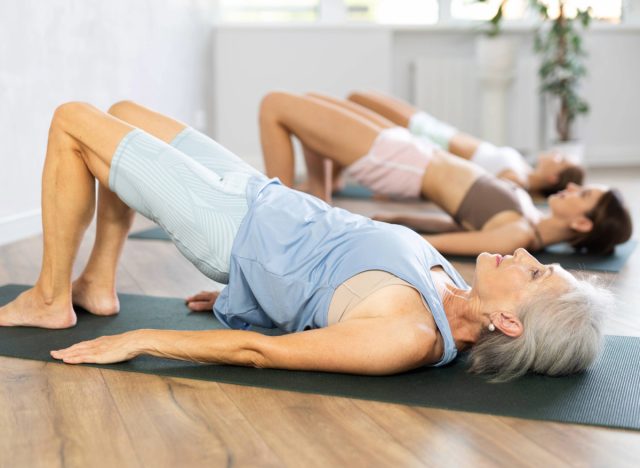
As you age, it’s natural to experience a gradual loss of lean muscle mass and strength, which is known as sarcopenia. This is typically accompanied by a reduction in overall physical activity.
“This can be a huge problem for maintaining independence as we get older, affecting mobility, stability, and strength. Specifically for our glutes and hips, preserving strength in these areas can help reduce the risk of falls and injury, help protect our joints from unnecessary stress, and keep us comfortably enjoying life,” says Borchert.
Whether you’re working long hours at a desk job or fatigued from the day and decide to kick back on the couch, extended periods of being sedentary can cause knee, lower back, and hip pain.
“Adding glute bridges to your routine can help to strengthen and wake up the glutes, which tend to become inactive during long periods of sitting. This increased activation can help to stabilize the pelvis and improve posture, strengthen the posterior chain, and fix muscle imbalances,” Borchert tells us.
The 5-Day Glute Bridge Challenge
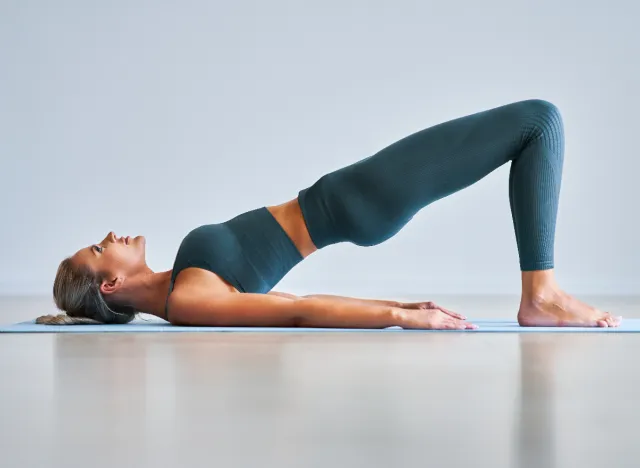
Below, Borchert outlines a beginner-friendly glute bridge challenge to help ease you into the routine of performing glute bridges.
“The only move you’ll tackle here are glute bridges. You’ll have one day of active recovery in the middle of the challenge, but listen to your body and give yourself a day of active recovery if/when your glutes need a little time off,” explains Borchert.
Week 1
Here’s the breakdown for week 1:
- Day 1: 3 sets of 10-15 reps
- Day 2: 3 sets of 10-15 reps
- Day 3: Take a rest day for your glutes, but treat this day as active recovery. This means taking a brisk walk around your neighborhood, doing a 10-minute yoga flow or stretch routine, or tackling some active house work or hobbies.
- Day 4: 4 sets of 10-15 reps
- Day 5: 4 sets of 10-15 reps
Week 2 and Beyond
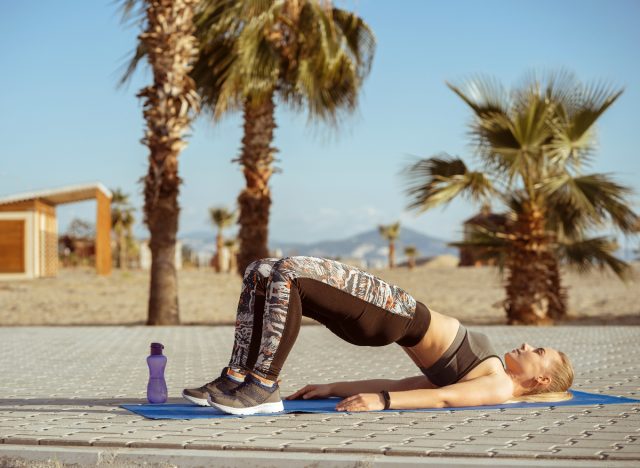
After wrapping up your first week, perform the same number of sets, but tweak your rep range so you’re working close to failure with 2 to 3 reps in reserve (RIR).
“For example, you might reach rep 16 and feel that you could only complete two or three more reps before reaching failure. For some people, that point may come at 15 reps; for others, it could be 30 or more. Focus on maintaining proper form throughout the set, even as you approach failure. If you have to sacrifice form to complete a rep, that’s an indicator you’ve gone beyond your limit,” explains Borchert.
- Day 1: 3 sets, close to failure (2-3 RIR)
- Day 2: 3 sets, close to failure (2-3 RIR)
- Day 3: Take a rest day for your glutes, but treat this day as active recovery. This means taking a brisk walk around your neighborhood, doing a 10-minute yoga flow or stretch routine, or tackling some active house work or hobbies.
- Day 4: 4 sets, close to failure (2-3 RIR)
- Day 5: 4 sets, close to failure (2-3 RIR)