This 5-Minute Bedtime Routine Builds More Strength Than Morning Gym Sessions After 50

Did you know that the time of day you work out can maximize your overall results and well-being? In fact, research shows that nighttime exercise can help you snooze into dreamland quicker and achieve more deep sleep. Another study found that working out in the evening boosts upper-body muscle strength and power. To help boost your routine, we spoke with Felicia Hernandez, NASM-certified personal trainer and community engagement lead at Eden Health Club, who breaks down a quick five-minute bedtime workout that builds more strength than morning gym sessions after 50.
“The scientific evidence now confirms that evening strength training produces better results than morning workouts for people above 50,” Hernandez tells us. “Your nervous system spends the entire day handling movement control and stress management, and daily responsibilities. Your body reaches optimal strength training conditions during evening hours because your nervous system operates differently than it does during morning hours when you are still waking up.”
The real power of an evening strength session is in its ability to promote a solid night’s rest, which leads to physical adaptation. A lengthy two-hour morning workout that leaves you fatigued and results in poor sleep quality will not improve your strength.
“Your body constructs muscle tissue through recovery processes, and better sleep quality leads to enhanced recovery performance,” Hernandez points out.
5-Minute Bedtime Routine That Builds Strength After 50
This routine will fire up your major muscle groups, establish systemic fatigue, and help your body ease into deep sleep. Hernandez recommends performing this workout four to five times a week, 30 to 45 minutes before bed.
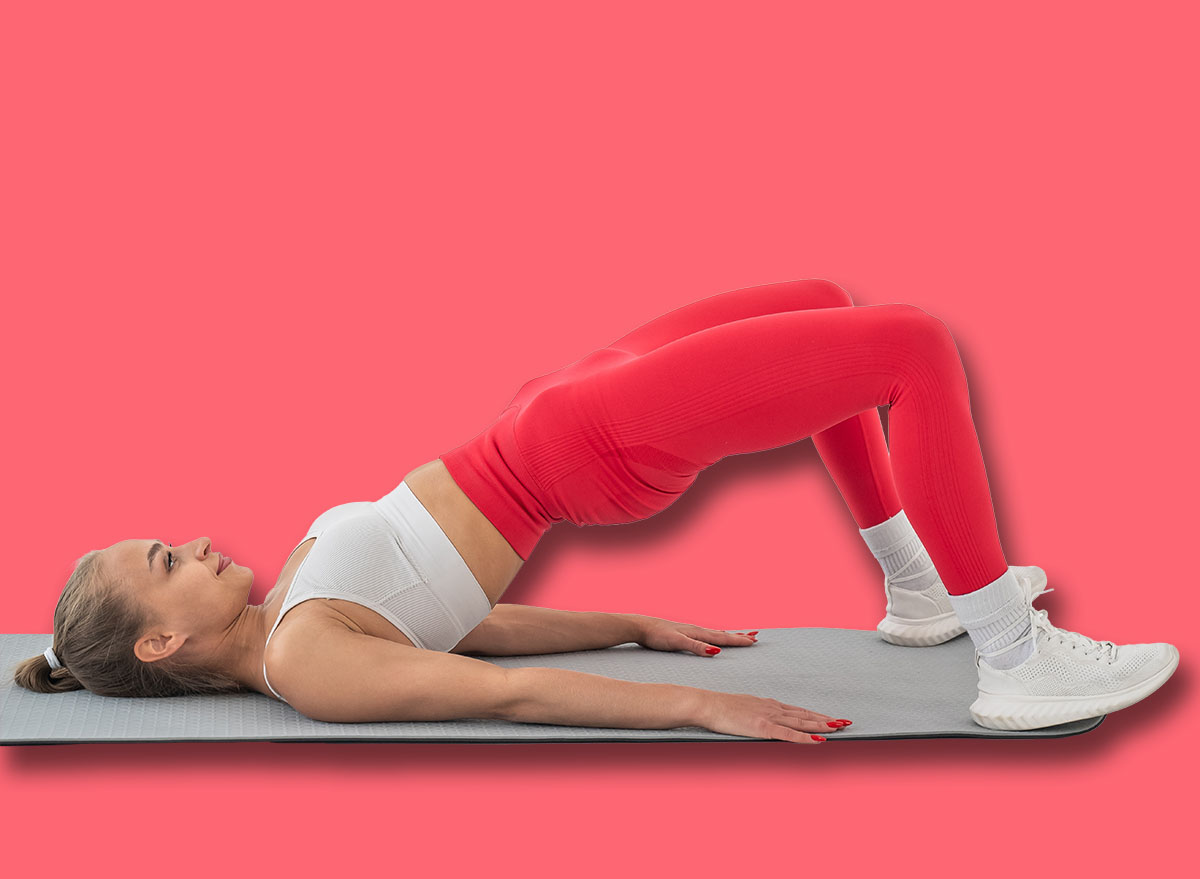
Slow Tempo Glute Bridges
“Your glutes are the largest muscle group in your body. Training them creates significant metabolic demand and systemic fatigue,” Hernandez explains. “Glute bridges also strengthen your posterior chain, which counteracts the forward posture most of us develop sitting throughout the day. For women over 50, strong glutes mean better hip stability, better posture, and reduced lower back pain. The slow tempo keeps your heart rate controlled while maximizing time under tension, exactly what you want for evening training.”
- Begin by lying flat on your back with bent knees and feet hip-width apart on the floor, arms at your sides with palms pressing into the ground.
- Press through your heels, taking 3 seconds to lift your hips until your body forms a straight line from head to heels.
- Squeeze your buttocks, holding at the top for 1 second.
- Take 3 seconds to lower your hips to the start position.
- Perform 2 sets of 12 to 15 reps at a 3-second tempo (3 seconds up, 1-second hold, and 3 seconds down).
RELATED: Over 50? If You Can Do This Many Knee Pushups, Your Upper Body Is Stronger Than Most
Wall Pushups
“Wall pushups train your chest, shoulders, triceps, and core simultaneously without the spinal load of floor pushups,” Hernandez notes. “For women over 50, maintaining upper-body strength is critical for functional independence, carrying items, pushing doors open, and maintaining posture. Wall pushups build that strength while being joint-friendly. The controlled tempo creates muscular fatigue without spiking your heart rate.”
- Begin standing tall, arms-length away from a wall.
- Place your hands shoulder-width apart on the surface.
- Engage your core and bend your elbows to lower your chest toward the wall.
- Press back up to the starting position, keeping the movement slow and controlled.
- Perform 2 sets of 12 reps (2 seconds up, 1-second hold, 3 seconds down).
Assisted Squats
“Squats train your quadriceps, glutes, and core through a functional movement pattern that mimics real-life activities like sitting and standing,” Hernandez explains. “One set of higher reps creates systemic fatigue and metabolic demand without excessive joint stress. For women over 50, maintaining lower-body strength is essential for fall prevention and maintaining independence.”
- Begin standing tall, facing a counter with your hands lightly resting on the surface for balance.
- Maintain a tall chest as you bend your knees and hips to lower into a squat, as if sitting into a chair.
- Lower as deep as possible while maintaining control.
- Press through your heels to rise back up.
- Perform 1 set of 20 reps at a controlled tempo.
Isometric Wall Hold
“This isometric hold trains your core stabilizers and postural muscles without dynamic movement,” Hernandez notes. “It’s perfect for evening training because it’s controlled, low-impact, and creates fatigue without an elevated heart rate. Strong postural muscles mean better spinal health, better breathing, and better overall function.”
- Stand tall with your back against a wall, feet hip-distance apart and about 6 inches away from the surface.
- Slightly bend your knees and press your mid-back, lower back, and head against the wall.
- Activate your core.
- Hold the position, keeping your breath steady.
- Perform 1 set of 20 to 30 seconds.
Calf Raises
“Calf raises train your lower legs and improve ankle stability and proprioception, your body’s awareness of position in space,” Hernandez says. “This is crucial for fall prevention and balance. The rhythmic, controlled movement of calf raises also has a calming effect on your nervous system, facilitating the transition to rest.”
- Begin by standing tall with your feet hip-width apart, facing a counter with your hands lightly resting on the surface.
- Engage your core.
- Rise onto your toes slowly.
- Pause at the top.
- Lower back down with control.
- Perform 1 set of 20 reps.