5 Morning Bodyweight Moves That Fight Aging Faster Than Hour-Long Workouts After 55
Waking up with stiff hips, tight shoulders, and heavy legs becomes more common after 55, but what you do in the first ten minutes of your morning can change how your body feels and performs the rest of the day. A short sequence of focused bodyweight movements wakes up your joints, activates stabilizing muscles, and restores mobility that sitting and daily routines quietly steal. These movements don’t aim to leave you drenched in sweat. They exist to reconnect your body to strength, coordination, and a smooth range of motion, which directly support healthy aging.
Morning training works because your nervous system stays fresh and responsive before the fatigue of the day piles up. Gentle but deliberate loading teaches your muscles to support your joints, reinforces balance, and helps preserve lean muscle tissue that naturally declines with age. These quick sessions also improve circulation, boost posture, and reduce low back and hip discomfort that often limits daily activity. Better movement quality carries into walks, weight training, yard work, and everything else that keeps you active outside the gym.
The five bodyweight moves below work together to open tight hips, build core stability, strengthen your legs, and restore spinal mobility. Each exercise requires no equipment, minimal space, and just a few focused minutes to deliver outsized benefits for longevity, strength, and daily energy.
Alternating 90/90’s
The 90/90 drill restores hip rotation that typically declines with age and prolonged sitting. Improving internal and external hip motion reduces joint stiffness that contributes to knee pain, low back discomfort, and uneven walking patterns. This movement teaches your hips to move independently from your spine, protecting your lower back during daily bending and lifting. It also builds deep rotational strength through controlled transitions rather than stretching alone. Performing this first thing in the morning immediately improves how your hips feel during squats, lunges, and walking.
Muscles Trained: Gluteus medius, Deep hip rotators, Adductors, Obliques
How to Do It:
- Sit tall on the floor with one leg bent in front at 90 degrees and the other bent behind at 90 degrees.
- Press your front knee gently toward the floor while bracing your core upright.
- Lift your hands off the floor and rotate both legs to the opposite side under control.
- Settle into the new position without collapsing your posture.
- Continue alternating sides slowly while maintaining smooth breathing.
Recommended Sets and Reps: Knock out 2 sets of 10 controlled transitions per side. Rest for 30 seconds between each set.
Best Variations: Assisted 90/90 with hands on floor, 90/90 with forward hinge reach, Elevated front shin 90/90
Form Tip: Keep your chest tall and rotate through your hips, not your spine.
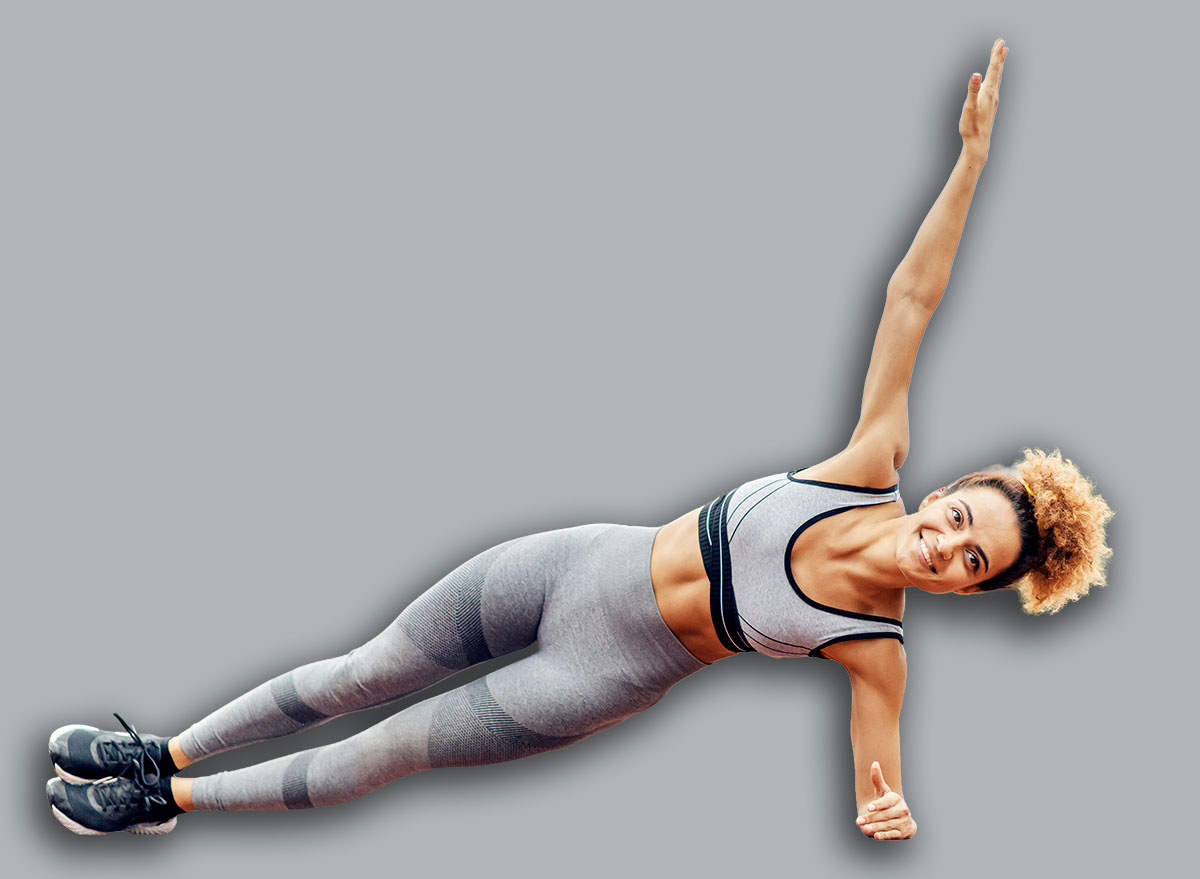
Side Planks
Side planks strengthen the muscles responsible for lateral stability, a critical element for balance and fall prevention after 55. Your obliques and glute medius fire together to keep your pelvis level while standing, walking, and climbing stairs. This exercise reinforces posture by training your body to resist side-bending rather than collapse into it. Side planks also protect your spine by improving stiffness across the torso without repetitive flexion. A stronger side plank directly transfers to better single-leg control and safer movement in daily life.
Muscles Trained: Obliques, Gluteus medius, Quadratus lumborum, Transverse abdominis
How to Do It:
- Position your elbow directly under your shoulder with your legs fully extended.
- Lift your hips until your body forms a straight line from ankles to shoulders.
- Brace your core and squeeze your glutes.
- Breathe steadily while holding the position.
- Lower with control and switch sides.
Recommended Sets and Reps: Perform 2 sets of 20 to 30 second holds per side. Rest for 45 seconds between each set.
Best Variations: Bent knee side plank, Star side plank, Side plank marches
Form Tip: Lock your rib cage down and avoid letting your top shoulder roll forward.
Planks with Leg
Plank leg lifts add dynamic stability to the traditional plank by forcing your core to control shifting weight while one leg moves. This action strengthens the linkage between your glutes and abdominal muscles, which often weakens with age. Better glute activation decreases pressure on your lower back and improves hip extension during walking. Your balance improves as you reinforce full-body tension rather than isolated muscle work. This variation trains total core coordination that applies directly to real-world movement demands.
Muscles Trained: Rectus abdominis, Glutes, Hip flexors, Shoulder stabilizers
How to Do It:
- Set up in a strong forearm plank with your elbows below your shoulders.
- Squeeze your glutes and brace your core.
- Lift one leg several inches without shifting your hips.
- Lower with control and switch sides.
- Continue alternating smooth repetitions.
Recommended Sets and Reps: Knock out 2 sets of 12 total alternating lifts. Rest for 45 seconds between each set.
Best Variations: Elevated plank leg lifts, High plank leg lifts, Bird dogs
Form Tip: Keep your hips square and avoid rocking side to side during each lift.
Bodyweight Squats
Bodyweight squats maintain the leg strength needed for standing up, climbing stairs, and moving confidently through daily life. This pattern stimulates large muscle groups that drive metabolic health while reinforcing proper joint mechanics. Squatting regularly keeps your knees tracking safely and your hips mobile. The controlled depth of each rep helps nourish joint cartilage throughout a full range of motion. A quality morning squat session wakes up the entire lower body and restores power for the rest of the day.
Muscles Trained: Quadriceps, Glutes, Hamstrings, Core stabilizers
How to Do It:
- Stand tall with your feet shoulder-width apart.
- Brace your core and push your hips back to start the descent.
- Bend your knees as you lower under control.
- Drive through your heels to stand tall.
- Repeat smooth, consistent reps.
Recommended Sets and Reps: Knock out 3 sets of 12 to 15 reps. Rest for 45 seconds between each set.
Best Variations: Box squats, Tempo squats, Split squats
Form Tip: Keep your chest tall and let your hips initiate the movement.
Downward Dog to Cobra
This flowing sequence restores spinal mobility while decompressing stiff joints that often greet you in the morning. The alternating positions elongate the posterior chain while opening the chest and hips. This movement enhances circulation to the spine and shoulders, reducing tension built from sleeping positions. Controlled spinal extension strengthens postural muscles that protect the back throughout the day. The rhythm of the transitions promotes calm breathing and reinforces smooth movement patterns that support long-term joint health.
Muscles Trained: Erector spinae, Lats, Glutes, Hip flexors
How to Do It:
- Begin in a high plank position.
- Push your hips upward into Downward Dog while lengthening the spine.
- Shift forward and lower into Cobra while lifting your chest.
- Hold each position briefly, breathing steadily.
- Continue transitioning between positions with control.
Recommended Sets and Reps: Perform 2 sets of 8 controlled flow repetitions. Rest for 30 seconds between each set.
Best Variations: Puppy pose to Cobra, Knee supported flows, Slow tempo spinal waves
Form Tip: Feel yourself “push the ground away” as you rise into downdog.
Best Longevity Tips for Morning Training After 55
Morning bodyweight sessions work best when consistency and intent guide your approach. Treat these movements as skill practice rather than rushing through them for calorie burn. Smooth execution builds joint resilience, balance, and strength faster than aggressive repetition. The goal evolves into better movement quality that fuels everything else you do throughout the day.
- Focus on control first: Move slowly enough to own every position before increasing reps or tempo.
- Prioritize breathing: Deep, steady breathing during each exercise improves mobility and keeps unnecessary tension out of your movement.
- Train daily, but keep it short: Five to ten minutes every morning beats long workouts performed inconsistently.
- Scale smartly: Modify holds, depth, and tempo whenever joints feel stiff or fatigued rather than skipping sessions entirely.
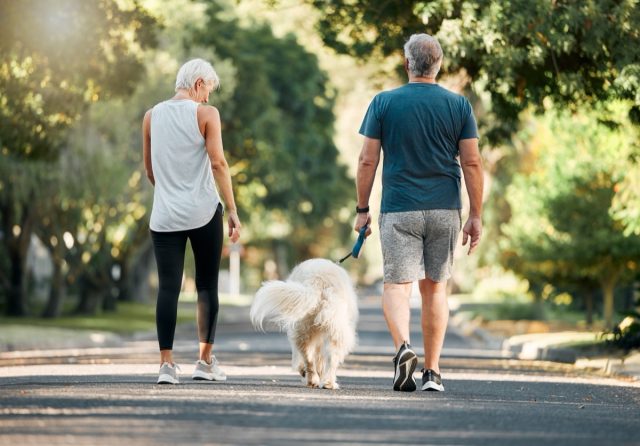
- Pair with daily walking: Short morning training sessions stacked with daily steps amplify circulation, joint health, and recovery for aging bodies.