The 6-Minute Routine That Restores Muscle Faster Than Morning Gym Sessions After 55

Rebuilding muscle after 55 starts with one simple truth: your body responds to consistent movement. When muscles are challenged through controlled, purposeful exercises, they adapt, strengthen, and support everything you do throughout the day. Short routines that emphasize quality reps, full ranges of motion, and steady tension often create a stronger foundation than longer sessions squeezed into busy mornings.
Morning movement works best when it matches how the body feels when you first wake up. Muscles and joints benefit from gradual activation, balanced loading, and patterns that reinforce stability and coordination. A focused routine helps turn stiffness into strength, improves blood flow, and sets your nervous system up for better movement the rest of the day. That early momentum carries into posture, energy, and confidence.
This six-minute routine brings it all together. It targets key muscle groups that support strength and independence, flows smoothly from one exercise to the next, and fits into any morning schedule. You’ll finish feeling capable, connected, and ready to take on the day with strength already on your side.
The Wake-Up Muscle Builder

What You Need: A chair or bench, open floor space, and six uninterrupted minutes. No weights required, though light dumbbells can be added if desired.
The Routine
- Sit-to-Stand Squats: 40 seconds
- Incline Push-Ups: 40 seconds
- Reverse Lunges: 40 seconds
Rest 20 seconds between exercises. Complete one full circuit.
Directions
Move through each exercise with control and focus. Prioritize full range of motion, steady breathing, and smooth transitions. Rest briefly between movements, then continue until all exercises are complete. Read on for the detailed instructions.
Sit-to-Stand Squats
This movement reinforces one of the most important strength patterns after 55: standing up with power and control. It builds leg muscle while reinforcing balance and hip stability. The chair provides a reference point that improves depth and confidence without limiting effort. Performed consistently, this exercise supports daily independence and helps retain lower-body muscle mass.
How to Do It:
- Sit tall on a chair with feet shoulder-width apart.
- Drive through your heels and stand up smoothly.
- Keep your chest tall and core engaged as you rise.
- Lower back to the chair with control.
Best Variations: Goblet sit-to-stands, tempo squats, single-leg assisted sit-to-stands.
Incline Push-Ups
Upper-body pushing strength often fades quietly with age, yet it plays a major role in posture and daily tasks. Incline push-ups activate the chest, shoulders, and arms without overstressing the joints. The elevated position encourages better form and allows you to focus on muscle engagement instead of joint discomfort. It’s one of the most joint-friendly ways to rebuild upper-body muscle.
How to Do It:
- Place your hands on a bench, counter, or wall.
- Step back into a straight body position.
- Lower your chest toward your hands with control.
- Press back up while maintaining a tight core.
Best Variations: Wall push-ups, knee incline push-ups, slow eccentric push-ups.
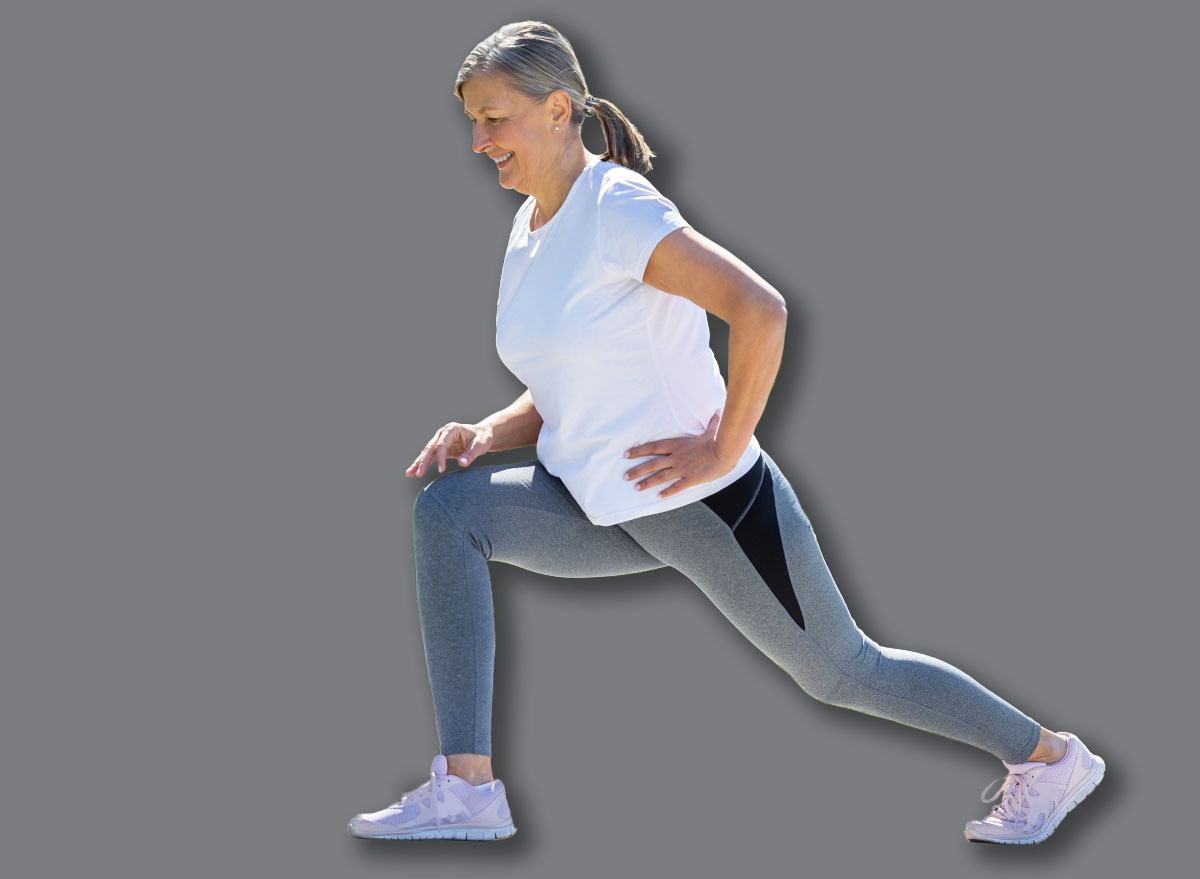
Reverse Lunges
Reverse lunges strengthen the legs while reducing stress on the knees and hips. The backward step improves balance and coordination while activating the glutes and thighs. This exercise challenges muscle symmetry and stability, which helps protect against falls and movement breakdowns. It also builds strength that carries over to walking, stairs, and daily movement.
How to Do It:
- Stand tall with feet hip-width apart.
- Step one foot back and lower into a lunge.
- Keep your front knee stacked over your ankle.
- Push through your front foot to return to standing.
Best Variations: Assisted reverse lunges, split squats, step-back lunges with pause.
The Best Tips for Restoring Muscle After 55

Rebuilding muscle works best when daily habits support your training. Short routines gain power when paired with smart recovery, consistent movement, and basic nutrition strategies.
- Train early, but don’t rush: Give your body a few minutes to warm up before pushing intensity.
- Focus on tension, not speed: Slower reps increase muscle engagement and joint control.
- Eat protein soon after moving: A protein-rich breakfast supports muscle repair and growth.
- Repeat often: Short routines performed most days beat long workouts done occasionally.
- Progress gradually: Add time, reps, or resistance once movements feel smooth and strong.
Six minutes may feel simple, but done consistently, it adds up to real strength, better movement, and a stronger start to every day.
References
- Pedersen H, Saeterbakken AH, Fimland MS, Iversen VM, Schoenfeld BJ, Stien N and Andersen V (2022) Effects of one long vs. two short resistance training sessions on training volume and affective responses in resistance-trained women. Front. Psychol. 13:1010596. doi: 10.3389/fpsyg.2022.1010596
- Schumacher, Leah M et al. “Consistent Morning Exercise May Be Beneficial for Individuals With Obesity.” Exercise and sport sciences reviews vol. 48,4 (2020): 201-208. doi:10.1249/JES.0000000000000226