6 Standing Workouts for a Leaner, Stronger Core After 55

Core training after 55 works best when it supports posture, balance, and daily movement, not when it isolates muscles on the floor. A strong, lean core holds the torso upright, transfers force between the upper and lower body, and keeps the spine protected during everyday tasks. When that system weakens, the midsection thickens, posture collapses, and movement feels heavier than it should.
Standing core workouts restore this system by forcing the body to stabilize itself against gravity. Instead of flexing and crunching, the core learns to brace, rotate, and resist movement while the hips and shoulders stay active. That approach trims the waist by improving how the body holds itself rather than chasing muscle fatigue.
These six standing workouts retrain the deep abdominals, obliques, and postural muscles through controlled tension and coordination. Practiced consistently, they build a core that looks leaner, feels stronger, and performs better throughout the day.
Standing Abdominal Brace With Breath Control
This movement rebuilds the foundation of all core strength: the ability to maintain abdominal tension while breathing naturally. Many adults over 55 unconsciously push the belly outward when standing or inhaling, which weakens support and thickens the waistline over time. This exercise retrains the deep core to draw inward without stiffness or strain.
Standing posture increases demand because the torso must support itself against gravity. When performed with patience and control, this movement teaches the abdomen to stay engaged during walking, lifting, and daily activity.
How to Do It
- Stand tall with ribs stacked over hips
- Inhale quietly through the nose
- Exhale slowly through the mouth
- Gently draw the belly inward.
Standing Pelvic Tilt Hold
A forward-tilted pelvis places constant pressure on the lower back and pushes the abdomen forward. This standing hold restores neutral alignment by engaging the lower abdominals and glutes together. Holding the position builds endurance, which matters more than momentary effort for lasting core strength.
Remaining upright forces the core to stabilize continuously. Over time, improved pelvic control directly contributes to a flatter, stronger midsection.
How to Do It
- Stand with knees slightly bent
- Gently tuck the pelvis under
- Keep chest tall and relaxed
- Hold while breathing steadily.
Standing Side Reach With Oblique Control
The obliques play a major role in waist definition and spinal stability, yet they often stay undertrained in traditional core workouts. This side reach activates the entire lateral core while maintaining upright posture. The movement challenges the core to resist gravity rather than fold under it.
Slow tempo increases time under tension without compressing the spine. Stronger obliques help pull the waist inward and support rotational control during daily movement.
How to Do It
- Stand tall with feet planted
- Reach one arm overhead
- Shift gently to the side
- Return and switch sides.
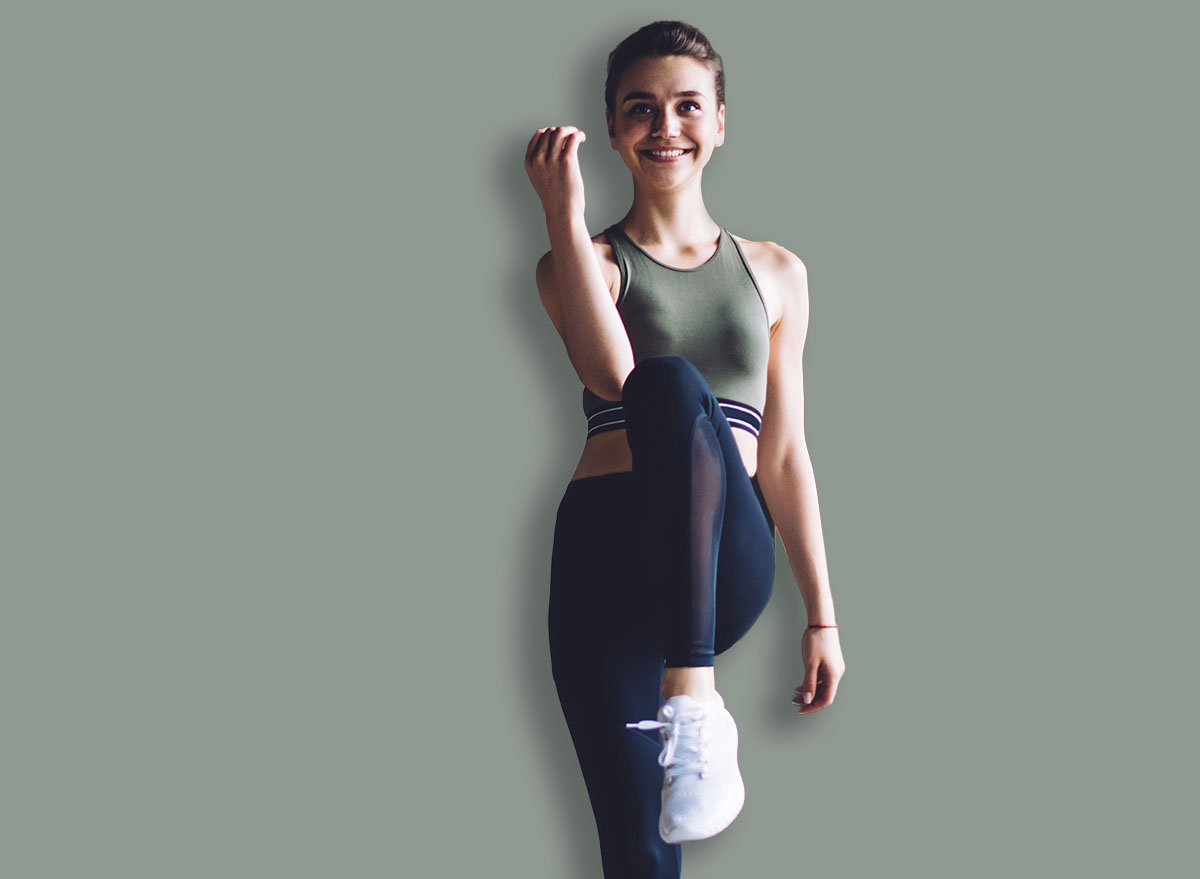
Standing March With Core Stability
Single-leg movement instantly exposes weak core control. Each knee lift shifts body weight, forcing the abdominals and hips to stabilize the pelvis. Slow, controlled marching removes momentum and demands continuous engagement.
This exercise strengthens the core in the same pattern used during walking and stair climbing. Improved stability here translates directly into better balance and a leaner waistline.
How to Do It
- Stand upright with hands on hips
- Lift one knee slowly
- Keep torso steady
- Alternate sides under control.
Hip Hinge With Abdominal Brace
A strong core doesn’t just flex, it stabilizes while the hips move. This exercise trains that coordination by teaching the abdomen to stay engaged as the hips hinge backward. When this pattern improves, the lower abdomen stops compensating by pushing forward.
Moving deliberately reinforces control and protects the spine. This workout strengthens the connection between the core and posterior chain, contributing to a tighter midsection and better posture.
How to Do It
- Stand with feet hip-width
- Push hips back into a hinge
- Maintain abdominal tension
- Return upright smoothly.
Standing Rotation Hold
Rotational control defines real-world core strength. This hold challenges the obliques to resist movement rather than create it, building deep stability without spinal stress. Standing position increases demand across the entire torso.
Maintaining tension during rotation improves balance, coordination, and waist strength. Over time, this movement helps reshape the midsection by strengthening the muscles that support and narrow the waist.
How to Do It
- Stand tall with arms extended
- Rotate torso slightly to one side
- Hold with controlled tension
- Return and switch sides.