5 Morning Exercises That Flatten Belly Overhang Faster Than Crunches After 50
Crunches can train the abs, but a belly-overhang goal usually needs more than folding your torso for a few sets. The midsection changes best when the workout asks more of the whole body, raises your effort, and gives you a routine you can repeat often enough for the results to build.
That’s why morning training can be useful after 50. You don’t need a long session to create momentum, but you do need exercises that make your legs, hips, back, shoulders, and core work together. A short morning routine also gives the day a cleaner starting point, which can make the rest of your movement, meals, and energy feel easier to manage.
When I coach people around body-composition goals, I want the workout to feel productive without turning into punishment. The best routines give you enough strength work to maintain muscle, enough pace to raise your breathing, and enough control to keep the reps clean. That combination beats a long list of crunches for most people.
These five exercises give you a stronger morning plan. You’ll lunge, hinge, row, brace, and move through a quick mobility drill that helps your body feel ready to train.
RELATED: 5 Barefoot Exercises That Strengthen Your Feet Better Than Orthotics After 60
Walking Lunge
Walking lunges bring the lower body into the workout right away. Each step trains your legs and hips while your core keeps your torso steady. The movement also raises the pace of the session, which helps make the routine feel more active than floor-based ab work alone. Start with bodyweight and shorten your stride if your knees or balance need a friendlier setup.
Muscles Trained: Quadriceps, glutes, hamstrings, calves, core.
How to Do It:
- Stand tall with your feet hip-width apart.
- Brace your core and take a controlled step forward.
- Bend both knees as you lower into a lunge.
- Press through your front foot to stand.
- Step forward with the opposite leg.
- Continue alternating sides with smooth control.
Recommended Sets and Reps: Perform 3 sets of 8 to 10 reps per side. Rest for 45 to 60 seconds between sets.
Best Variations: Reverse lunges, supported walking lunges, short-stride walking lunges.
Form Tip: Keep your front heel grounded and your torso tall as you step.
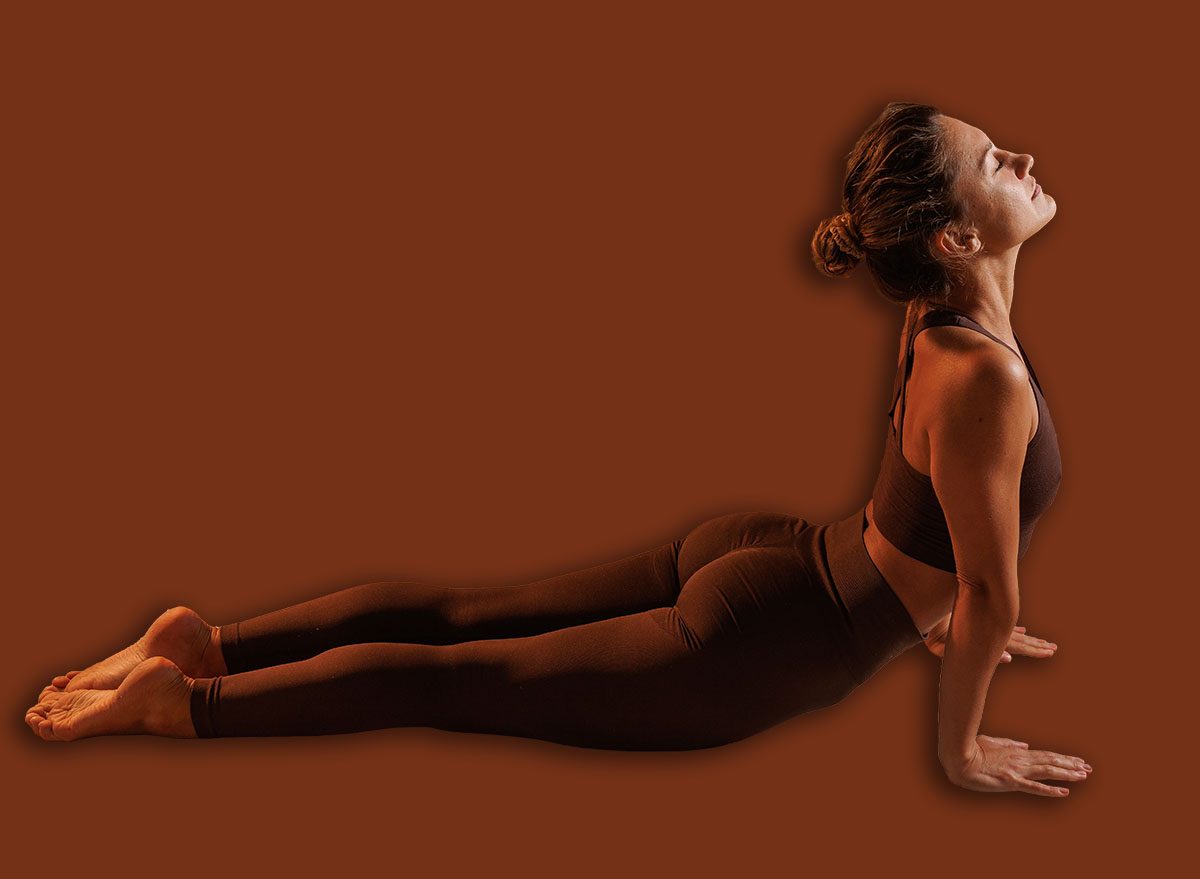
Down Dog to Cobra
Down dog to cobra helps your morning routine feel less stiff and more athletic. It opens the shoulders, lengthens the back side of the body, and moves the spine through a controlled range before the heavier strength work. Treat it like a reset, not a race. Smooth movement and steady breathing make this drill work better.
Muscles Trained: Shoulders, upper back, abs, spinal erectors, glutes, hamstrings.
How to Do It:
- Start in a high plank position with your hands under your shoulders.
- Push your hips back and up into a down dog position.
- Press your chest gently toward your thighs.
- Shift forward with control.
- Lower your hips and lift your chest into cobra.
- Return to down dog and repeat.
Recommended Sets and Reps: Perform 2 to 3 sets of 6 to 8 reps. Rest for 30 to 45 seconds between sets.
Best Variations: Down dog holds, cobra holds, slow down dog to cobra flows.
Form Tip: Keep the movement comfortable through your lower back and shorten the cobra if it feels too intense.
Dumbbell Renegade Row
Renegade rows train your back and core at the same time. Your rowing arm pulls the dumbbell, while the rest of your body works to keep your hips from shifting. That gives your midsection a stronger job than most crunch variations. Use light dumbbells and place your feet wider to make the exercise easier to control.
Muscles Trained: Lats, upper back, shoulders, biceps, abs, obliques, glutes.
How to Do It:
- Place two dumbbells on the floor about shoulder-width apart.
- Grip the dumbbells and step into a high plank.
- Set your feet wider than hip-width for balance.
- Brace your core and squeeze your glutes lightly.
- Row one dumbbell toward your ribs.
- Lower it with control, then repeat on the other side.
Recommended Sets and Reps: Perform 3 sets of 6 to 8 reps per side. Rest for 45 to 60 seconds between sets.
Best Variations: Elevated renegade rows, plank dumbbell rows, slow-tempo renegade rows.
Form Tip: Keep your hips as still as possible while you row.
Dumbbell Deadlift
Dumbbell deadlifts give this routine a strong hinge pattern. Your glutes and hamstrings create the lift, and your core helps protect your position as the weights move. This is a great morning strength move because it trains larger muscles without needing a complicated setup. Keep the weights close to your legs and move with control.
Muscles Trained: Glutes, hamstrings, lower back, upper back, core, grip.
How to Do It:
- Stand with your feet hip-width apart and hold dumbbells in front of your thighs.
- Soften your knees and brace your core.
- Push your hips back as the dumbbells lower along your legs.
- Stop when you feel tension through your hamstrings.
- Press through your feet and drive your hips forward.
- Stand tall and repeat.
Recommended Sets and Reps: Perform 3 sets of 8 to 12 reps. Rest for 45 to 60 seconds between sets.
Best Variations: Bodyweight hip hinges, suitcase deadlifts, slow-tempo dumbbell deadlifts.
Form Tip: Let your hips lead the movement so the exercise doesn’t turn into a lower-back bend.
Plank With Shoulder Taps
Plank shoulder taps finish the routine with a focused core challenge. Every tap asks your abs and obliques to keep your body steady while one hand leaves the floor. It’s simple, but it works best when you slow it down and make each tap clean. Elevate your hands on a bench or counter if the floor version feels too aggressive.
Muscles Trained: Abs, obliques, shoulders, chest, glutes, deep core.
How to Do It:
- Start in a high plank with your hands under your shoulders.
- Set your feet slightly wider than hip-width.
- Brace your core and lightly squeeze your glutes.
- Lift one hand and tap the opposite shoulder.
- Return that hand to the floor.
- Alternate sides while keeping your hips steady.
Recommended Sets and Reps: Perform 3 sets of 20 to 30 seconds. Rest for 45 to 60 seconds between sets.
Best Variations: Elevated shoulder taps, slow shoulder taps, knee plank shoulder taps.
Form Tip: Move slowly enough that your hips don’t rock side to side.
How to Use These Morning Exercises After 50

Use these exercises as a circuit three to four mornings per week. Complete one set of each move in order, rest for 60 to 90 seconds, then repeat for two to three total rounds.
- Start with clean reps: The workout should raise your effort without turning sloppy. Use lighter weights and shorter ranges at first.
- Keep the pace steady: Move with intent, then rest long enough to keep the next exercise sharp.
- Make the core work honest: Renegade rows and shoulder taps should challenge your midsection without twisting through every rep.
- Use the mobility drill as a reset: Down dog to cobra helps your body feel more prepared before the heavier strength moves.
- Pair the routine with daily movement: Walks, errands, yard work, and consistent activity all help support the body-composition changes behind the belly-overhang goal.
Flattening belly overhang takes more than a stronger set of abs. Train the whole body, keep the routine repeatable, and use the morning as a reliable place to build momentum.
References
- Cox, Carla E. “Role of Physical Activity for Weight Loss and Weight Maintenance.” Diabetes spectrum : a publication of the American Diabetes Association vol. 30,3 (2017): 157-160. doi:10.2337/ds17-0013
- Schumacher, Leah M et al. “Consistent exercise timing as a strategy to increase physical activity: A feasibility study.” Translational journal of the American College of Sports Medicine vol. 8,2 (2023): e000227. doi:10.1249/tjx.0000000000000227