5 Simple Bed Exercises That Shrink Lower Belly Faster Than Ab Workouts After 60

Changes in the lower belly after 60 rarely come from a single cause. Muscle loss, reduced daily movement, slower recovery, and long hours of sitting all contribute. That combination makes traditional floor workouts feel uncomfortable, inconsistent, or easy to skip altogether.
Bed-based exercises solve a different problem. They allow you to train first thing in the morning or wind down at night without stressing joints, wrists, or the lower back. The surface provides support, helping you focus on muscle engagement and breathing rather than bracing against discomfort. That consistency adds up faster than occasional high-effort workouts.
The appearance of the lower belly also responds best when the hips, glutes, and postural muscles start doing their job again. When those muscles stay active, the pelvis sits in a stronger position, movement feels easier, and your midsection stops carrying the workload alone. That shift changes how your body looks and moves throughout the day.
Below are five simple bed exercises that encourage full-body engagement, improve muscle tone, and support fat loss without traditional ab work. They’re gentle, effective, and easy to build into your daily routine.
Glute Bridge Hold
The glute bridge trains the hips and glutes, which play a major role in posture and pelvic alignment. When these muscles stay strong, the lower belly appears flatter because the pelvis stays in a better position. Holding the top position also encourages full body tension and steady breathing. Over time, this improves muscle tone and stability without stressing your spine.
Muscles Trained: Glutes, hamstrings, lower back stabilizers, and deep core support muscles.
How to Do It:
- Lie on your back with your knees bent and feet flat on the bed.
- Press your heels into the ground and squeeze your glutes.
- Lift your hips until your body forms a straight line from shoulders to knees.
- Hold the position while breathing steadily.
- Lower your hips back down with control.
Recommended Sets and Reps: Perform 3 sets of 20 to 30 second holds. Rest for 30 seconds between each set.
Best Variations: Single leg bridge, bridge with heel lift, bridge with arms overhead.
Form Tip: Think about pulling your ribs down as you lift your hips.
Heel Slides
Heel slides encourage smooth hip movement while keeping your body relaxed and supported. They improve coordination between the hips and the trunk, helping restore efficient movement patterns. This exercise also promotes blood flow and joint mobility, making it ideal for mornings or evenings. Over time, better hip control reduces strain on the lower belly area.
Muscles Trained: Hip flexors, hamstrings, inner thighs, and pelvic stabilizers.
How to Do It:
- Lie on your back with both legs straight.
- Slowly slide one heel toward your glutes while keeping your foot in contact with the bed.
- Pause briefly at the top of the movement.
- Slide the leg back to the starting position.
- Alternate sides with each repetition.
Recommended Sets and Reps: Perform 2 to 3 sets of 8 to 10 reps per side. Rest for 30 seconds between each set.
Best Variations: Alternating heel slides, double heel slides, heel slides with light resistance band.
Form Tip: Move slowly and keep your hips relaxed against the bed.
Bent Knee Fallouts
Bent knee fallouts train hip control and stability without requiring bracing or crunching. They teach your body to resist unwanted movement, which supports better posture throughout the day. This exercise also helps reduce stiffness in the hips and lower back. Consistent practice improves muscle tone while staying gentle on joints.
Muscles Trained: Inner thighs, outer hips, glutes, and deep stabilizing muscles.
How to Do It:
- Lie on your back with your knees bent and feet flat on the bed.
- Keep one knee steady while letting the opposite knee slowly fall out to the side.
- Pause briefly near the end range.
- Bring the knee back to center with control.
- Alternate sides.
Recommended Sets and Reps: Perform 2 to 3 sets of 8 to 10 reps per side. Rest for 30 seconds between each set.
Best Variations: Slow tempo fallouts, resistance band fallouts, alternating fallouts.
Form Tip: Imagine your pelvis staying heavy and still on the bed.
Marching Bridge
The marching bridge builds on the standard glute bridge by adding controlled leg movement. This challenges balance and coordination while keeping the body supported. It reinforces hip strength and stability, which directly affects how the lower belly looks and feels. The movement also improves confidence with daily tasks like walking and climbing stairs.
Muscles Trained: Glutes, hamstrings, hip stabilizers, and postural muscles.
How to Do It:
- Lie on your back with knees bent and feet flat on the bed.
- Lift your hips into a bridge position.
- Slowly lift one foot a few inches off the bed.
- Lower the foot back down with control.
- Alternate sides while keeping hips level.
Recommended Sets and Reps: Perform 2 to 3 sets of 6 to 8 reps per side. Rest for 45 seconds between each set.
Best Variations: Marching bridge holds, slow alternating marches, elevated foot marches.
Form Tip: Keep your hips steady as if balancing a glass of water on them.
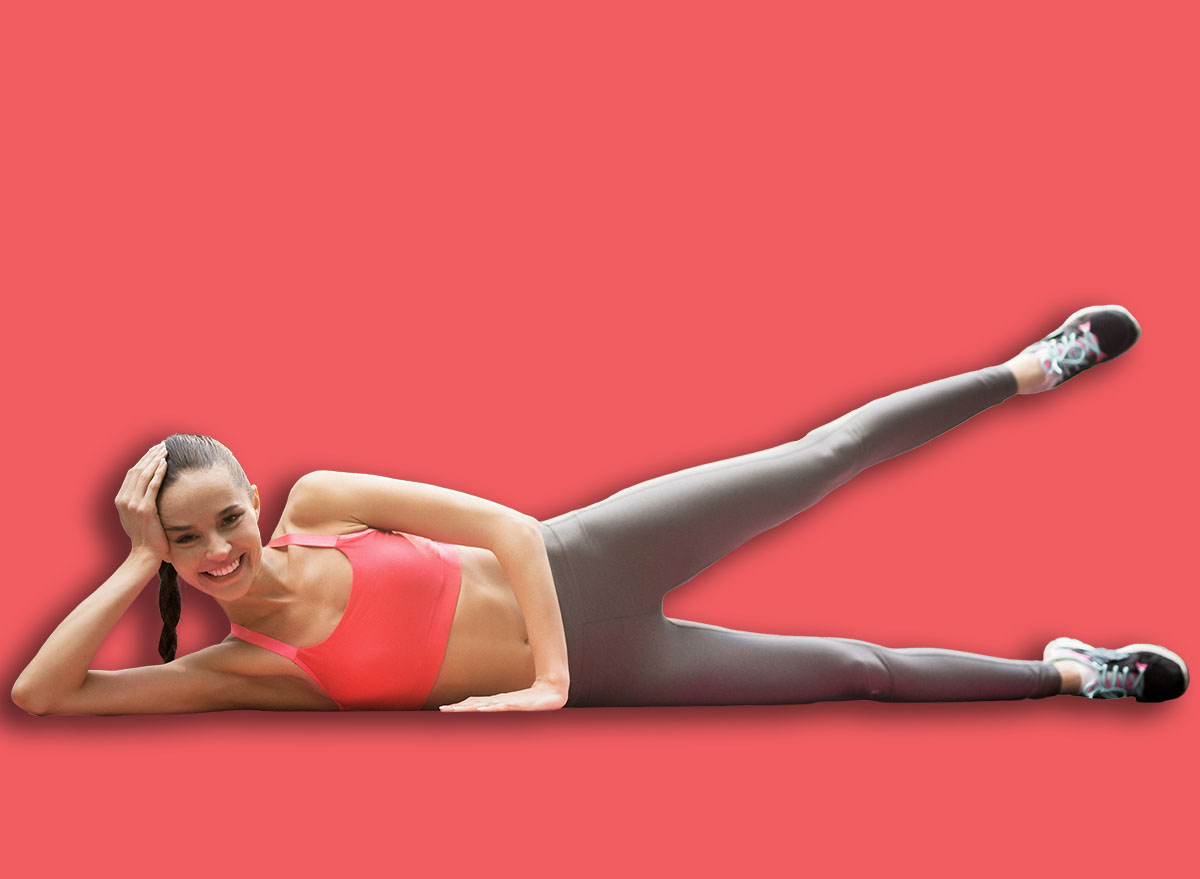
Side Lying Leg Lifts
Side-lying leg lifts strengthen the outer hips, which support pelvic alignment and walking mechanics. When these muscles weaken, the lower body compensates and tension shifts forward. Strengthening them helps redistribute effort across the body. That change improves posture and supports a flatter midsection over time.
Muscles Trained: Outer hips, glutes, inner thigh stabilizers, and lower back support muscles.
How to Do It:
- Lie on your side with your bottom knee bent and top leg straight.
- Keep your hips stacked and shoulders relaxed.
- Lift your top leg slowly toward the ceiling.
- Pause briefly at the top.
- Lower the leg back down with control.
Recommended Sets and Reps: Perform 2 to 3 sets of 10 to 12 reps per side. Rest for 30 seconds between each set.
Best Variations: Small range pulses, extended holds, slow tempo lifts.
Form Tip: Lead the movement with your heel, not your toes.
The Best Daily Tips for Shrinking Lower Belly After 60

Lower belly changes respond best to daily habits that support muscle tone, circulation, and posture. These adjustments don’t require intense workouts or long sessions. They focus on consistency, awareness, and smart movement choices that fit your lifestyle.
- Move early in the day: Gentle morning movement helps regulate blood sugar and sets your posture for the rest of the day.
- Breathe with intention: Slow nasal breathing supports muscle engagement and reduces unnecessary tension.
- Prioritize hip strength: Strong hips reduce stress on the lower belly and improve overall movement quality.
- Stay consistent: Short daily routines outperform occasional long workouts.
- Finish feeling better: Exercises should leave you energized and stable, not fatigued or sore.
When these habits work together, your body begins to respond faster. Strength improves, posture changes, and the lower belly gradually follows.
References
- Maccarone, Maria Chiara et al. “Effects of the Full-Body in-Bed Gym program on quality of life, pain and risk of sarcopenia in elderly sedentary individuals: preliminary positive results of a Padua prospective observational study.” European journal of translational myology vol. 33,3 11780. 26 Sep. 2023, doi:10.4081/ejtm.2023.11780
- Zhong, Yuanji et al. “Effects of core training on balance performance in older adults: a systematic review and meta-analysis.” Frontiers in public health vol. 13 1661460. 9 Oct. 2025, doi:10.3389/fpubh.2025.1661460