5 Best Chair Moves That Firm Sagging Arms Better Than Bicep Curls After 50

Sagging arms don’t come from weak biceps alone. After 50, loss of muscle tone around the triceps, shoulders, and upper back drives most of the softness people see waving back at them in the mirror. Traditional bicep curls isolate one small muscle group while ignoring the larger support system responsible for arm firmness, posture, and tension.
Chair-based training flips that approach. Seated and supported movements allow longer time under tension, deeper muscle engagement, and safer loading angles for joints that don’t tolerate heavy standing lifts anymore. Instead of chasing heavier dumbbells, this method sharpens control, stability, and muscle recruitment where aging arms need it most.
These five chair moves target the entire upper-arm complex while sparing the neck, elbows, and lower back. Each movement forces the triceps, shoulders, and stabilizers to work together, creating visible firmness that curls alone rarely deliver, especially after 50.
Chair Triceps Press-Back
Most sagging shows up on the back of the arms, yet many programs barely challenge the triceps through a full range. This press-back demands sustained tension while the torso stays upright and supported. The chair removes momentum, forcing the arms to carry the load without help from the hips or spine. Every inch of the movement sharpens control, making lighter resistance feel brutally effective. Over time, this kind of slow, deliberate extension rebuilds tension where skin tends to loosen first.
By anchoring the body, this move lets you focus entirely on elbow extension and shoulder stability. That focus matters after 50, when sloppy form often steals tension from the very muscles you’re trying to firm.
How to Do It
- Sit tall at the edge of a chair, feet planted
- Hold light dumbbells or resistance bands
- Elbows stay pinned to your sides
- Press hands straight back until arms fully extend
- Pause briefly, then return slowly
Seated Overhead Reach & Pull
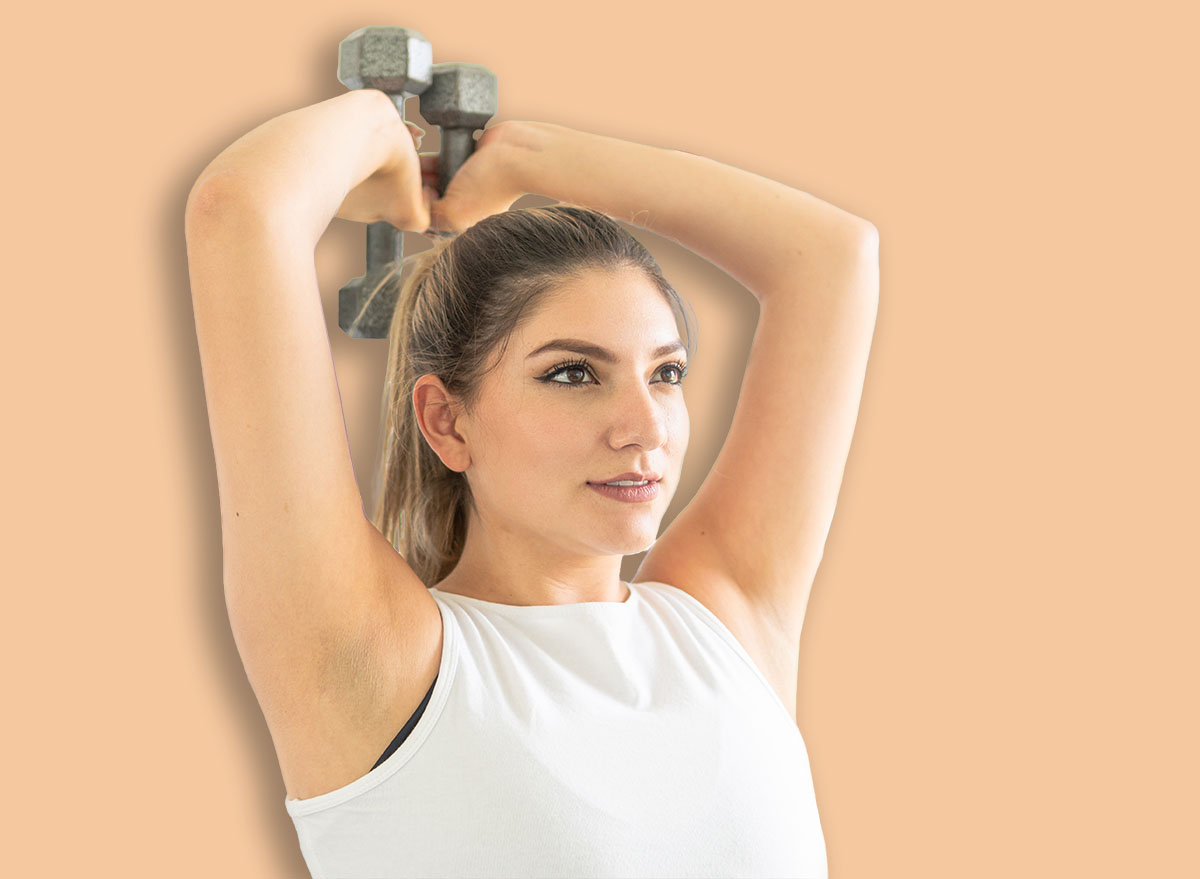
Overhead arm firmness requires more than curls, it demands shoulder stability and triceps strength working together. This reach-and-pull pattern loads the arms in a vertical plane that everyday life rarely challenges, especially once people stop lifting objects overhead. The chair keeps the spine stacked while the arms handle the work.
Each repetition stretches the triceps under control, then forces them to contract through a long range. That stretch-to-contract pattern drives muscle engagement without joint strain. Over time, this move improves arm shape while reinforcing shoulder mechanics that protect against pain and stiffness.
How to Do It
- Sit upright, core braced
- Hold one dumbbell or band overhead with both hands
- Lower hands behind head slowly
- Keep elbows pointing forward
- Press arms upward until fully extended
Chair-Supported Push-Away
This movement mimics a push-up pattern without floor strain, making it ideal for building arm tension safely after 50. The chair support shifts emphasis onto the triceps and shoulders while minimizing wrist and lower-back stress. Unlike curls, this push-away demands the arms stabilize the body while producing force, exactly how functional strength develops.
The slow tempo and angled position keep muscles under constant load. That constant load builds firmness far more effectively than short, isolated lifts. Done consistently, this move tightens the entire upper arm while improving pressing strength for daily tasks.
How to Do It
- Sit tall, hands on chair arms or seat edges
- Slide hips slightly forward
- Bend elbows to lower body a few inches
- Press hands down to lift torso back up
- Move slowly with control
Seated Lateral Lift Hold
Side-arm softness often comes from neglected shoulder stabilizers. This move attacks that problem head-on. By lifting and holding rather than swinging, the shoulders and upper arms stay under sustained tension, a key driver of firmness after 50. The chair eliminates leg drive, forcing the arms to work uninterrupted.
Isometric holds like this build endurance and definition without heavy loads. That combination proves especially effective for aging joints while still delivering visible results in arm shape and posture.
How to Do It
- Sit tall with light dumbbells
- Raise arms out to shoulder height
- Palms face down
- Hold position for several seconds
- Lower slowly with control
Chair Cross-Body Pulls
Firm arms rely on more than pushing strength. Pulling patterns engage the back of the shoulders and upper arms, areas that often weaken with age and contribute to loose appearance. This cross-body pull challenges coordination, control, and tension across the entire upper-arm chain.
The seated position locks the torso in place, preventing momentum. Each pull tightens muscles through rotation and resistance, reinforcing balance between the front and back of the arms, something curls never address. That balance drives long-term firmness and healthier shoulders.
How to Do It
- Sit upright holding a band or dumbbell
- Start with hand near opposite knee
- Pull diagonally upward across body
- Keep shoulders down and controlled
- Return slowly, then switch sides