5 Best Low-Impact Exercises To Melt Belly Fat After 55
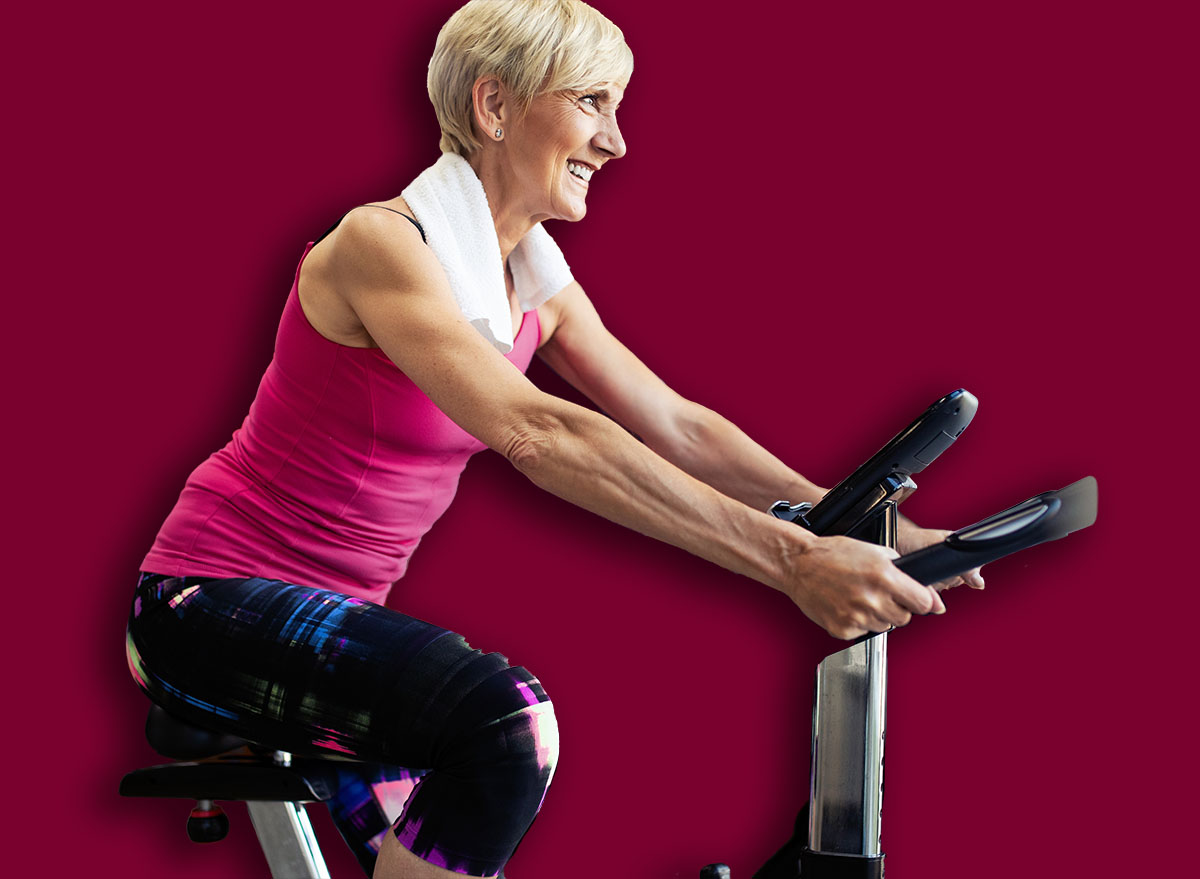

Losing fat around your stomach becomes one of the biggest challenges as you get older. I’ve worked in the fitness industry for 40 years—as a group exercise instructor, a personal trainer, and now educating personal trainers at TRAINFITNESS. One of the biggest challenges I see older adults struggle with is losing fat, especially around their stomach. Although harder, with consistency and the right plan, it’s more than achievable. Here are the best low-impact exercises that can help you finally target that stubborn belly fat without putting your joints at risk.
Why Belly Fat Gets Harder To Lose After 55
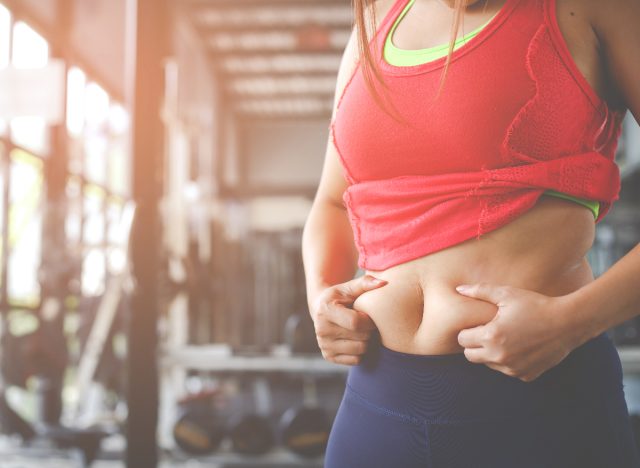
Your hormones change dramatically once you reach your mid-50s. For women, menopause causes massive drops in oestrogen, telling the body to store fat around the middle rather than the hips and thighs. From around 30, men face a gradual drop in testosterone, which has the same effect, making the stomach the primary area they store fat. These changes are not small—they are fundamentally altering where and how the body stores fat.
After 30, our muscle mass drops by up to 8% a decade, and this accelerates after 60. When we have less muscle, we burn fewer calories while resting. At 55, we are burning significantly fewer calories than at 35, even if our weight is the same. This slowdown in metabolism is such a slow process that most of us do not notice until our clothes are too tight.
Insulin sensitivity also declines as we get older. Our cells become resistant to insulin’s signals, so instead of using food for energy, it gets stored as fat. This process gets faster if you’re already carrying additional fat, which creates a cycle that’s really hard to break.
After 55, the stress hormones (like cortisol) are often chronically elevated. Pressure accumulated over decades, combined with poor sleep and life demands, keeps your cortisol high—directly promoting fat storage around your tummy. Something that was once beneficial as an evolutionary survival mechanism is now working against us.
Movement decreases without you realising it. You avoid certain activities because they’re uncomfortable. Those small daily movements—stairs, walking to the shops, gardening—disappear gradually. The result is hundreds fewer calories burned each week compared to when you were younger.
Why Low-Impact Exercises Are Your Best Choice
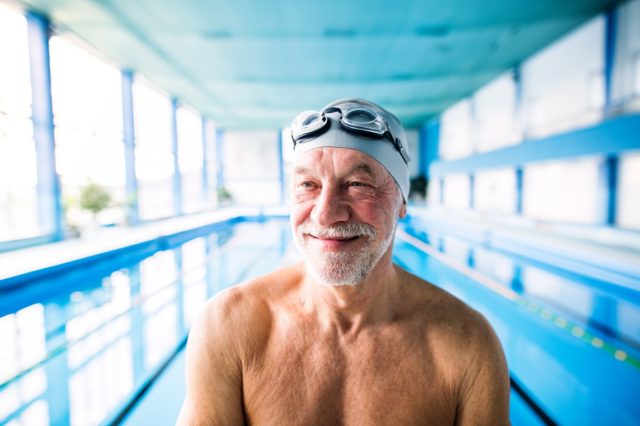
By 55, our joints have decades of accumulated wear and tear, and the cartilage is significantly thinner than it used to be. Activities like running and jumping are high-impac,t and they put a massive stress on our knees, hips, and ankles. Lower impact options deliver the same fat-burning benefits but massively reduce the risk of an injury that stops you from training.
Compared to a 30-year-old, someone who’s 55 will take two to three times longer to recover. At 30, doing an intense CrossFit session and recovering in a day is more than feasible, at 55 you’d often need three. By switching to low-impact exercises, we can train more often as we’re not constantly recovering from damage to our muscles and stress to the joints. For fat loss, frequency is much more effective than intensity.
The most important thing of all is sustainability—if every session leaves you exhausted, sore and worried about hurting yourself, then the chance that you’ll quit goes through the roof. Lower impact exercises feel manageable, so you’ll keep doing them week in week out. This consistency is what will help you lose your belly fat.
Low-impact doesn’t mean ineffective. Swimming, cycling and brisk walking can all elevate your heart rate and engage multiple muscle groups without pounding your joints. You can work hard while protecting your body.
These exercises build confidence. When movement feels safe and controlled, you’re more likely to push yourself. That psychological component is huge—many people over 55 have backed away from exercise because they’re afraid of injury. Low-impact training removes that fear.
The 5 Best Exercises To Melt Belly Fat
Brisk Walking (With Intervals)

Walking torches calories without beating up your joints. Adding intervals turns it into a metabolic workout that keeps burning calories for hours after you finish. The constant engagement of your core to maintain posture works the muscles around your midsection directly.
How to do it:
- Warm up with 2 minutes of easy walking
- Push the pace for 3 minutes—you should be breathing hard but still able to speak in short sentences
- Recover at an easy pace for 3 minutes
- Repeat this pattern for 20-30 minutes total
- Cool down with 2 minutes of gentle walking
Common mistakes:
- Don’t walk too slowly during the hard intervals
- Don’t hunch forward or stare at the ground. Keep your head up and chest open
- Don’t take short, choppy steps. Lengthen your stride
- Don’t let your arms hang limply. Swing them naturally
Modifications for beginners:
- Start with 15 minutes total
- Make your fast intervals 2 minutes instead of 3, and take 4 minutes to recover
- If intervals feel too challenging, walk at one steady challenging pace without speed changes
- Use walking poles if balance concerns you—they add stability and work your upper body
Swimming or Water Walking
Water provides 12 times more resistance than air while supporting your body weight. Every movement becomes strength training without joint impact. The resistance forces your core to work constantly for stability, directly targeting belly fat. Swimming engages your entire body—arms, legs, back and core all firing together burns serious calories.
How to do it (swimming):
- Warm up with 5 minutes of easy freestyle or breaststroke
- Swim at moderate intensity for 2-3 minutes
- Rest 30-60 seconds at the pool edge
- Repeat and build to 20-30 minutes of this pattern
How to do it (water walking):
- Stand in chest-deep water
- Stride forward with exaggerated steps, pumping your arms through the water
- Walk 3 minutes, rest 1 minute
- Repeat for 20-30 minutes
Common mistakes:
- Don’t swim too hard in the first few minutes or you’ll gas yourself
- Make sure you engage your core. Your torso should feel braced and stable
- During water walking, don’t shuffle with tiny steps. Take proper strides
- Don’t hold the pool edge during water walking. It kills the intensity
Modifications for beginners:
- Use a pool noodle or kickboard for support if swimming intimidates you
- Stick to water walking in shallow water where you can stand comfortably
- Start with 10-15 minutes and build up gradually
- If swimming feels too technical, just move through the water however feels natural—the resistance alone provides a workout
Stationary Cycling
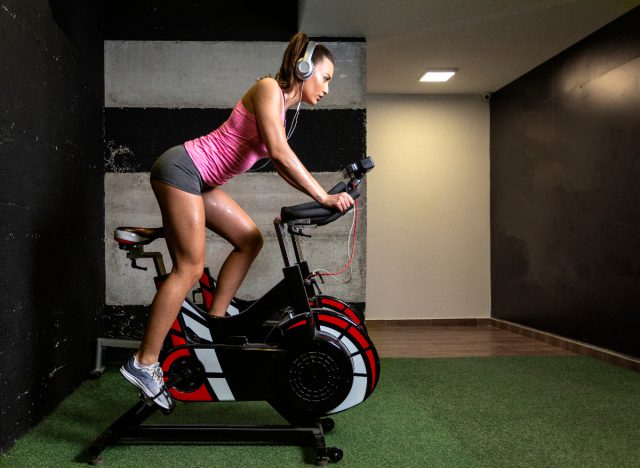
Cycling builds leg strength while keeping weight off your joints. The smooth, circular motion suits people with knee or hip issues perfectly. Being seated makes it easier to sustain intensity for longer periods, burning more total calories. The resistance settings let you match the difficulty to your exact fitness level.
How to do it:
- Set the seat so your leg is almost fully extended at the bottom of each pedal stroke with a slight knee bend
- Warm up with 5 minutes of easy pedalling
- Increase resistance and cycle hard for 3 minutes—you should be breathing heavily and unable to hold a conversation
- Drop the resistance and pedal easily for 2 minutes
- Repeat this pattern for 20-30 minutes
- Cool down with 5 minutes of easy pedalling
Common mistakes:
- Don’t set the seat too low. It hammers your knees
- Don’t death-grip the handlebars. Your hands should rest lightly
- Don’t pedal fast with no resistance. Use enough resistance to challenge your muscles
- Don’t slouch forward. Keep your core tight and back relatively straight
Modifications for beginners:
- Use a recumbent bike (the one with a chair-like seat) if you have balance or lower back concerns
- Start with 15 minutes total
- Keep resistance low initially and focus on maintaining steady rhythm
- If intervals feel impossible, cycle at one moderate pace for the entire session
- Take breaks whenever needed
Chair Squats
Squats work the biggest muscles in your body—legs and glutes. Building muscle here dramatically boosts metabolism because muscle tissue burns calories 24/7, even at rest. The movement forces your core to stabilise you, directly engaging the muscles around your belly. The chair provides a safety net and teaches proper form.
How to do it:
- Stand in front of a sturdy chair with feet hip-width apart, toes pointing slightly out
- Hold your arms straight out for balance
- Push your hips back like you’re sitting down, keeping your chest up and core braced
- Lightly tap the chair with your bottom—don’t actually sit
- Push through your heels to stand, squeezing your glutes at the top
- Do 10-12 reps, rest 60 seconds, repeat for 3 sets
Common mistakes:
- Don’t let your knees collapse inward. They should track over your toes
- Don’t round your back or drop your gaze to the floor
- Don’t actually sit down and relax. Just tap the chair
- Don’t lift your heels. It shifts all the stress to your knees
Modifications for beginners:
- Use a higher chair or stack cushions to reduce the range of motion
- Hold a chair back with one hand for balance
- Start with 5-6 reps if 10-12 is impossible
- If touching the chair feels too hard, squat down only as far as comfortable—you’ll progress to touching it eventually
Standing Marching
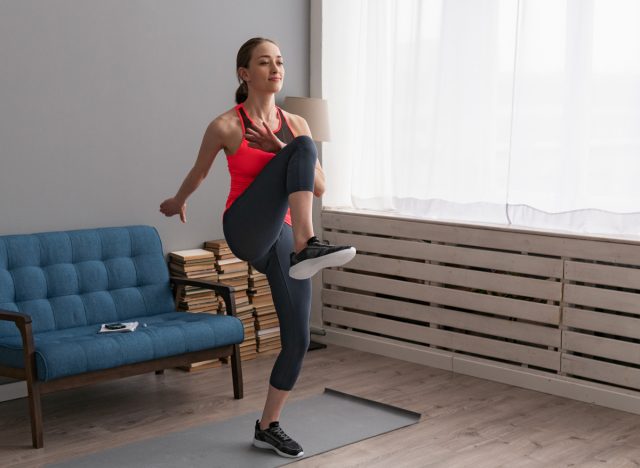
This simple movement elevates your heart rate while hammering your core and hip flexors. The alternating leg action creates rotational forces that your core must resist, working the muscles around your midsection hard. It requires no equipment and scales perfectly to any fitness level. Being upright also challenges balance and coordination.
How to do it:
- Stand with feet hip-width apart, arms at your sides
- Drive your right knee up toward your chest as high as comfortable while swinging your left arm forward
- Lower your right foot
- Immediately drive your left knee up while swinging your right arm forward
- Keep alternating at a challenging but sustainable pace
- March for 60 seconds, rest 30 seconds, repeat for 5-8 rounds
- Keep your core braced tight throughout—pull your belly button toward your spine
Common mistakes:
- Don’t barely lift your knees. Aim to bring your thigh parallel to the floor if possible
- Don’t lean backward or forward. Stay vertical
- Don’t march too slowly or you’ll reduce the cardiovascular benefit
- Make sure you engage your core or it turns into just a leg exercise
- Don’t hold your breath. Breathe naturally
Modifications for beginners:
- Hold a wall or sturdy surface for balance
- Lift your knees lower—even a few inches works
- March for 30 seconds instead of 60, rest for 60 seconds instead of 30
- Slow the pace until it feels manageable
- If standing feels unstable, do seated marching in a chair—you’ll still engage your core and elevate your heart rate
How Often You Should Exercise
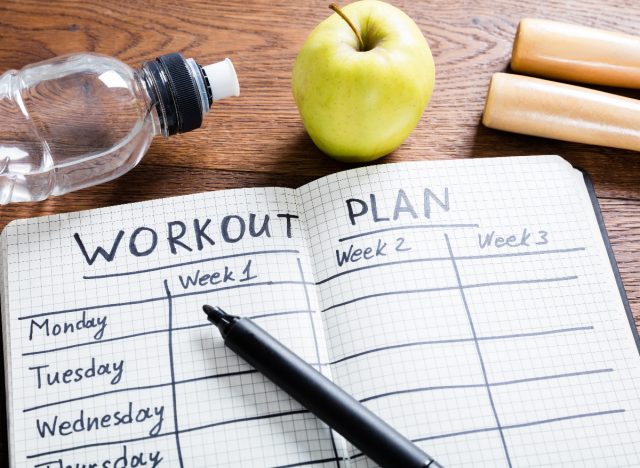
Train 4-5 days per week for real results. This frequency keeps your metabolism elevated consistently while providing adequate recovery. Three days won’t create enough stimulus for significant fat loss. Seven days doesn’t allow your body time to adapt and get stronger.
Sessions should last 25-35 minutes including warm-up and cool-down. That’s enough time to burn calories and build strength without exhausting yourself. Longer sessions compromise form and increase injury risk. Shorter sessions don’t provide enough intensity to make a difference.
Mix up your training throughout the week. Walking or swimming twice, cycling once, strength work (chair squats and standing marching) twice. This prevents overuse injuries and keeps your body adapting to different demands. Your metabolism responds better to variety than repetition.
Rest when your body needs it. If you’re genuinely exhausted or sore, take an extra day off. Pushing through fatigue leads to declining performance and usually injury. On the flip side, if you feel good, light walking or swimming on a rest day is fine—just keep it easy.
Consistency trumps perfection. Four solid sessions weekly for three months will transform your body far more than seven brutal sessions that you quit after two weeks. Build the habit first, optimise later.
What Results You Can Expect In 4-6 Weeks
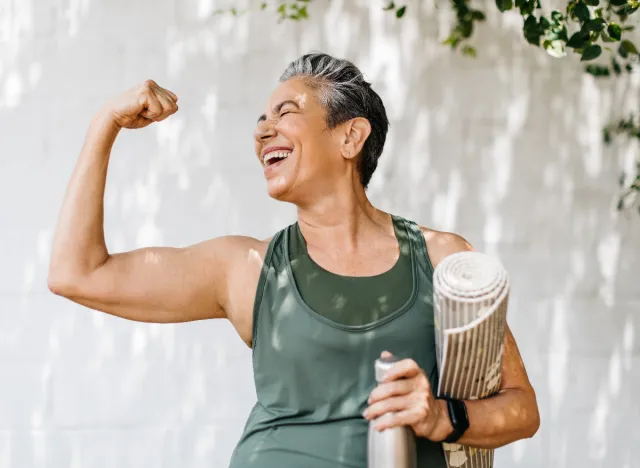
The first week will give you a bit more energy throughout the day. Getting up in the morning will feel easier, and the afternoon crashes will not be as extreme. Even though you cannot see any physical changes yet, your body’s usage of energy is already more efficient.
By the second and third weeks, everyday tasks will feel easier. Stairs will no longer leave you breathless, and getting out of chairs will feel smoother. Your clothes might start to feel like they are fitting differently, looser around the waist even if you are not yet seeing changes on the scale. On top of this your nervous system has started to fire more efficiently, and you are building initial strength.
By week 4, the changes will be measurable. An inch or two lost from your waist is more than reasonable if you have been consistent with your training and have been eating sensibly. You might see 4-8 pounds down on the scale (some of which will be water weight). Your posture will have improved noticeably—as your core gets stronger, you will be standing taller. By this stage, you will start making positive changes—like taking stairs or longer walks—without even really thinking about it.
By week 6, other people start commenting. Friends and family notice you’re moving better, standing straighter, looking healthier. You should have lost 2-3 inches from your waist and 6-12 pounds total if you’ve stayed consistent. More importantly, activities that exhausted you at the start now feel routine. Your resting heart rate might drop 5-10 beats per minute, meaning your cardiovascular system is more efficient.
The mental shifts matter just as much. Your confidence grows as you prove you can stick with something hard. Sleep improves. Stress feels more manageable. These changes reinforce your commitment, which is when real transformation happens.
Visible fat loss lags behind fitness improvements. You’ll feel stronger and more energetic before you see dramatic changes in the mirror. The physical transformation follows the performance gains, not the other way around.