5 Home Exercises That Restore Leg Strength Faster Than Gym Machines After 60

Maintaining leg strength after 60 can help you climb stairs, get out of chairs, walk with confidence, and boost your balance. All of these benefits are essential for reducing fall risk and promoting healthy aging. But despite that, many older adults rely on gym machines and intense workouts for building and restoring leg strength, which doesn’t necessarily translate to real-world strength.
Leg press machines, seated extensions, and other gym-based exercises can certainly build muscle, but they often remove the balance, coordination, and stabilization from the equation by locking your body into fixed positions. While that may feel safer, it can limit your development of functional strength, which is the kind of strength you use outside the gym and research says can improve your quality of life.
But with all the conflicting information online, how can you know where to start? Don’t worry, we’re here to help. We chatted with James Brady, CPT, a certified personal trainer at OriGym, who shares his five best home exercises that can restore leg strength faster than gym machines after 60.
The following exercises target your lower body’s major muscle groups while helping to improve stability, coordination, and mobility. When done consistently, they can help restore leg strength that carries over directly into everyday life. Read on for the exercises and detailed instructions.
(Next up: Don’t miss these 4 Bed Exercises That Restore Leg Muscle Faster Than Gym Machines After 60.)
Sit-to-Stands
Sit-to-stands imitate the act of standing up from a chair, which research shows strengthens your quads, glutes, and hips. “Sit-to-stands are one of the best indicators of functional leg strength after 60 because they directly mimic everyday movement,” says Brady.
How to do it:
- Sit upright on a sturdy chair with your feet flat on the floor.
- Position your feet hip-width apart.
- Keep your chest lifted and your core engaged.
- Lean slightly forward from your hips.
- Push through your heels to stand up.
- Fully extend your hips and knees at the top.
- Slowly lower yourself back into the chair with control.
- Perform two to three sets of 10 to 15 reps. Rest for 45 to 60 seconds between sets.
Step-ups
“Step ups strengthen the legs in a way that translates directly to climbing stairs and improving balance,” Brady explains. What makes this exercise so effective for restoring leg strength is that it’s performed one leg at a time, which studies show can help correct side-to-side strength imbalances.
How to do it:
- Stand in front of a low step or bottom stair.
- Place one foot firmly on the step.
- Brace your core and keep your posture upright.
- Push through your front foot to lift your body upward.
- Bring your other foot up to meet it.
- Step back down slowly with control.
- Repeat on the same side before switching legs.
- Use a railing or wall for support if needed.
- Complete two to three sets of 8 to 12 reps per leg, resting for 45 to 60 seconds between sets.
Wall Sits
This isometric hold creates continuous tension through your quads and glutes without requiring repetitive movement. “Wall sits are highly effective because they build leg endurance without placing unnecessary stress on the joints,” Brady says.
How to do it:
- Stand with your back flat against a wall.
- Step your feet forward about 18 to 24 inches.
- Slide your back down the wall until your knees are bent.
- Aim for roughly a 90-degree bend in the knees if comfortable.
- Keep your knees aligned over your ankles.
- Flex your core and press your back gently into the wall.
- Keep your chest upright and breathe steadily through your nose.
- Hold for 20 to 45 seconds, repeating for 2 to 4 rounds. Rest for 60 to 90 seconds between rounds.
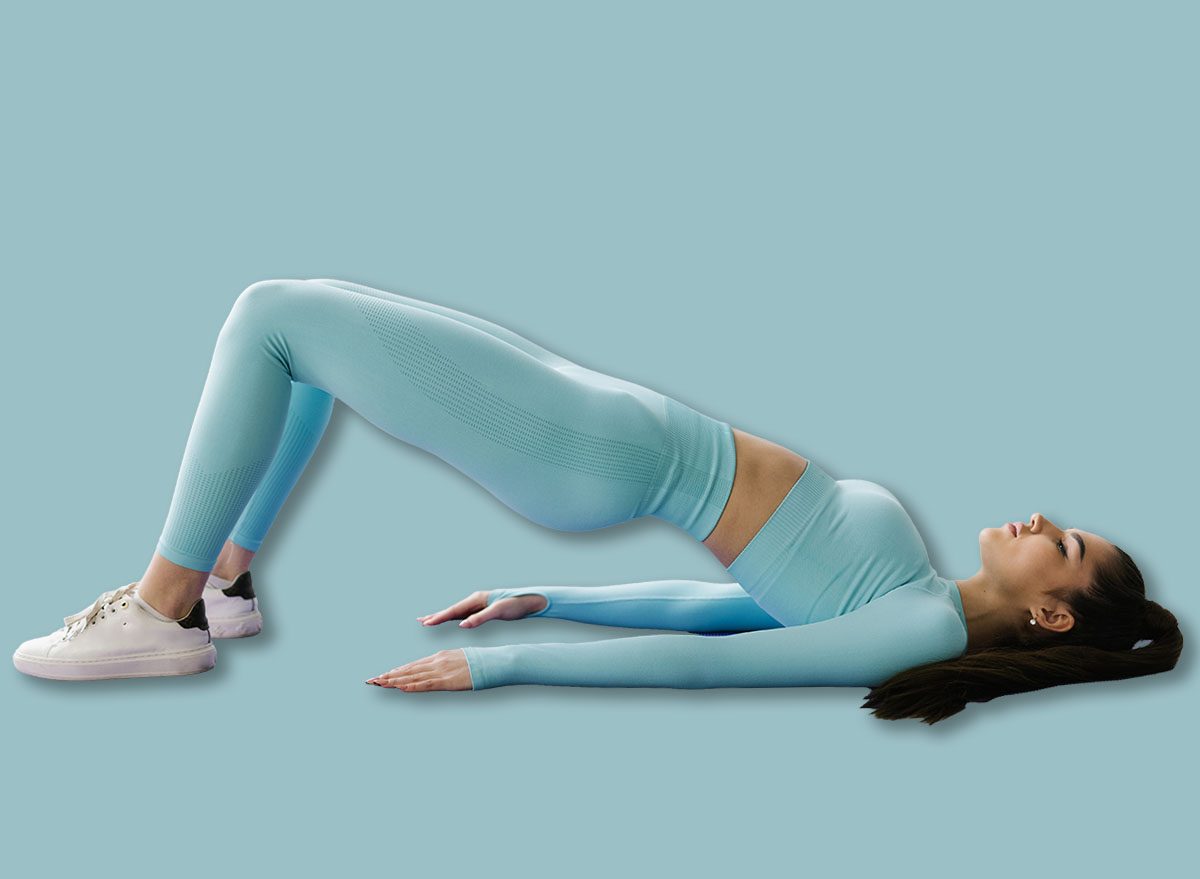
Glute Bridges
“Strong glutes are essential for protecting the hips, knees, and lower back as we age,” Brady explains. One study found that weak glutes can contribute to poor posture, instability, and poor walking mechanics.
How to do it:
- Lie on your back with your knees bent and your feet flat on the floor.
- Position your feet hip-width apart.
- Rest your arms at your sides.
- Engage your core before beginning the movement.
- Push through your heels to lift your hips upward.
- Raise your hips until your body forms a straight line from shoulders to knees.
- Squeeze your glutes for one to two seconds at the top of the movement.
- Lower your hips back down slowly with control.
- Aim for two to three sets of 12 to 15 reps, resting for 45 to 60 seconds between sets.
Calf Raises
“Calf strength is often overlooked, but it plays a major role in balance, walking speed, and fall prevention,” Brady says. So don’t underestimate the power of strengthening your calves when restoring leg strength.
How to do it:
- Stand behind a chair or countertop for support.
- Position your feet hip-width apart.
- Tighten your core and stand tall.
- Slowly raise your heels off the floor.
- Lift as high onto the balls of your feet as comfortable.
- Pause for one to two seconds at the top of the movement.
- Lower your heels back down slowly.
- Perform two to three sets of 15 to 20 reps. Rest for 45 to 60 seconds between sets.