6 Chair Exercises That Trim Belly Overhang Faster Than Gym Sessions After 60
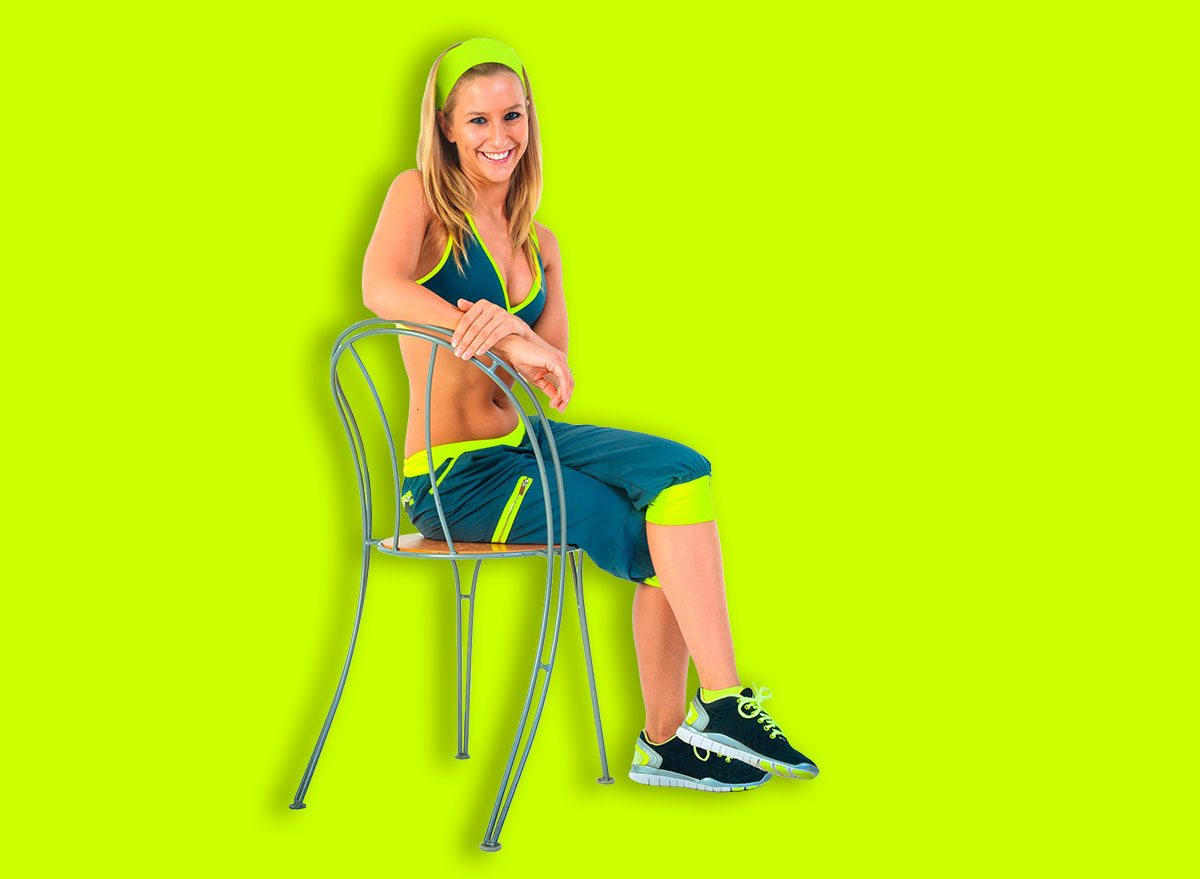
A chair might not look like much of a workout tool, but it can be a surprisingly effective starting point for trimming belly overhang. It gives you support when you need it, a target to work toward, and enough structure to make each rep feel controlled rather than clumsy. For anyone who doesn’t love getting down on the floor or driving to the gym for another crowded session, a chair routine removes a lot of the excuses before they even start.
Belly overhang usually comes from a mix of factors: overall body fat, muscle loss, prolonged sitting, and less consistent movement throughout the week. Spot reduction still doesn’t work, so no chair exercise is going to melt fat from one exact area. The real path comes from creating a calorie deficit, building lean muscle, and moving often enough that your body has a reason to change. Chair exercises help because they make that consistency easier to reach.
When I coach this type of routine, I’m looking for movements that do more than make the abs burn. Seated knee tucks and leg lifts train lower-belly control; oblique twists build waist strength; sit-to-stands engage the legs and glutes; and chair mountain climbers raise the heart rate without the floor-workout hassle. Taken together, these six exercises give you a simple way to train your core, build muscle, and add more movement to your day without turning the whole thing into a production.
Seated Knee Tucks
Link: https://youtu.be/oKQyVMYxNug?si=oW0uqMzkbi-o7POo
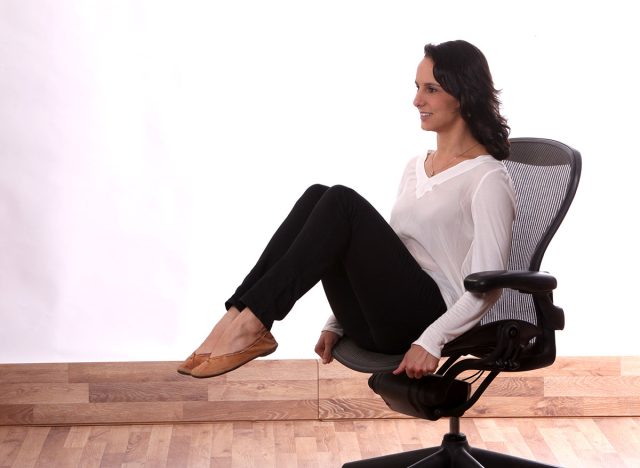
Seated knee tucks train your lower abs and hip flexors while your core keeps your torso steady. As your knees lift toward your chest, your midsection has to brace so you don’t lean back and turn the movement into momentum. This helps strengthen the area beneath the belly overhang while also improving control through your pelvis. Clean, controlled reps give you more value than rushing through a bigger range you can’t hold.
Muscles Trained: Lower abs, hip flexors, deep core
How to Do It:
- Sit near the front edge of a sturdy chair.
- Place your hands lightly on the sides of the seat.
- Brace your core and sit tall.
- Lift both knees toward your chest.
- Lower your feet back to the floor with control.
- Repeat without rocking your torso.
Recommended Sets and Reps: Perform 3 sets of 8 to 12 reps. Rest for 30 seconds between each set.
Best Variations: Single-leg knee tucks, alternating knee tucks, paused knee tucks
Form Tip: Keep your chest lifted and avoid leaning back as your knees rise.
Seated Marches With Reach
Link: https://youtu.be/5GYXSe0e2p8?si=4IJ53pOnYc4bUmop
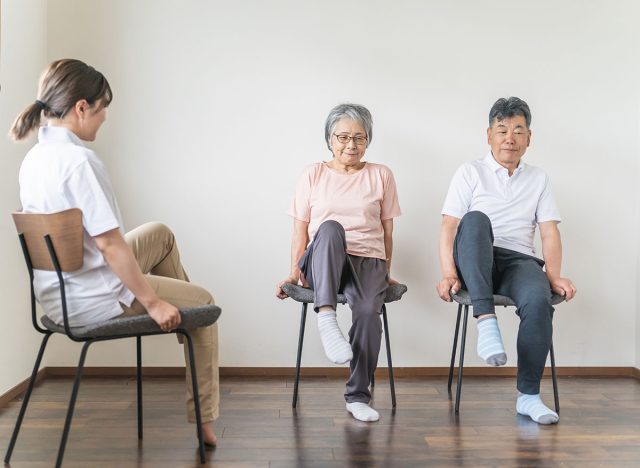
Seated marches with reach train your core, hip flexors, shoulders, and coordination. Lifting one knee while reaching with the opposite arm engages your midsection to keep your posture tall and your ribs stacked over your hips. The movement also raises your activity level without impact, which helps when trimming belly overhang, depending on total daily calorie burn. Keep the pace steady and make each rep feel controlled instead of bouncy.
Muscles Trained: Core, hip flexors, shoulders, quadriceps
How to Do It:
- Sit tall near the front edge of a chair.
- Plant your feet flat on the floor.
- Brace your core and lift your right knee.
- Reach your left arm forward or overhead.
- Lower your foot and arm with control.
- Alternate sides in a steady rhythm.
Recommended Sets and Reps: Perform 3 sets of 10 to 12 reps per side. Rest for 30 seconds between each set.
Best Variations: Slower marches, higher knee marches, light dumbbell reaches
Form Tip: Stay tall through your torso and keep your movement smooth.
Seated Oblique Twists
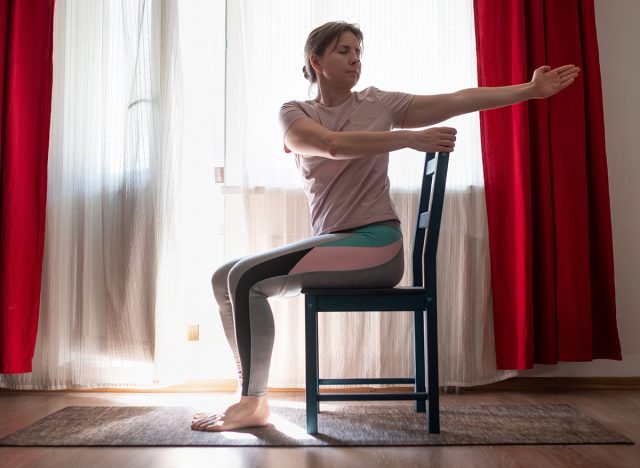
Link: https://youtu.be/_cD9f078WQ4?si=2OCgaWQBMuVyVsBW
Seated oblique twists train the sides of your waist while your deep core helps control rotation. Turning your torso from side to side challenges your abs to guide the movement instead of letting your arms swing. This supports a firmer midsection because the obliques help shape and stabilize the waist as overall body fat drops. A small, controlled twist works better than a fast, sloppy one.
Muscles Trained: Obliques, abs, deep core
How to Do It:
- Sit tall with your feet flat on the floor.
- Hold your hands together in front of your chest.
- Brace your core and keep your chest lifted.
- Rotate your torso to one side.
- Return to center with control.
- Rotate to the other side and continue alternating.
Recommended Sets and Reps: Perform 3 sets of 10 to 12 reps per side. Rest for 30 seconds between each set.
Best Variations: Paused twists, light dumbbell twists, slower tempo twists
Form Tip: Rotate through your torso instead of swinging your arms.
Sit-to-Stands
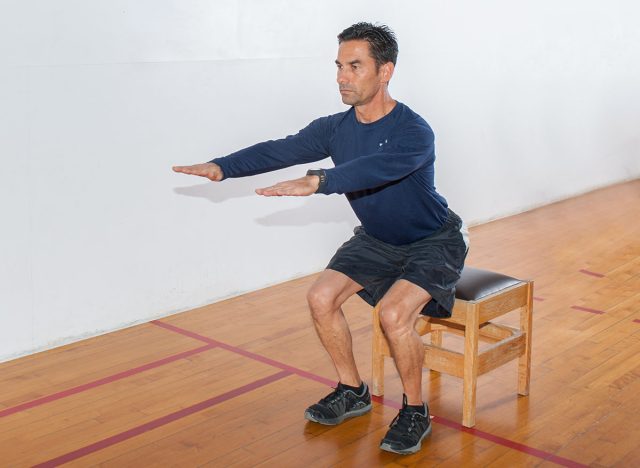
Link: https://youtu.be/ITv-_BkcrD0?si=2luBJsTY0E0omOfS
Sit-to-stands train your glutes, quads, hamstrings, and core while adding more muscle-building value than most seated ab moves. Every rep asks your legs to create force and your midsection to keep your torso steady as you stand and lower. Bigger muscles burn more energy, which helps the calorie-burning side of trimming belly overhang. This move also carries over into daily life, as standing up from a chair is a movement you use all day.
Muscles Trained: Glutes, quadriceps, hamstrings, core
How to Do It:
- Sit near the front edge of a sturdy chair.
- Place your feet flat on the floor about hip-width apart.
- Brace your core and lean your torso slightly forward.
- Press through your feet to stand tall.
- Squeeze your glutes at the top.
- Lower back to the chair with control.
Recommended Sets and Reps: Perform 3 sets of 8 to 12 reps. Rest for 45 seconds between each set.
Best Variations: No-hands sit-to-stands, slower tempo sit-to-stands, paused sit-to-stands
Form Tip: Control the lowering phase and avoid dropping into the chair.
Seated Leg Lifts
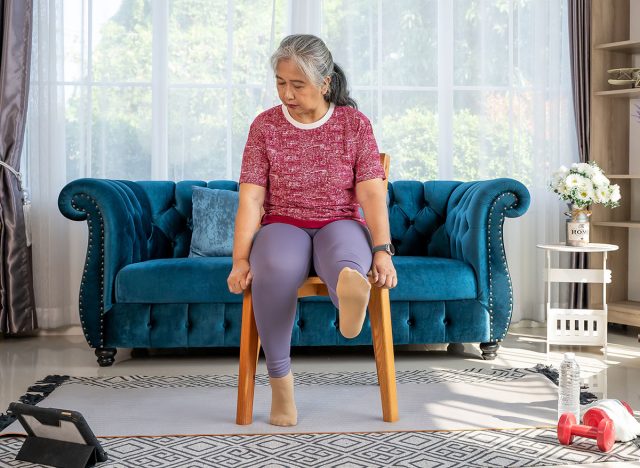
Link: https://youtu.be/ValvczxDffI?si=2-pTF390CJ3Ga-K2
Seated leg lifts train your lower abs, hip flexors, and quads while keeping your spine supported. Straightening and lifting one leg forces your core to stay engaged so your pelvis doesn’t tip or your lower back take over. This is a simple way to build lower-ab control from a chair, especially if floor exercises feel uncomfortable. Move slowly and keep the lift within a range you can control.
Muscles Trained: Lower abs, hip flexors, quadriceps, deep core
How to Do It:
- Sit tall near the front edge of a chair.
- Plant one foot flat on the floor.
- Extend your opposite leg straight in front of you.
- Brace your core and lift your straight leg a few inches.
- Pause briefly at the top.
- Lower your leg with control and switch sides.
Recommended Sets and Reps: Perform 3 sets of 10 to 12 reps per leg. Rest for 30 seconds between each set.
Best Variations: Alternating leg lifts, paused leg lifts, ankle-weight leg lifts
Form Tip: Keep your torso tall and avoid leaning back during the lift.
Chair Mountain Climbers
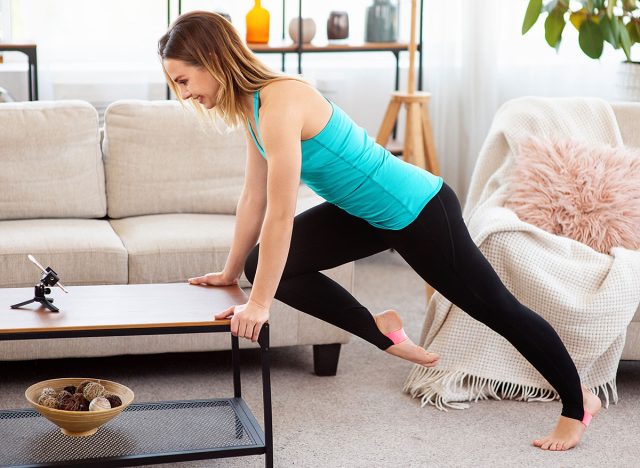
Link: https://youtu.be/8x70ER-FoWY?si=KGzZyJe3_QB1y_i3
Chair mountain climbers train your core, shoulders, hip flexors, and legs while adding a low-impact conditioning element. Placing your hands on the chair creates an incline, which makes the movement more approachable than floor mountain climbers. Your abs have to brace while your knees drive forward, and your heart rate gets a steady bump. That combination supports both core strength and calorie burn, which matters when the goal is trimming belly overhang.
Muscles Trained: Core, shoulders, hip flexors, quads
How to Do It:
- Place your hands on the seat or back of a sturdy chair.
- Step your feet back into an incline plank position.
- Brace your core and keep your hips level.
- Drive one knee toward your chest.
- Return your foot to the starting position.
- Alternate legs with steady control.
Recommended Sets and Reps: Perform 3 sets of 20 to 30 seconds. Rest for 45 seconds between each set.
Best Variations: Slow chair mountain climbers, higher incline climbers, cross-body climbers
Form Tip: Keep your hips steady and avoid bouncing through the reps.
How to Make Chair Workouts Help Your Midsection
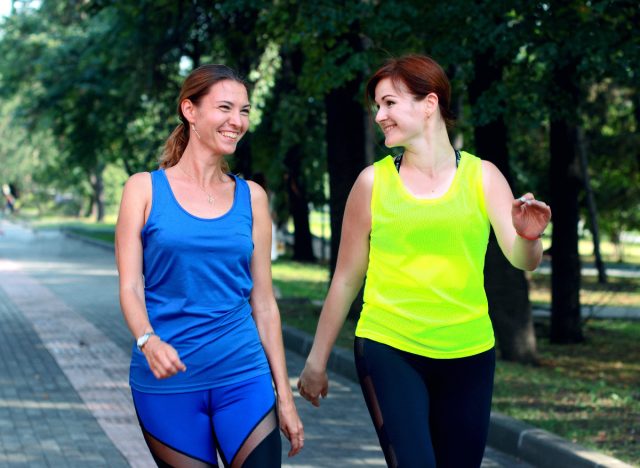
Chair exercises can help trim belly overhang when they fit into a bigger plan that supports fat loss and muscle tone. The chair gives you a simple setup, but the effort still has to be there. Train with control, move often, and pair these exercises with daily walking and nutrition that supports a calorie deficit. Your core will feel stronger first, and changes around the belly follow as body composition improves.
- Focus on overall fat loss: Belly overhang shrinks as overall body fat drops. Keep meals protein-focused, watch portions, and aim for steady progress instead of quick fixes.
- Use the chair for consistency: Short chair routines are easy to repeat. A few focused rounds in the morning or evening can help you move more without needing a full gym session.
- Train bigger muscles, too: Sit-to-stands and chair mountain climbers engage more of your body. Greater muscle involvement increases total effort.
- Control your core position: Keep your ribs stacked over your hips during seated moves. Better posture helps your abs do the work instead of your lower back or hip flexors taking over.
- Add daily walking when possible: Walking supports calorie burn, recovery, and overall fitness without beating up your joints. Even short walks after meals can help build momentum.
A chair routine won’t replace every part of a fitness plan, but it can make consistency easier. Start with clean reps, repeat the movements several times per week, and let the small daily effort build into stronger movement and a firmer midsection.
References
- Klempel, Natalie et al. “The Effect of Chair-Based Exercise on Physical Function in Older Adults: A Systematic Review and Meta-Analysis.” International journal of environmental research and public health vol. 18,4 1902. 16 Feb. 2021, doi:10.3390/ijerph18041902
- Beekman, Marian et al. “Lifestyle-Intervention-Induced Reduction of Abdominal Fat Is Reflected by a Decreased Circulating Glycerol Level and an Increased HDL Diameter.” Molecular nutrition & food research vol. 64,10 (2020): e1900818. doi:10.1002/mnfr.201900818