6 Chair Exercises That Keep Your Body 10 Years Younger After 60
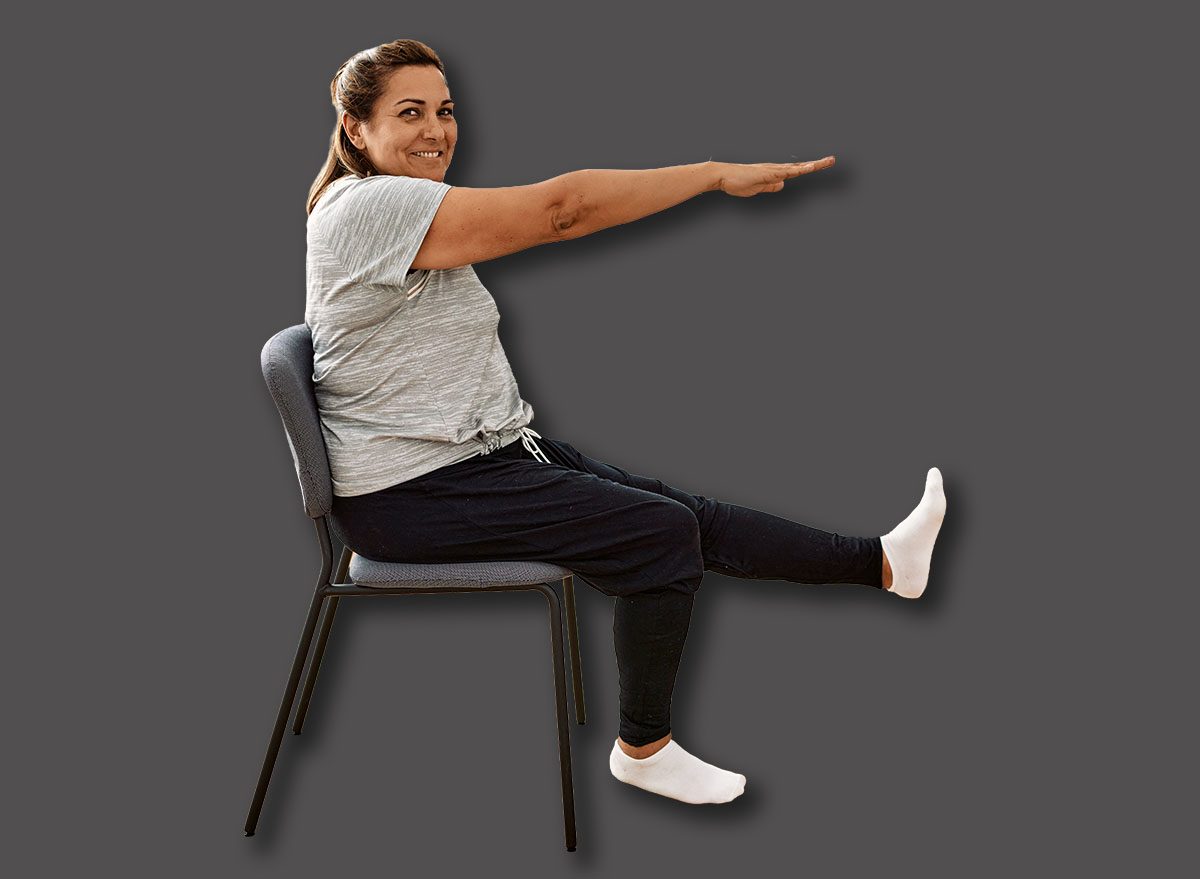

Staying strong, mobile, and energized after 60 depends on training patterns that support the way your body moves every day. Chair exercises offer the perfect blend of stability and challenge, giving you enough support to protect your joints while still firing up the muscles that maintain youthful strength. Instead of forcing your body into stressful positions or heavy loads, these moves restore mobility, activate dormant muscles, and reinforce better posture and balance. When performed consistently, they create the kind of strength that helps you move confidently through life.
As you age, your body naturally declines in muscle mass, joint mobility, and coordination, the exact qualities that determine how young or old your body feels. A chair becomes an ideal training tool because it helps you access deeper muscle engagement with fewer compensations. You’ll strengthen your core, activate your hips, stabilize your spine, and wake up the postural muscles that keep you upright and steady. Over time, this improves everything from walking efficiency to everyday stamina.
The best part is that these movements meet you exactly where you are while still delivering meaningful results. With daily use, they enhance strength, flexibility, balance, and overall control, all crucial markers of a younger-feeling body. A consistent chair routine builds resilience into your core, glutes, legs, and shoulders, giving you smoother movement patterns and a stronger foundation. Do these six exercises every day, and you’ll notice real changes in how lightly, fluidly, and confidently your body moves.
Seated Cross-Body Knee Lifts
A younger-feeling body requires strong, reactive core muscles, and this move quickly engages the deep stabilizers responsible for balance and posture. Crossing elbow to knee activates your obliques through rotation while keeping your spine supported by the chair’s stable base. The marching pattern improves hip mobility, strengthens your lower abdominals, and sharpens coordination, all essential for daily movement after 60. With consistent practice, this drill keeps your midsection firm, reactive, and ready for anything.
How to Do It
- Sit tall at the edge of your chair, hands behind your head.
- Lift one knee as you rotate toward it with the opposite elbow.
- Return to the start position with control.
- Switch sides and continue alternating.
- Move for 40–60 seconds.
Chair Sit-to-Stand Lifts
Few exercises keep your lower body younger than controlled sit-to-stands, because they directly strengthen the muscles that support walking, stairs, and balance. This move trains your quads, glutes, and hamstrings in one smooth pattern while teaching your core to stabilize your spine. The momentum-free lift forces you to use real strength instead of speed, which builds functional power quickly. Over time, this drill improves mobility, joint stability, and your confidence in everyday transitions.
How to Do It
- Sit tall with feet hip-width apart.
- Drive through your heels and stand without using your hands.
- Lower back into the chair slowly with full control.
- Repeat for 10–15 smooth reps.
- Keep your core braced throughout.
Seated Hip Circles
Healthy hip mobility contributes to everything from smoother walking to better spinal alignment, and hip circles restore that freedom of movement without strain. Sitting allows your pelvis to stay anchored while your hip joint moves through a full, controlled rotation. That pattern loosens stiff tissue, improves joint fluidity, and strengthens the stabilizers that keep your hips functioning like they did years earlier. This move also reduces tension in the lower back by teaching your hips to move independently.
How to Do It
- Sit tall with feet slightly wider than hip-width.
- Lift one knee a few inches and draw slow circles outward.
- Reverse the direction after several rotations.
- Switch legs and repeat.
- Continue for 20–30 seconds each side.
Seated Reach-and-Pulls
This move reawakens the muscles of your upper back and shoulders while improving posture and overhead mobility. These exercises are normally done with cables, but you don’t need them to feel the results. Reaching upward opens the chest and lengthens tight tissue, while the downward pull pattern strengthens the lats and postural stabilizers. These muscles directly influence how tall, open, and youthful your upper body feels, especially when battling years of rounding and slouching. Over time, this simple drill enhances shoulder freedom and reinforces a strong, upright posture.
How to Do It
- Sit tall with arms extended overhead.
- Reach upward, then pull your elbows down toward your ribs.
- Squeeze your shoulder blades together.
- Return to the full reach and repeat.
- Perform 12–15 smooth reps.
Chair Leg Extensions With Hold
Strong quads support your knees, hips, and balance, all essential components of staying youthful and mobile after 60. This extension move isolates your quadriceps while the chair keeps your spine fully supported. Pausing at the top wakes up the muscle fibers responsible for stabilizing your knees, reducing strain and improving control. Over time, this leads to smoother walking, stronger legs, and steadier movement in daily life.
How to Do It
- Sit tall with your hands holding the sides of the chair.
- Extend one leg fully and hold for 1–2 seconds.
- Lower with control and switch legs.
- Continue alternating for 12–15 reps each side.
- Keep your core lightly braced throughout.
Seated Torso Rotations
Rotational strength keeps your spine youthful, flexible, and capable of supporting daily movement without stiffness or pain. This move engages your obliques and deep core muscles while the chair stabilizes your hips for cleaner rotation. The slow, controlled twisting teaches your spine to move through a healthy range while reinforcing the muscles that protect it. This simple drill enhances mobility, improves posture, and restores the smoothness your torso may have lost over time.
How to Do It
- Sit tall with your hands together in front of your chest.
- Rotate your torso slowly to one side.
- Return to center and rotate to the other side.
- Keep your hips stable and your core engaged.
- Continue for 30–45 seconds.