5 Chair Exercises That Flatten Belly Overhang Faster Than Ab Workouts After 55
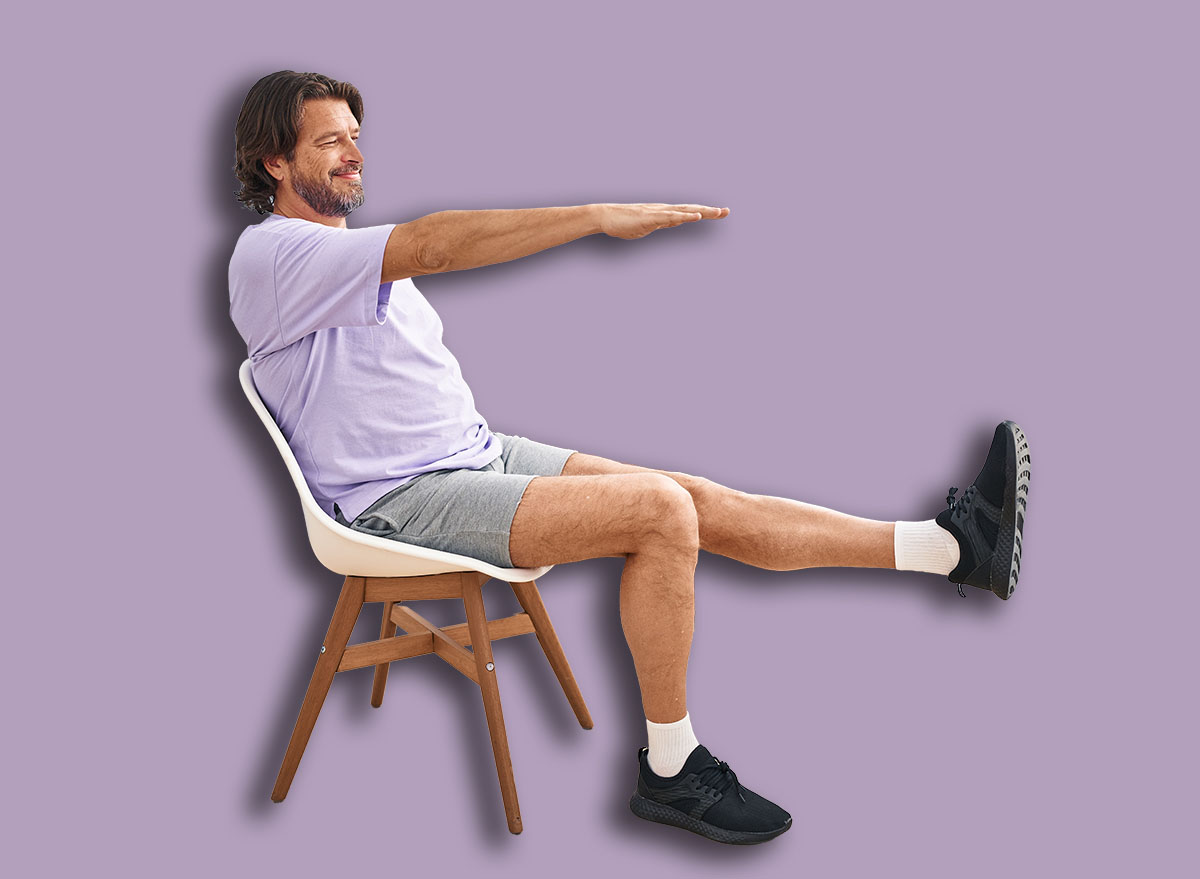

If you’re over 55 and frustrated with stubborn belly overhang that you just can’t seem to get rid of, you’re not alone. According to a 2022 survey, more than half of Americans have abdominal obesity. But that doesn’t mean you should throw in the towel and give up on your weight loss goals.
One of the biggest myths in fitness is that endless ab workouts are the best way to flatten your midsection. But in reality, crunches and sit-ups alone rarely deliver visible results, especially as you age. Research shows that hormonal changes, slower metabolism, and natural muscle loss all shift how and where your body stores fat. That’s why many traditional ab workouts stop working as you age.
Fortunately, what works better for weight loss are chair exercises that burn calories, engage large muscle groups, and strengthen your core without harming your joints. Far from being a watered-down option, chair-based training allows you to stay active, elevate your heart rate, and build muscle safely, especially if balance, joint pain, or mobility issues make floor exercises uncomfortable.
To find out which chair exercises are best for melting away unwanted belly fat, we chatted with Abbie Watkins, CPT, a certified personal trainer with OriGym, who shares her top best chair moves for older adults to combine strength and movement in a way that’s accessible and sustainable.
But before we dive in, it’s crucial to note that no exercise can “spot reduce” belly fat. Instead, performing exercises that engage your core while activating your legs and upper body can help your body burn more total calories. Eventually, that calorie burn combined with strength training can reduce belly overhang and improve how your waistline looks and feels.
Read on for Watkins’ five most effective chair exercises for adults over 55.
(And when you’re finished, check out If You Can Master These 4 Standing Moves at 60, You’re Fitter Than Most 40-Year-Olds.)
Seated Knee Drives
Seated knee drives are one of the best ways to elevate your heart rate and activate your core without impacting your joint health. Because the movement alternates sides, it also challenges coordination and keeps your abdominal muscles engaged throughout the exercise.
Watkins says seated knee drives are effective because they “elevate your heart rate, burn calories, improve coordination, and strengthen your abdominal muscles without putting stress on the joints.”
How to Do It:
- Sit up tall near the front edge of a sturdy chair with your feet flat on the floor.
- Place your hands lightly on the sides of the chair for support.
- Brace your core by gently pulling your belly button toward your spine.
- Lift one knee toward your chest while keeping your torso upright.
- Lower your foot back to the floor with control.
- Alternate sides in a steady, marching rhythm.
- Aim for 15 to 20 reps per leg for two to three sets. Rest for 30 to 60 seconds between sets.
Chair Squats
Squats are one of the most effective compound exercises you can do, and this variation is perfect for those 55 and older. “Chair squats mimics a traditional squat, but with extra support, making them a more accessible alternative,” explains Watkins. “Similar to squats, they target large muscle groups like the glutes and thighs.”
How to Do It:
- Begin seated with your feet shoulder-width apart and your toes pointing forward.
- Shift your weight slightly forward so your chest is over your feet.
- Press through your heels to stand up tall without using your hands.
- Fully extend your hips at the top while keeping your core engaged.
- Slowly lower yourself back toward the chair over two to three seconds.
- Lightly touch the chair before repeating the next rep.
- Complete two to three sets of 12 to 15 reps with 45 to 60 seconds of rest between sets.
Seated Punches
Seated punches add an upper-body cardio element that many ab workouts lack. They also get your heart pumping while activating muscles in your shoulders, arms, and core. “Seated punches combine upper body strength work and cardio, making them a great way to burn calories even in a seated position,” Watkins says.
How to Do It:
- Sit up straight with your feet flat on the floor and your knees bent at 90 degrees.
- Tighten your core and keep your chest lifted.
- Raise your fists to shoulder height with your elbows bent.
- Punch one arm straight forward while slightly rotating your torso.
- Retract your arm back to the starting position with control.
- Alternate arms while maintaining a steady, controlled pace.
- Perform this movement for 30 to 45 seconds at a time. Aim for two to three sets with 30 to 45 seconds of rest between sets.
Chair Leg Extensions
Leg extensions strengthen your thighs, which helps support walking, standing, and daily activity—all of which contribute to increased calorie burn. Watkins tells us, “Leg extensions are a simple exercise that helps build lower body strength, supporting daily movement and overall activity levels.”
How to Do It:
- Sit up tall with a straight back and relaxed shoulders.
- Place your hands on the sides of the chair for balance.
- Engage your core and extend one leg straight out in front of you.
- Squeeze your thigh muscle at the top for one to two seconds.
- Lower your leg slowly back to the floor.
- Switch legs and repeat.
- Complete 15 reps per leg for two to three sets. Rest for 30 to 45 seconds between sets.
RELATED: This 30-Minute Walking Routine Burns More Calories Than Jogging After 40
Seated Torso Twists
Seated torso twists target your obliques (side abs) and deep core muscles that help shape and support the waistline. Unlike fast twisting motions, controlled rotations keep tension on your core and reduce strain on your spine. “Seated torso twists engage the core and obliques, strengthening the midsection and burning calories,” Watkins says.
How to Do It:
- Sit upright with your feet flat on the floor and your knees hip-width apart.
- Cross your arms over your chest.
- Flex your core and rotate your torso to one side.
- Keep your hips facing forward as you twist.
- Return to center with control.
- Rotate to the opposite side and continue alternating.
- Perform two to three sets of 20 reps. Rest for 30 to 45 seconds between sets.