5 Daily Exercises That Restore Muscle Faster Than Gym After 55, According to a Trainer
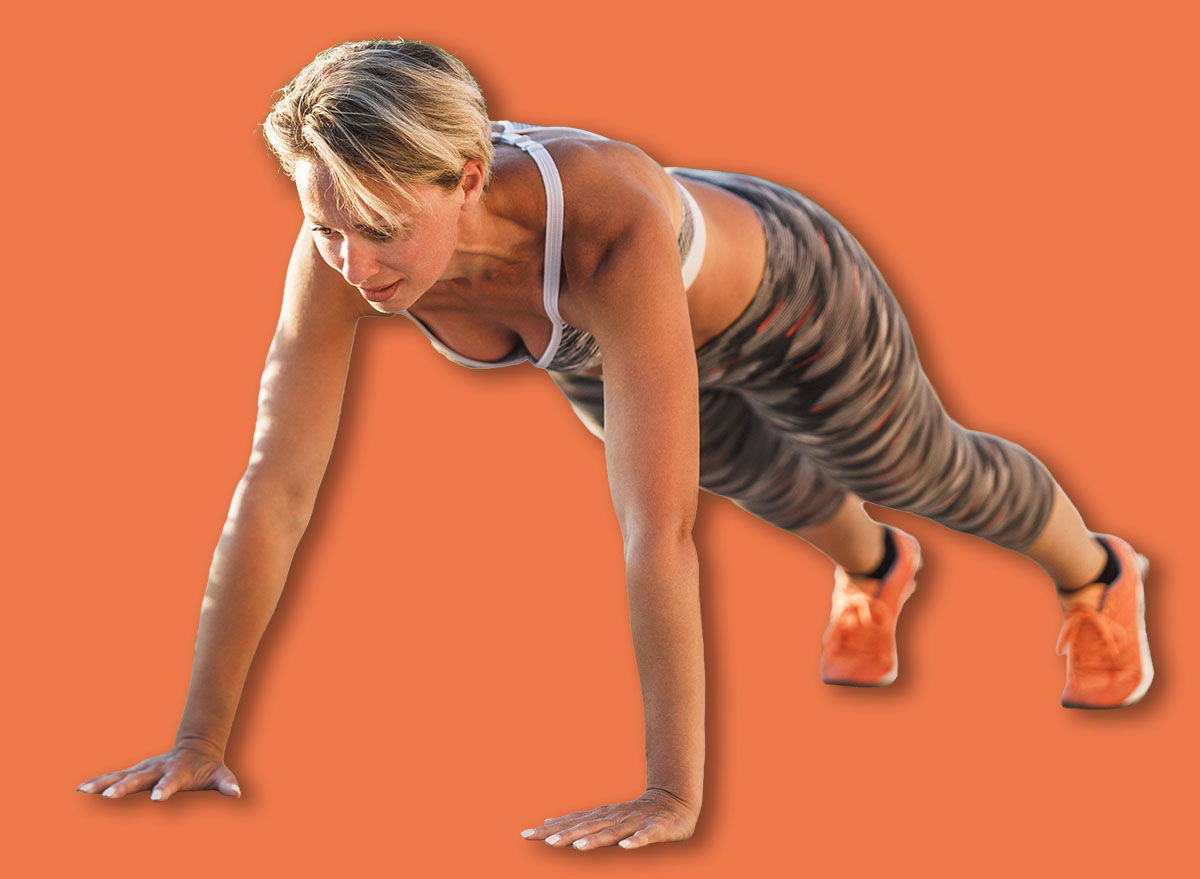

Restoring muscle after 55 is often framed as something other than building muscle, but the body doesn’t see it that way. Muscle responds to tension, effort, and repetition at any age. When you challenge it consistently, it adapts. The goal shifts slightly toward joint-friendly execution and smart volume, but the fundamentals stay the same.
Compound exercises do most of the heavy lifting in that process. Movements that use multiple joints and large muscle groups deliver more stimulus per rep than isolation lifts. They ask your body to coordinate, stabilize, and produce force as a unit. That kind of demand supports muscle rebuilding while also reinforcing balance and movement quality.
Reps matter more than most people realize. Too few and the muscle never gets enough time under tension. Too many and fatigue outpace recovery. Finding a productive middle ground (ideally, 8 to 12 reps per set) allows you to train frequently without feeling beat up, which becomes more important as recovery windows change with age.
Consistency is the final piece that ties everything together. Daily movement doesn’t need to mean daily exhaustion. It means showing up, practicing quality reps, and letting momentum build over time. The exercises below check those boxes and create a simple, repeatable approach to restoring muscle strength after 55.
Push-Ups
Push-ups remain one of the most effective upper-body exercises you can do anywhere. They train pressing strength while demanding constant core engagement. Each rep reinforces shoulder stability and trunk control, which supports better posture and joint health. Push-ups also scale easily, making them ideal for daily practice. When performed with intent, they deliver far more than chest work alone.
Muscles Trained: Chest, shoulders, triceps, core.
How to Do It:
- Start in a plank position with your hands under your shoulders.
- Brace your core and squeeze your glutes.
- Lower your body toward the floor with control.
- Keep your elbows at a comfortable angle from your sides.
- Press the floor away to return to the start.
Recommended Sets and Reps: Perform 3 to 4 sets of 6 to 12 reps. Rest for 60 seconds between each set.
Best Variations: Incline push-ups, tempo push-ups, close grip push-ups.
Form Tip: Keep your body moving as one solid unit from head to heels.
Lunges
Lunges train the legs one side at a time, which improves balance and joint control. They challenge the hips and core while reinforcing symmetrical strength. This movement also mimics everyday tasks like stepping and climbing. Lunges build resilience through the knees and hips when performed with proper alignment. That makes them a cornerstone exercise for restoring lower-body muscle.
Muscles Trained: Quadriceps, glutes, hamstrings, calves.
How to Do It:
- Stand tall with your feet hip-width apart.
- Step forward with one leg.
- Lower your body until both knees bend comfortably.
- Push through your front heel to stand back up.
- Alternate sides with each rep.
Recommended Sets and Reps: Perform 3 sets of 8 to 10 reps per side. Rest for 60 seconds between each set.
Best Variations: Reverse lunges, walking lunges, and supported lunges.
Form Tip: Think tall through your torso as your legs do the work.
Chin-ups
Chin-ups rebuild pulling strength that often fades with age. They strengthen the upper back and arms while encouraging better shoulder mechanics. Even assisted versions create meaningful stimulus for muscle restoration. Chin-ups also strengthen grip, which carries over to daily tasks. Practicing them regularly pays dividends beyond aesthetics.
Muscles Trained: Lats, biceps, upper back, core.
How to Do It:
- Grip a bar with your palms facing you.
- Hang with your shoulders engaged.
- Pull your chest toward the bar.
- Pause briefly at the top.
- Lower yourself under control.
Recommended Sets and Reps: Perform 3 to 5 sets of 3 to 8 reps. Rest for 90 seconds between each set.
Best Variations: Band-assisted chin-ups, negative chin-ups, neutral grip pull-ups.
Form Tip: Lead the pull by driving your elbows down and back.
Deadlifts
Deadlifts rebuild strength through the hips and posterior chain. They reinforce proper lifting mechanics that protect the lower back. This movement trains large muscle groups at once, making it efficient and effective. Deadlifts also improve grip and trunk stability. When loaded appropriately, they support muscle restoration without unnecessary strain.
Muscles Trained: Glutes, hamstrings, lower back, core.
How to Do It:
- Stand with your feet hip-width apart.
- Hinge at your hips while keeping your spine neutral.
- Grip the weight firmly.
- Drive your heels into the ground to stand tall.
- Lower the weight back down with control.
Recommended Sets and Reps: Perform 3 to 4 sets of 5 to 8 reps. Rest for 90 seconds between each set.
Best Variations: Trap bar deadlifts, Romanian deadlifts, kettlebell deadlifts.
Form Tip: Push the floor away rather than pulling the weight up.
Squats
Squats strengthen the lower body while improving mobility and coordination. They engage multiple joints and muscle groups in a single movement. Squatting regularly supports independence by improving the ability to sit, stand, and lift. This exercise also encourages core stability under load. Done well, squats remain one of the most valuable daily movements after 55.
Muscles Trained: Quadriceps, glutes, hamstrings, core.
How to Do It:
- Stand with your feet slightly wider than your hips.
- Sit your hips back and down.
- Keep your chest upright as you lower.
- Push through your heels to stand up.
- Fully extend your hips at the top.
Recommended Sets and Reps: Perform 3 to 4 sets of 8 to 12 reps. Rest for 60 seconds between each set.
Best Variations: Goblet squats, box squats, tempo squats.
Form Tip: Think about spreading your feet on the floor as you stand.
The Best Muscle-Restoring Habits to Focus on After 55

Daily exercise works best when it’s paired with habits that support recovery and adaptation. Muscle restoration doesn’t happen in a single workout. It builds gradually through smart choices made every day. The goal is progress you can sustain.
- Protein intake: Aim for protein at every meal to support muscle repair.
- Repetition quality: Prioritize clean, controlled reps over heavier loads.
- Training frequency: Short daily sessions outperform occasional long workouts.
- Recovery routines: Light movement and mobility work help maintain consistency.
- Patience: Muscle returns steadily when effort stays consistent over weeks, not days.
Stick with these principles, and restoring muscle after 55 becomes a process you can trust and repeat.
References
- Strasser, Barbara et al. “Role of Dietary Protein and Muscular Fitness on Longevity and Aging.” Aging and disease vol. 9,1 119-132. 1 Feb. 2018, doi:10.14336/AD.2017.0202
- Schoenfeld, Brad J et al. “Loading Recommendations for Muscle Strength, Hypertrophy, and Local Endurance: A Re-Examination of the Repetition Continuum.” Sports (Basel, Switzerland) vol. 9,2 32. 22 Feb. 2021, doi:10.3390/sports9020032
- Chen, Ming-Hsin et al. “Constant Daily Exercise to Keep the Doctor Away: A Study of Adherence to Physical Exercise Using a Gym in Individuals Older Than 55 Years.” International journal of qualitative studies on health and well-being vol. 16,1 (2021): 1859174. doi:10.1080/17482631.2020.1859174