4 Classic Dumbbell Moves That Rebuild Muscle Faster Than Machines After 50

After 50, holding onto muscle gets harder. It’s not your imagination—it’s biology. Early onset sarcopenia, the age-related loss of muscle fibers and the neurological connections that activate them, starts chipping away at your strength. As muscle tissue declines, coordination suffers, everyday activities become harder, and blood sugar gets less stable. Skeletal muscle acts like a sponge for glucose, so when muscle mass decreases, fat gain often follows.
The good news? Rebuilding muscle doesn’t require complicated systems or hours at the gym. It takes consistent, well-designed resistance training done safely. Here are four classic dumbbell moves that can help you regain strength, stability, and confidence—no machines required.
Why Dumbbells Work Better Than Machines
Dumbbells force each side of the body to work independently, which helps correct strength imbalances that machines often hide. On machines or barbells, the stronger side can compensate, leading to poor mechanics, joint stress, and stalled progress.
Dumbbells also recruit stabilizer muscles, especially in the shoulders, hips, and core. Every repetition requires balance and control in multiple planes of motion, increasing overall muscle activation. They also improve grip strength and core engagement while remaining widely accessible and cost-effective—ideal for both gym and home workouts.
Dumbbell Chest Press on a Swiss Ball
Why it works: Builds chest, shoulders, and triceps while engaging the core and glutes for stability.
How to do it:
- Sit on a Swiss ball holding dumbbells on your knees
- Roll down until your head is supported
- Tuck the pelvis and squeeze the glutes
- Lower the weights to shoulder level
- Press up smoothly
Avoid these mistakes:
- Don’t let your hips sag
- Don’t rush your reps
- Use your full range of motion
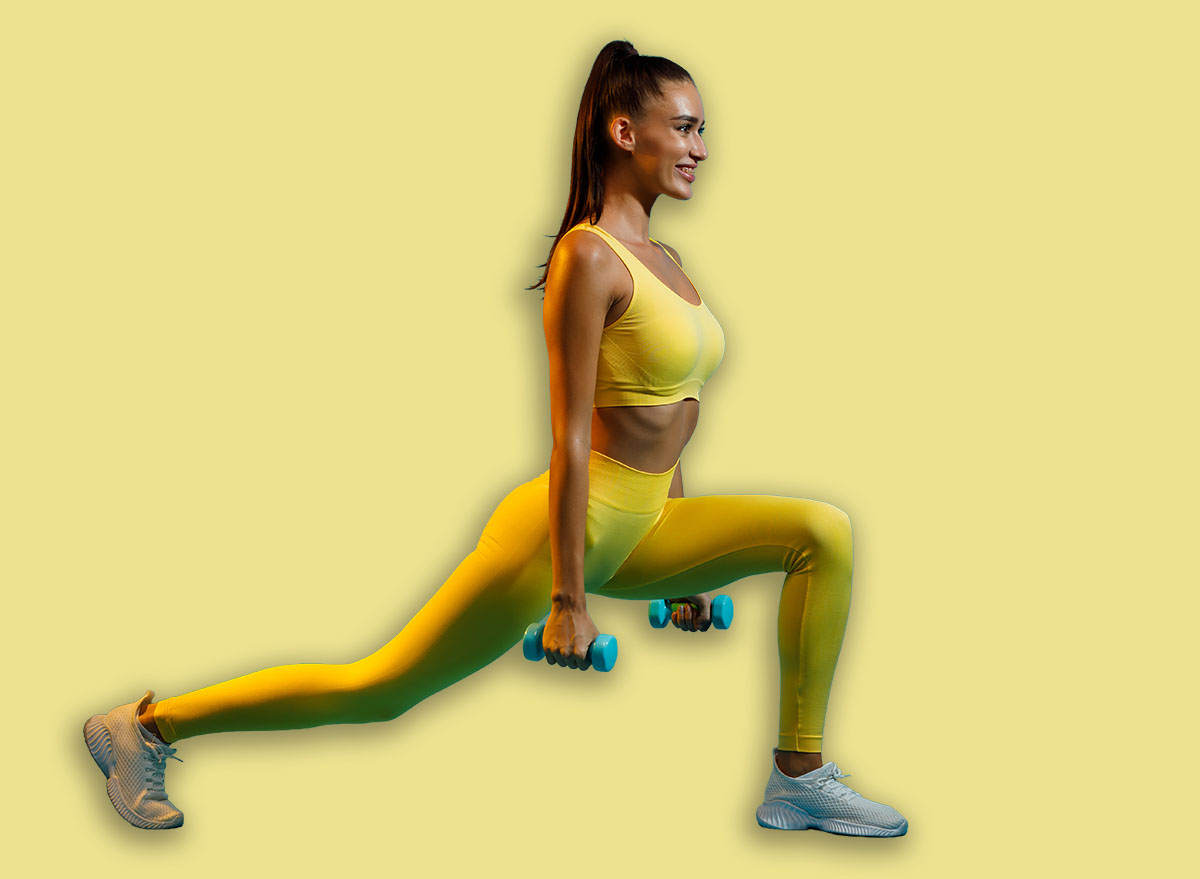
Dumbbell Lunge
Why it works: Strengthens legs, glutes, and core while improving balance and coordination.
How to do it:
- Hold dumbbells at your sides
- Step forward into a lunge
- Lower with control
- Drive back up
- Switch legs each set
Avoid these mistakes:
- Don’t lean forward
- Don’t let your knee collapse inward
- Don’t rush your transitions
Bent-Over Dumbbell Row
Why it works: Targets the back, shoulders, arms, and spinal stabilizers.
How to do it:
- Hinge forward with a flat back
- Pull the weights toward your ribs
- Squeeze the shoulder blades
- Lower slowly
Avoid these mistakes:
- Don’t round your spine
- Don’t use momentum
Goblet Squat
Why it works: Trains quads, glutes, adductors, core, and spinal muscles simultaneously.
How to do it:
- Hold one dumbbell close to your chest
- Squat down with a tucked pelvis
- Drive back up
Avoid these mistakes:
- Don’t let your pelvis tip forward
- Don’t cut your depth short
What Weight Should You Start With?
Start light and focus on form. Muscle growth comes from strain, which is influenced by weight, time under tension, range of motion, and volume. If a workout produces no fatigue or soreness, it’s likely too easy. When progressing, increase weight gradually—about 10–20% at a time—to reduce injury risk.
How to Fit These Moves Into Your Week
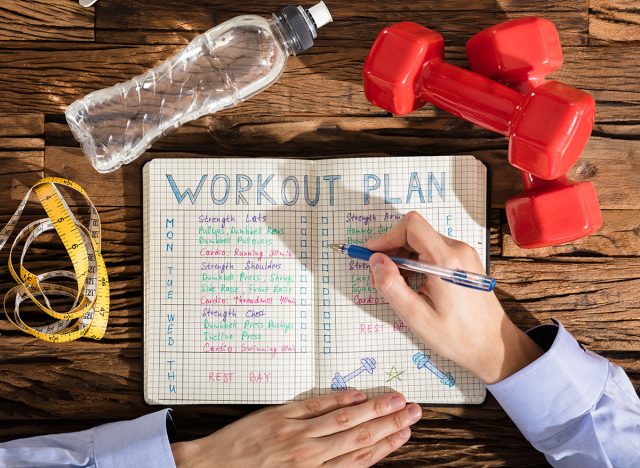
These exercises can be performed 2–3 times per week as a full-body workout. A structured approach like a 10 sets of 10 reps protocol works well, with 30–60 seconds of rest between sets. Consistency matters more than complexity.
What Results Can You Expect in 4 to 8 Weeks?
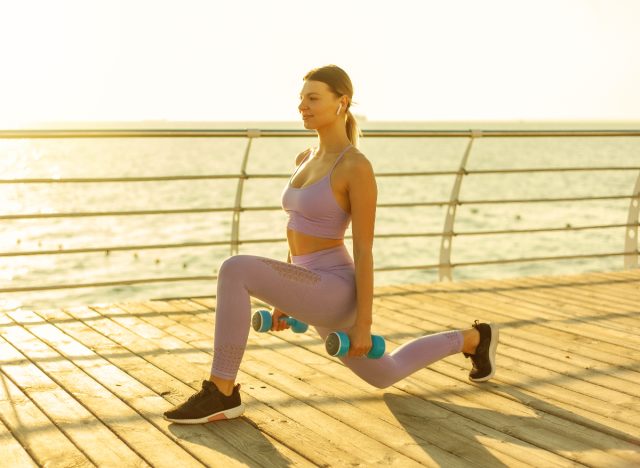
With consistent training, most people notice increased strength, improved muscle tone, better blood sugar control, enhanced posture, and more confidence in daily movement within 4–8 weeks. While dramatic muscle growth takes time, these early gains lay the foundation for long-term strength, health, and longevity.